
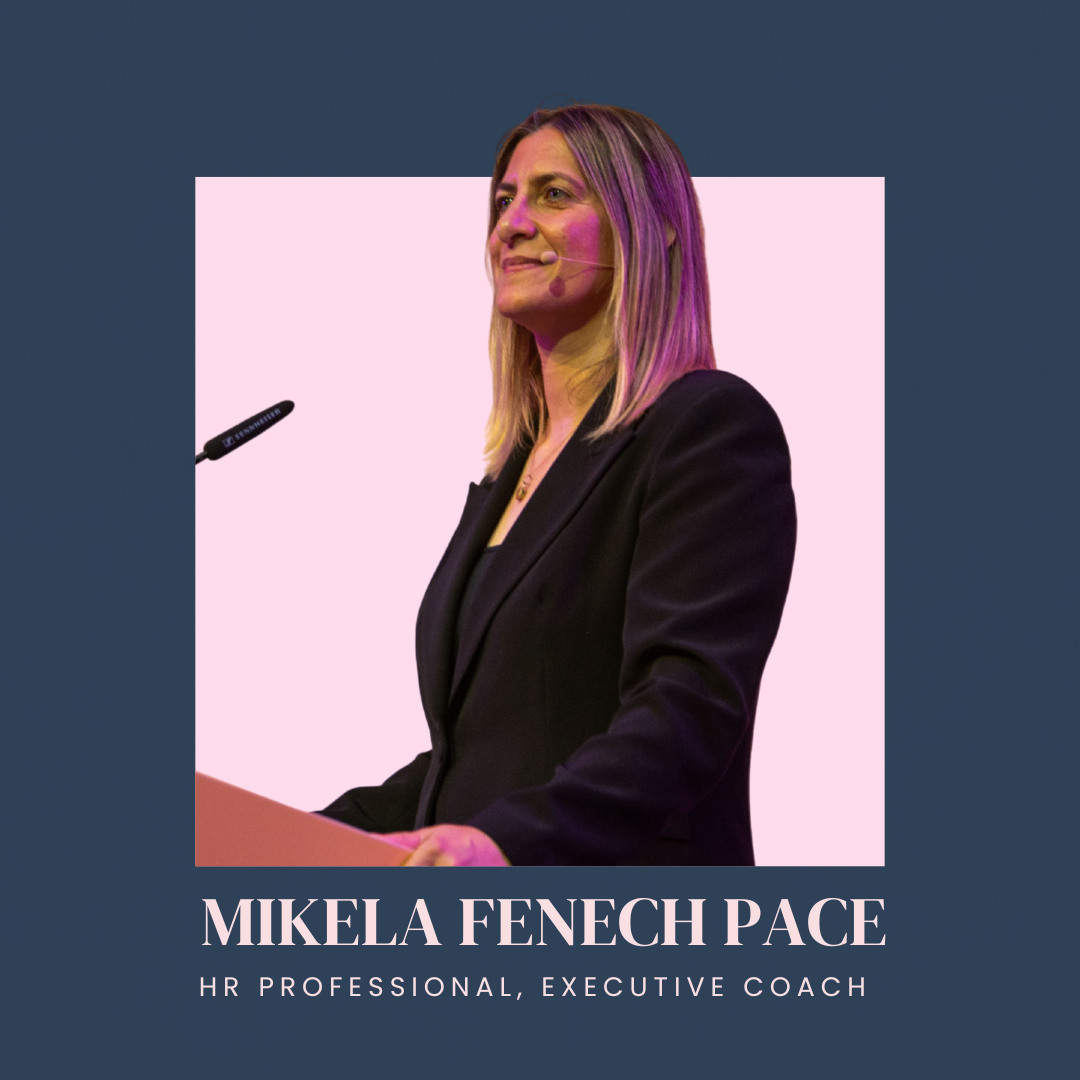
CATEGORIES
Entrepreneurship | Leadership and Networking | People We AdmireOverview:
- Mikela Fenech shares how her childhood impacted how she shows up to her workspaces.
- Her evolution from diplomacy to HR was more personally driven than a desire to change careers.
- She speaks on the importance of showing up prepared to every professional setting
- Mikela’s family plays a huge role in her learning curve and journey of life.
1. Could you tell us a bit about your childhood and how it may have shaped the person you are today?
I come from a Maltese ‘twin’ family. My mom, dad, and I are twins, and I also have twins. When I was young, I felt like the ugly twin who wasn’t very talented. I felt inadequate and insecure, luckily my mom caught it early. She guided me in developing my own identity. Moving forward, I decided I was going to work as hard as I could, and that became my identifying factor.
I come from a relatively well-known political family in Malta and this necessarily defined my childhood. My main influence for my first career move as a diplomat was my paternal grandfather who was a well-known ophthalmologist and politician.
2. You describe yourself as a “hands-on HR professional.” What does being hands-on mean to you, and how has that shaped your career?
My mantra is ‘data and information is power.’ I follow the script of trying hard, so if I am told to read one book, I’ll read four. I would never walk into a boardroom or a meeting unprepared. In fact, usually I’m overprepared.
When I went into the HR department, I wanted to know everything there was to know, and I realized that HR is about people. Therefore, I make it my business to make sure I know facts about people—not just their name. I can work a room and gain the trust of people very quickly, and I’m also viciously loyal.
I have deep respect for the people around me, so I find it extremely important to invest time in my projects. The higher you go in an organization, the easier it is to become complacent and this is where HR needs to do its best work but often finds a door shut. The idea of life-long learning and growth is required to be able to ensure the leadership of every company allows themselves the space to read, think and learn for this is how they can grow as individuals and run better people organisations.
3. You’ve worked as an HR professional in various companies. How did you cater to the different requirements?
HR is not rocket science because you are basically dealing with people. At the beginning of my career, I approached HR like a bulldozer, which was wrong. One of the first and most important ways I catered to the different requirements was by developing trust. The formula is quite different with staff in comparison to the senior leadership, depending on its members. You have to show that you’re competent and also that you’re humble enough to admit that you’ve made mistakes. You also need to be loyal and remain committed to your word. If you say A, then it has to be A.
Another thing in HR that is crucial, and a tool that you need to have, is being able to have difficult conversations at the right moment. At the beginning of my career, I did not know how to do that. I have since learned not to break policy on account of a few members of staff. However, I prioritize their safety and well-being as I detach myself from outcomes in the work environment in the event that senior leadership dents policy. At the end of the day, I find joy in working with people I can learn from and admire.
4. How can an HR professional best cope with the mental toll of working in a department as demanding and stress-intensive as HR?
Most people think of HR when there’s a crisis, when something goes wrong, or when someone complains. Nobody can understand frontline HR and its anxiety unless they’ve been there. When it comes to burnout, the most important thing is for HR professionals to look out for each other, and be able to make a case for themselves at the end of the day. We tend to overextert ourselves to our own detriment when we should be learning to create boundaries and to become more conscious of our own emotions, needs and biases.
I’ve learned a couple of things over the years. One is ensuring the wellness of HR functions.
Second is caring without taking responsibility. Basically, being able to allow for a safe space for people to trust you, but not to own their problems. At the end of the day, our job is to empower people to solve their issues. What I do now is coach and mentor individuals to be strong enough to be able to stand up for themselves and create solid boundaries.
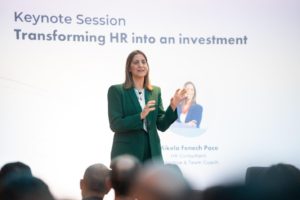
5. As an author and public speaker, what themes or messages do you find resonate most with your audiences?
The first thing is to know your audience because that decides what they are expecting. For example, are you speaking to feminists, men, businesspeople, or children? I have a deep respect for my audience, and I take time to tailor-make presentations for them. I believe I have a responsibility to be able to relate to them.
Though I prepare a lot of content, I am always ready to adapt to the audience. In fact, I rarely use my notes as intended. My focus is on making the presentation feel relevant to the individuals in the room. I keep in mind what key messages I want them to remember and convey them in different ways. Either by storytelling, through personal experiences, or through teaching.
6. Can you share a pivotal moment or transformation in your career that shaped the way you coach leaders today?
I was a diplomat, and I loved it. I loved representing my country, the diversity of work I got, and who I met. I reluctantly left my career as a diplomat and looked into the private sector after some of my greatest successes working in Government. It was time for me to leave. I pride myself with always knowing when it is time for me to move on and I don’t like to linger.
There were times when I felt like a failure and judged my decisions quite harshly. Then I remembered all my achievements, such as studying abroad. Suddenly, the imposter syndrome left, and I began looking into what would come next for me. I transitioned into coaching from diplomacy purely by accident. It was driven more from personal than professional reasons. What I discovered about myself is what and how I pour out into coaching other people.
7. How has writing helped you become a better coach or leader yourself?
Language fascinates me, more so writing. I also take great pleasure in reading books, listening, and learning. When I was young, journaling was a way to express myself. I believe that if you’re able to read, then you can write, because structure comes from writing. I hold the opinion that it’s not what you say, but how you say it.
One of the biggest challenges I had was that my language was very inflammatory. I would use words like ‘great’ to make things look big, especially in the HR space. I had to take responsibility for that by going into the psychology of writing. I then learned how to stick to facts and use phrases such as “It seems like.” That gave me a different perspective because it respected my audience, particularly on email. My writing then became much more impactful, and I received better feedback from it.
8. What do you do to stay inspired and continue growing as a coach and leader?
I make sure that I’m learning all the time. At the moment, I’m doing a one-year Compassionate Inquiry course, which is a therapeutic approach where I learn more about myself. You don’t know business if you don’t know people, and you don’t know people if you don’t know yourself. The best leaders are the ones that know themselves. When I learn more about myself, I challenge myself to do and be better. This drives the impact that I want to have in a room.
I have also learned to replicate lessons from parenthood, which is mostly trial and error, to coaching and leadership. I keep challenging myself to grow for my kids. I look at how I can be the best model for them, because their personalities will be a result of me. Being self-assured and courageous enough to admit that I’ve made mistakes is important. Allowing my children the space to thrive as individuals while also respecting each other is a journey nobody gives you a handbook for.
9. How do you define success in your work with organizations and individuals?
About two or three years ago, I found myself on a panel of women, and I was the oldest. I was asked what I thought about not having enough women on boards and in top positions, and its cost to the economy. And I said, “Well, have you asked women my age if we want to be on boards?”
Success can indeed be subjective to everyone. If I were to define success generally, it would be having the courage to live life as you want to. The bottom line is having the courage to follow what you really want and craft your own story.
I’m redefining success and what it means to me. When I was younger, it was proving that I was competent enough to be able to reach the highest levels. But as I got older, my definition of success changed, especially with my teenage kids. All of a sudden, the higher I climb up in an organization, the more I see C-suite positions, and the more I realize that reaching the C-suite is not my definition of success. What drives me the most now is being able to impact, help and encourage people, and allow them to thrive.
10. Do you have any people you look up to and/or mentors who have supported your professional journey?
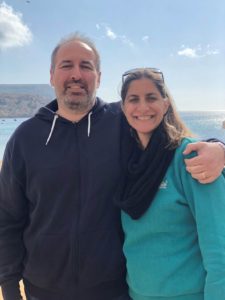
I got married to a wonderful man who is my greatest fan. I gave up a lot for my relationship when I had to decline jobs I had been offered in New York and Vienna. I am very fortunate because my husband has supported me in a lot of ways, including in my professional journey and with our family.
My English teacher as well played a big role by helping create confidence in me. She taught us how to feel less intimidated when we walked into an accomplished crowd. That lesson has stayed with me over the years. So whenever I approach a meeting, I always remain bold as long as I am as prepared as I can be.
11. If you could give one piece of advice to a young professional just entering the world of HR or coaching, what would it be?
Start the journey to learn. The first and hardest thing to do is to be able to confront the truths about ourselves. We spend most of our time looking outside when actually we should be focused inside because it affects everything we do. One of the most courageous things for us to do in our daily lives is to take responsibility, without which there’s no moving on and no forgiveness.
The other thing is to be compassionate. Have the ability to meet people where they are rather than where you’re at. Finally, each one of us has our own process. Find your way, and respect it.
Conclusion:
Mikela Fenech Pace epitomizes hard work in every space and task she is called to do. From childhood to adulthood in her professional journey, she has faced challenges head on. Her aim is to meet people where they are with empathy and to drive impact from the value she creates.
