
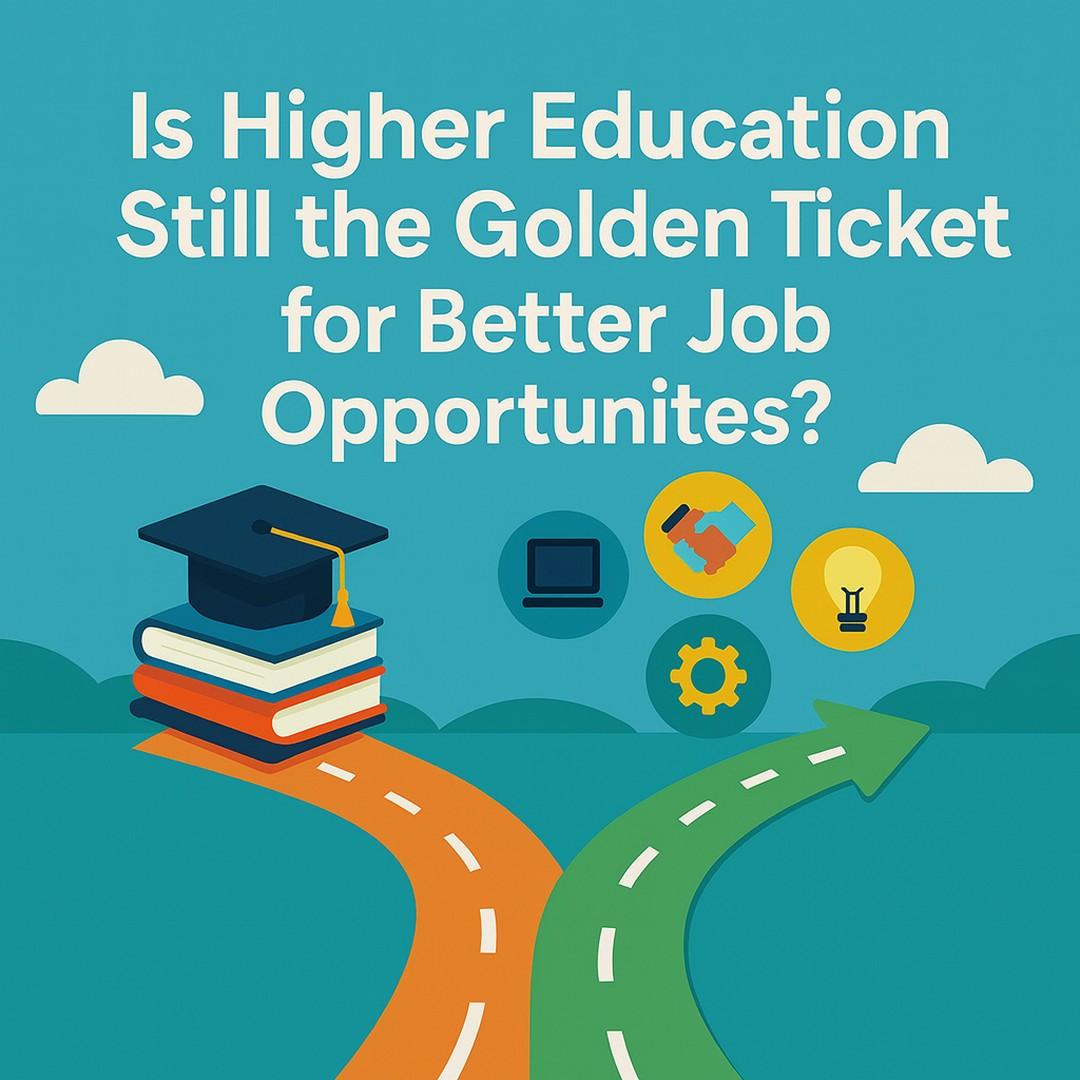
Overview:
- Families see education as the safest path to success.
- A degree alone no longer guarantees secure employment.
- Skills, experience, and networks increasingly shape career outcomes.
- Education remains valuable if treated as a strategic investment.
Parents believe the more degrees their children get, the better their future will be. Getting a degree is not just regarded as a personal achievement but a family win. They consider their hard work and sacrifices to be paid off. But the reality tells a different story. Graduates today find themselves facing job rejections due to high competition and a battle of skills. Traditional education is no longer enough. “The higher the degree, the better the opportunity” is now being questioned.

Education as the Traditional Pathway
For a very long time, it was believed that higher education was a stepping stone to stability. A degree represented more than just a paper. It represented status, progress, and opportunity. The standard of schooling, undergraduate, and post-graduation has become the norm. This belief still impacts the decisions made today. Young students enroll in advanced programs with hopes of a better career. In reality, these degrees no longer guarantee what they previously did.
The New Realities of the Job Market
With recent developments and an increase in demand for jobs, employers look for those who bring an additional asset to the table. They no longer base their decision solely on one’s degree. Employers today seek experience, adaptability, skill building, and other criteria. Additionally, routine tasks once handled by freshers and now being done by AI. Even well-qualified students from prestigious universities face the wrath of unemployment. Relying solely on one’s degree is no longer enough.
Beyond Degrees: Skills, Experience, and Networks
Employers constantly look for those who have practical knowledge. Internships, part-time jobs, and real-world experience are what make the difference today. Relationships with peers, alumni, mentors, and networking often unlock opportunities that degrees cannot. Education provides knowledge, not success depends on what more you can do.

Rethinking Higher Education as an Investment
Graduate programs are seen as the next logical step. Higher education delivers value when aligned with career goals and practical strategies. Higher education should be treated as an investment rather than a guarantee. An effective way to success is to inculcate adaptability, work experience, and continuous skill development. Degrees open doors, but are no longer a golden ticket
Conclusion:
The link between higher education and success is not broken; it has simply evolved. Degrees still provide a strong foundation, but are not solely capable of taking one towards their destination. Today, they serve as one of the pieces in a bigger puzzle. Personal effort, resilience, and ability to grow with change matter just as much as formal qualifications.
