
CATEGORIES
Entrepreneurship | Leadership and Networking | People We AdmireOverview:
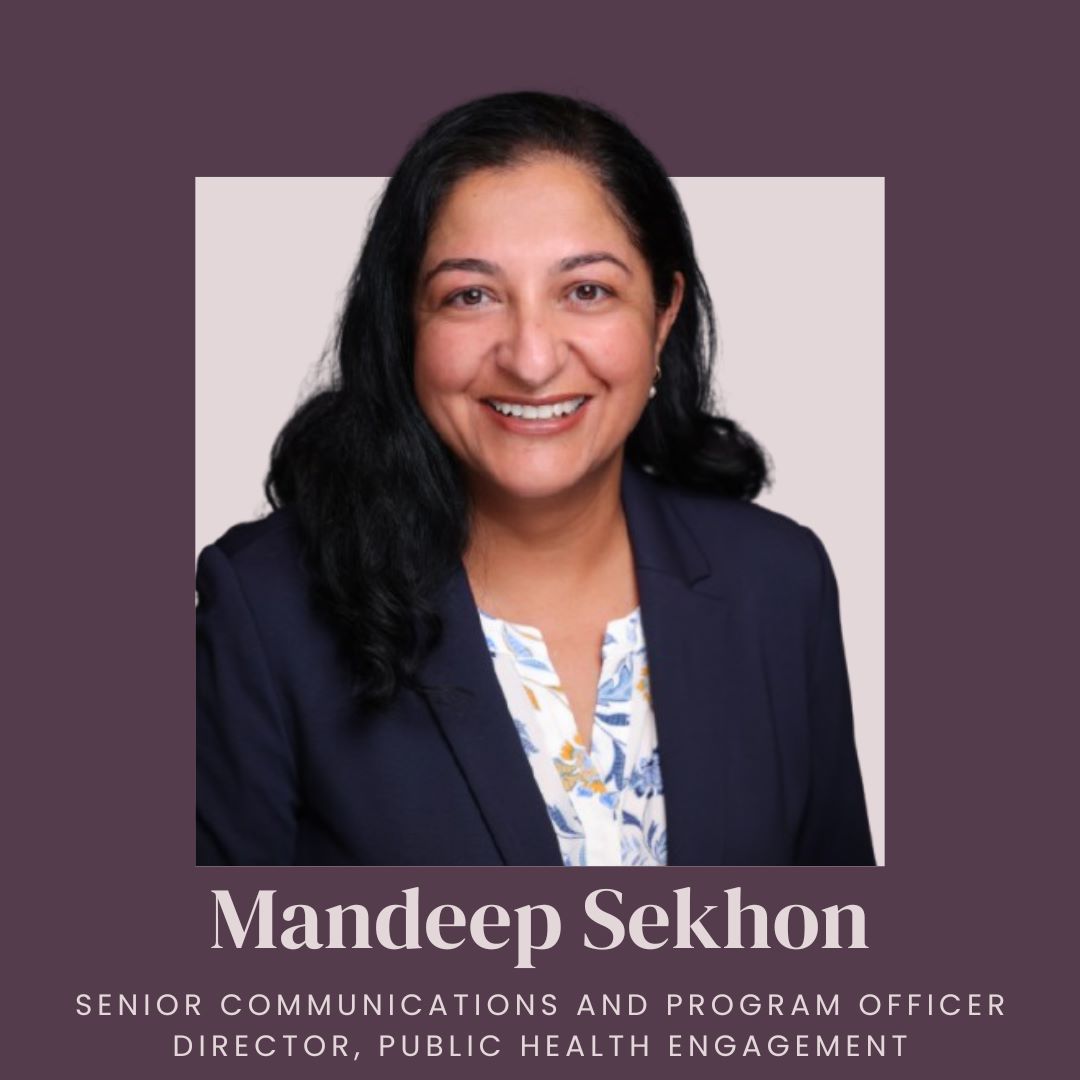
- A childhood shaped by immigrant struggles and small-town grit gave Mandeep Sekhon the resilience that defines her character today.
- What began with the Human Genome Project grew into a career spanning science philanthropy and global communication leadership.
- Alongside her professional path, she has balanced motherhood, leadership, and lifelong learning with determination and grace.
- Equity, compassion, and empathy guide her work, values she believes are essential for meaningful progress in science.
- By living these principles, she inspires women everywhere to expand their vision of what is possible.
1. Could you share a bit about your childhood and how it shaped who you are today?
I grew up in Terre Haute, Indiana, a small rural college town where my father settled as a sociology professor after earning his PhD. My parents had migrated from India in the 1960s, and life there meant living among a very small Indian community, maybe 10 or 20 families at most. We were the only Punjabi family in town, so I felt connected to other Indians yet also somewhat isolated at school and in the larger community.
It toughened me and gave me a kind of resilience and quiet adaptability. In college, I majored in Biology and Spanish, expecting to go to medical school. Although life had other plans for me. By accident, I ended up in a genetics research laboratory that became part of the Human Genome Project. What I thought would be a temporary job lasted seven years of pioneering work. I eventually led a team of 30 researchers who created a physical map of the human genome.

2. Your career has moved through research, industry, philanthropy, and communications. What do you value most about it?
When the Human Genome Project ended in 2003, I transitioned from academia to industry. At GlaxoSmithKline, I loved that everything circled back to patients. Later, at Quintiles (now IQVIA), I oversaw clinical trials and feasibility studies and saw how research transformed into real-world solutions.
One of the biggest decisions of my life was stepping away from the workforce to raise my three children. I took five years off, and although re-entering the professional community was difficult, I’ve never regretted it.
When I returned, I joined the Burroughs Wellcome Fund. I started with infectious disease grants, but when leadership shifted, I was asked to join communications and marketing. It turned out to be the perfect blend of my passions for science, writing, and public health. Eventually, I decided to pursue a Master’s in Public Health while working full-time. Earning that degree in 2024 tied everything together. Now, I get to work at the intersection of science communication, philanthropy and public health. My career has really been a journey of reinvention, always driven by curiosity and purpose.

3. Was there ever a moment that revealed to you the power of communication?
Yes, during the Human Genome Project. I did not expect to be in a leadership role so young, but suddenly I was managing a team in a constantly changing environment. The project’s objectives shifted frequently, sometimes weekly, and I had to keep people motivated while communicating those changes.
That’s when I realized communication is far more than merely sharing information. It is about building trust, clarity, and shared purpose. Learning to keep my team aligned in the midst of uncertainty shaped the way I approach communication even now.
4. How do you align messaging for both internal leadership and external stakeholders?
For me, it always begins with the audience. Externally, we focus on early-career researchers who face steep challenges at the start of their careers. Our communication is designed to support, encourage, and empower them, while also highlighting opportunities through our programs.
We also run K–12 STEM programs in North Carolina, which requires a completely different mode of operation consisting of messaging that sparks teachers and childrens’ curiosity and builds pathways into science over time.
Internally, since our organization is small, communication is very direct and personal, often coming straight from leadership. My role is to make sure that whether we’re writing policies, press releases, or outreach materials, the message always reflects our values and goals.

5. What are your most important life values, and how have they guided your career?
My guiding values are equity, compassion, and empathy. They shape my decisions every day. The inequities in the world are what drew me to public health, especially after 2020, when racial equity came to the forefront of societal issues.
Public health felt like the natural intersection of my science education and my commitment to justice. Getting a Master’s degree in Public Health wasn’t just about career development, it was quite personal as well. I wanted to show my children and other women that you are never too old to learn or to expand your sense of what’s possible.
6. What have been some of the biggest challenges you’ve faced in your career?
Gender has been a persistent challenge. Women remain underrepresented in leadership positions in both science and philanthropy. Early in my career, when I asked a supervisor about going to graduate school, he bluntly told me, “If you want a family, don’t go to grad school.”
I’ve also seen how much of the work done in philanthropy is carried out by women, yet men still dominate leadership roles. And the expectations placed on mothers are very different from those placed on fathers. That disparity has been frustrating, but it has also strengthened my resolve. I make it a priority to mentor younger women and to advocate for gender equity wherever I can.
7. What keeps you accountable when under deadline or going through change?
My sense of mission. Knowing that my work is helping advance science and equity keeps me going, even on tough days. Gratitude also plays a large role. Taking time to appreciate what I have keeps everything in perspective.
Family and well-being always come first. Change is inevitable, but meeting it with empathy and perspective makes it easier to navigate. The values of balance, empathy, and gratitude help me stay steady in times of uncertainty.
Conclusion:
Mandeep Sekhon’s story is one of strength, reinvention, and staying true to her values. From helping map the human genome to shaping the future of science communication and public health, she showcases how equity, compassion, and empathy can guide not just a career, but a life.
Her journey also reminds us that obstacles, whether rooted in gender, identity, or change, can be transformed into sources of strength. Most of all, she shows that purpose is not something we stumble upon; it’s something we build every day through our values and choices.
