
CATEGORIES
Entrepreneurship | Leadership and Networking | People We AdmireOverview:
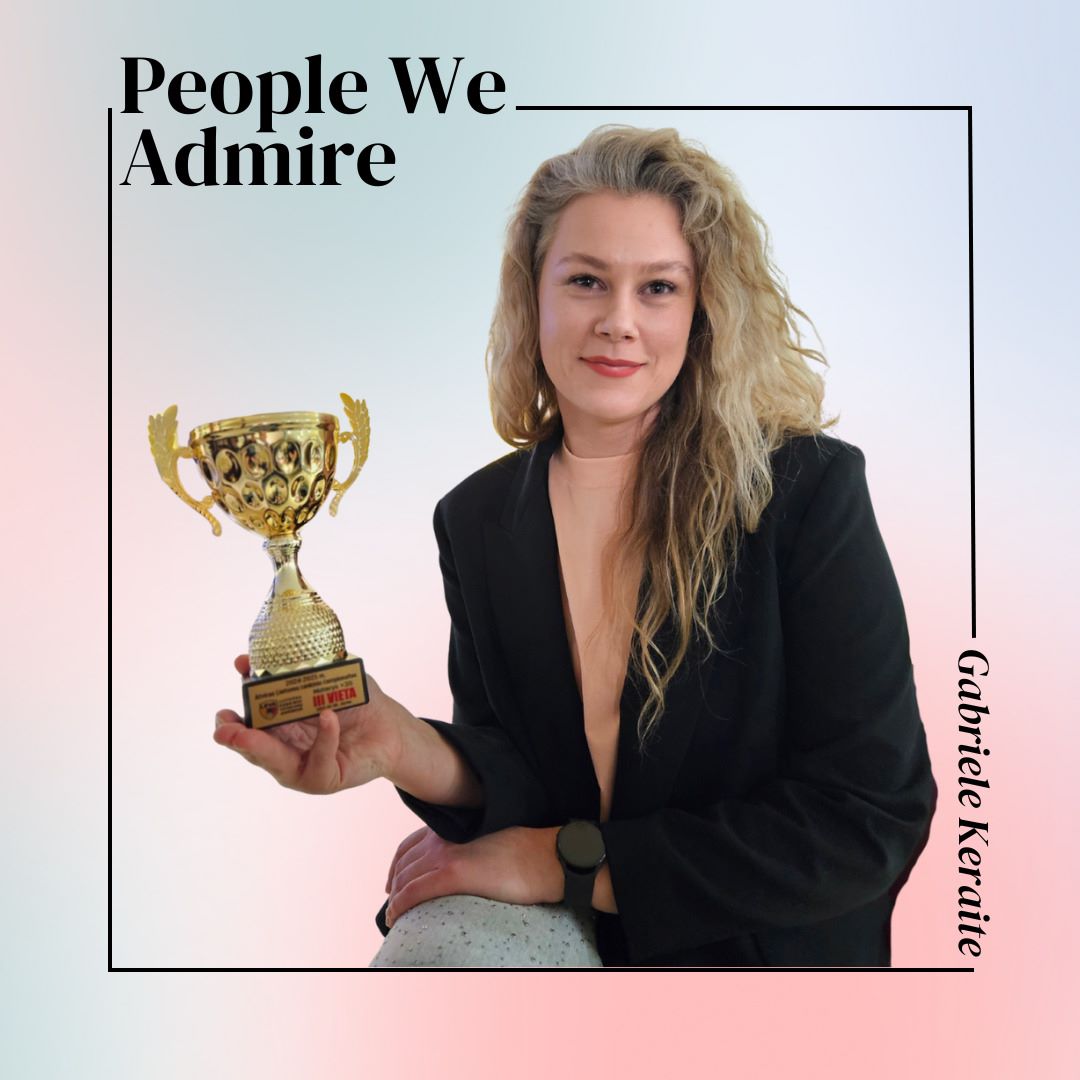
- Gabrielė Keraité shares how her early sense of discipline and admiration for her father shaped her leadership style.
- She highlights the importance of empathy, contextual innovation, and clear communication when working across cultures.
- Her leadership approach is rooted in humility, emotional intelligence, and a commitment to empowering her team.
- Through sports, nature, and mentoring, Gabriele grounds herself while paving the way for more inclusive innovation in smaller regions.
1. Could you tell us a little bit about your childhood and how your early experiences influenced who you are today?
I come from a pretty normal family, but one that shaped me in many ways. My dad was the director of a printing house, and he was my idol. I admired his work, his leadership, and the way he carried himself — it had a big influence on me growing up. My mom, on the other hand, was a wonderful, loving, and caring mother, truly made to be a mom. She spent 10 years working in a laboratory, before boldly changing her career to become a professional bartender and later opening her own small business — a pizzeria. Her warmth at home and her courage to reinvent herself both inspired me deeply.
I also think I was quite independent from an early age. One specific moment that stands out is from when I was around five or six, still in kindergarten. Usually, parents take you there and pick you up. But I remember one morning, my mom said, “Let’s not go today.” Maybe she was tired after work or just didn’t feel like it. But I couldn’t understand why we wouldn’t go. I wasn’t sick, there was no reason. And I asked her, “But why?” I just couldn’t process that something could be skipped without a clear reason.
Looking back, I think that moment says a lot about who I’ve always been. From a young age, I had this strong sense of discipline. If something needs to be done, you just do it. That mindset continued through school and later in sports. I started playing handball when I was around 10 or 11, and I wouldn’t skip training for no reason. I was committed. If I said yes to something, I followed through.
Now, that same approach is very much a part of my work. I’m currently the Director of the Research and Innovation Unit at Metis Baltic. It’s a small company working with European-funded research and innovation projects. We lead the communication, dissemination, and exploitation which is directly related to project impact. We help define the identity, brand, and outreach strategy. And I think that early discipline, that drive to show up and deliver, still guides everything I do today.
2. Do you feel that being a woman has shaped how you approach leadership or decision making in your work?
Yes, I definitely think that being a woman has an influence and it shapes how I listen, how I negotiate, and how I make decisions. I’ve learned to turn challenges into opportunities. There were some moments in my career where I was really afraid or I didn’t know how to behave; I was left alone and had no one to really consult or seek advice from. But in the end, I managed to make my own decisions and they turned into huge opportunities. I also feel that emotional intelligence is a real strength which some male leaders are lacking. It plays a big role in how I lead.

3. You’ve worked across diverse markets and cultures. How has that global exposure really influenced your approach to brand building today?
My experience with pan-European initiatives and collaboration with partners from the rest of the world has shown me that innovation is always contextual. Just because it works in one region, country, or culture doesn’t mean that it will work somewhere else. This realization has made me more empathetic, more agile, and more strategic in my way of working. Frankly, I sometimes feel like a psychologist in this job. At times, I’m trying to understand and connect the messages coming from different levels; from executives to engineers and analysts, to make sure everyone is aligned. I need to find a way to properly communicate with every person involved, convey the proper information, and make the project happen. It taught me how to adapt, how to be flexible, listen better, and understand people.
And about brand building, especially in my company, I really believe our brand is the output of our quality work. We are not a big firm, yet we are being invited continuously to new initiatives and projects, because we are good at what we do and we deliver results. That’s what speaks for us. Our work, our reliability, and how we collaborate is what builds our brand more than anything else.
4. What do you hope will be the long-term legacy of the work you are doing today?
I hope to contribute to building systems and communities that make innovation more inclusive and more impactful, especially in smaller countries and regions like Lithuania. We’re a very small country compared to the rest of the world, but I believe we have so much potential. There are a lot of innovative companies and technologies emerging here, and things are really happening.
What’s missing sometimes is visibility. That’s something I hope to help change. I believe now is the time when that visibility is starting to grow, and I truly hope it continues.
5. What are some underrated qualities you look for when building or mentoring a high-impact innovation team?
I think that those who quietly connect the dots or help keep the team balanced are the unsung heroes in innovation. So in that sense, I really value resilience, active listening, and humility. I believe those are the qualities that matter a lot.
I’ve also noticed that the loudest people in the room aren’t necessarily the ones who have more impact at work. It’s the opposite. The ones who listen more, who don’t go around announcing everything they’ve done, are usually the ones truly focused on getting the job done. In simple words, being humble is a very important trait.
6. In your role as Director of the Research and Innovation Unit, what does a typical day look like for you?
I’d say there’s no such thing as a typical day, because honestly, no day is the same.
But usually, it involves overseeing the project pipelines, supporting my team with both technical and strategic input and decisions. I also spend time aligning with our partners, communicating with them on our international projects.
Another part of my day is making sure that our communication strategies, both in the team and within the projects, are aligned with EU impact expectations and regulations, and that we’re delivering what we’re supposed to.
Also, I believe that every day, or at least every second or third day, I try to dedicate time to mentor my team and younger colleagues. My door is always open. We have quite a small, family-like environment in the office, and I really value that.
So yes, a lot of things happen in one day, but that’s what makes it interesting.
7. How do you approach people management within your team and what do you do to keep everyone motivated and engaged in their roles?
Firstly, I believe you should start by fostering a healthy and friendly atmosphere for people to feel comfortable in the environment they work in. I also really value trust and autonomy. I’m not into micromanagement. Instead, I encourage open communication and celebrate small wins and achievements and to empower the team.
When people feel seen, valued, and appreciated, their motivation naturally grows and follows. One of the biggest mistakes leaders or organizations can make is overlooking the power of a supportive work culture. It really kills motivation.
8. Do you have one experience that you consider the most rewarding or fulfilling in your career so far?
There was a time when the company was induced to undergo internal changes, a restructuring. I had to make a really tough decision on whether to follow my former leader or stay and continue working on my projects more or less alone. It was scary. There were no senior people around, no guidance, and I had to decide if I could take full responsibility and keep going.
In the end, I decided to stay. That decision turned out to be one of the most rewarding ones I’ve made. I completely led the work package; we delivered the final conference, and everything was a success. In hindsight, it became a crucial moment that led me to where I am now. I have my own team, I lead the unit, and I can constantly apply what I learned from that experience.
Also, during that time, I had a very negative, stressful, and unappreciative view of leadership, which formed a very clear example of how not to lead. It really shaped how I treat my team today. I want them to feel comfortable, not afraid of management, and confident in the work they do.
9. What advice would you give to the young professionals who are curious about building a career in research policy and innovation?
Stay curious and never stop learning. That’s the most important thing. Also, look for mentors who will motivate you to leave your comfort zone. Don’t be afraid to contribute, even if you’re the
youngest in the room. Speak up, ask questions, consult with people who have more experience than you. All these things are small steps you have to take because no one else can do them for you. You really have to stand up for yourself.
Innovation and progress require fresh perspectives. That’s what the younger generation brings. I’ve noticed senior leaders often tout “Young people are the future,” yet they don’t always open up that space for them to speak or become involved. So yes, sometimes you have to fight to enter those communities and be truly heard. People say they’re inviting, but it can still be difficult to actually get involved in a meaningful way. But don’t give up. Keep pushing your way in.
10. What are some of your practices that you follow to ground yourself at the end of the day?
I love doing sports. I played handball for about ten years, it’s a team sport I really enjoyed. I still play, actually. This might sound funny, but I now play with the veterans and I’m the youngest one there, because you can join a veterans’ team once you’re in your 30s!
Then there’s beach volleyball, which I discovered two years ago. I now train for it twice a week. This keeps me healthy and energized, not because I have to, but because I genuinely want to. Even after being dead tired for hours after practice, it still makes me happy.
I also have a cat at home. I love spending time with her and taking her outside. She behaves quite differently when she is outdoors, which I find fun and joyful in its own way.
And lastly, sometimes I just need to turn off the screens and take a long walk through the forest. Being in nature, a quiet environment, helps me unwind and be present at the end of the day.
Conclusion:
Gabrielė Keraité’s story is one of grounded leadership, quiet strength, and a steadfast belief in the power of showing up. From her early lessons in discipline to navigating high-stakes decisions alone, she’s carved a path built on trust, empathy, and purpose. Whether mentoring her team or pushing for visibility in smaller regions, her vision remains clear: innovation must be inclusive to be impactful. Her journey reminds us that meaningful leadership is built day by day through presence, patience, and heart.
