
CATEGORIES
Entrepreneurship | Leadership and Networking | People We Admire | Social Impact1. Can you share a bit about your childhood and how it may have influenced the person you are today?
I grew up in a family where excellence and impact were part of the family DNA. My parents were both highly accomplished physicians and researchers, and my grandmother worked alongside my grandfather, a Nobel Prize winner (and the second Nobel Laureate in the family). But what shaped me most wasn’t the accolades my family had received. It was the quiet and consistent belief that everyone, regardless of gender and background, had a voice and a responsibility to do meaningful work. There was no pressure to follow a specific path, only a clear expectation that whatever you do, do it with impact.
As a kid, I spent time between my grandfather’s laboratories and the front desk of my mom’s medical office. I saw everything from Medicaid patients to royalty, and doctors at the top of their research game who were enormously diverse. Those early exposures gave me a real understanding of humanity across class, culture, and background. It taught me to value who they are, not what they have. That mix of intellectual rigor and human connection gave me a deep respect for both excellence and empathy. These two values continue to guide me today.
2. What inspired you to co-found H/L Ventures and CityRock Venture Partners?
I’ve always had a natural drive to start things. Even as a kid, I was the one organizing games on the playground. I’ll admit, I’m probably not the world’s best employee, which might be why I’ve leaned toward building from the ground up. At 26, I co-founded both the Resolution Project and H/L Ventures. Neither came from a master plan. They emerged from conversations, personal experiences, and a desire to create something meaningful.
The Resolution Project was born from my love of Model UN. We were struck by the energy of students coming together, convinced they could change the world. But after each conference, that momentum disappeared. A small group of friends came together and wondered: “What if we gave small grants to students to help them act on their ideas?” My co-founders, George Tsiatis and Howard Levine, and I, along with a small founding team, ran a pilot and received hundreds of thoughtful proposals. It revealed an entire community of young people ready to lead. Today, Resolution works in about 100 countries and supports thousands of students every year, with almost 1,000 entrepreneurs funded, leading to over $5B in market capitalization of social ventures, around 6 million beneficiaries, and more than 40,000 students a year trained in socially responsible leadership.
H/L Ventures emerged just as naturally. My co-founding partner, Eric Hatzimemos, and I were consulting for early-stage companies that couldn’t afford traditional firm rates, so we proposed taking equity in exchange for strategic help. It was rewarding to watch those companies grow. That experience sparked the idea for a firm built around long-term support and shared success. Eric and I have now worked together for well over two decades. In a world where many people switch jobs every few years, I’ve been fortunate to have built two mission-driven organizations alongside people I deeply trust and respect.
3. As an impact investor and someone who has a keen eye for growth opportunities, what would you say is one skill or characteristic young people ought to have in order to be successful?
There’s no single trait that guarantees success, but if I had to name one, I would say resilience. Almost every successful entrepreneur I have met shares some combination of persistence and the ability to persevere when things get tough. It might sound cliché, but it is true. My version of that comes down to understanding the difference between “check” and “checkmate.” In chess, being in check means you are under pressure, but the game is still in play. Checkmate means it is over. The same goes for entrepreneurship. You will face setbacks, frustration, and moments when everything feels like it is going wrong. But most of the time, those are just checks and not the end of the game.
Learning how to tell the difference is important. You might wake up to a problem that derails your day, but it doesn’t mean your idea, your company, or your future is finished. That mindset can make all the difference. I also believe that while entrepreneurs need to be resilient, they do not have to do everything alone. At our venture firm, we often work with founders raising their first seed round. They are brilliant, but the fundraising process can be unfamiliar and overwhelming. That’s where we come in and share what we have learned from doing this hundreds of times. Supporting entrepreneurs with experience and guidance helps clear the path so they can focus on building something great.
4. Do you believe there is an inherent duty to ensure leadership personnel lead in a way that has a social impact?
That’s a complicated question, and probably more than it seems at first. Personally, I try not to tell other people what they should do. But I do have a deep-seated belief that leadership and responsibility go hand in hand. I’m Jewish, but I went to a high school with a Bible quote carved into the wall: “From those to whom much has been given, much is to be expected.” It has always stayed with me, and it reflects how I lead.
In everything I do, from the entrepreneurs we support at H/L Ventures to the students and fellows we work with at Resolution, I’m drawn to people who understand that leadership carries a responsibility for others. I was listening to a podcast recently on how AI is reshaping the world, and that raised a great question: ”Efficiency in service of what?” AI, like social media, can be both incredibly useful and deeply harmful. The same goes for leadership. If someone wants to build a big organization just to make money, that’s their choice. But the work I choose to support is grounded in leadership and responsibility. And for me, that means using your position to create a positive, lasting impact. Efficiency and technological power are great, but they have no conscience. We must supply the conscience.
5. How can venture capitalists lead with values in their investment approach?
Venture capital is a very small corner of the financial world, but it tends to get outsized attention. I often compare it to steroids. It’s sometimes necessary, but most of the time, best used sparingly. When we talk about investing with values, I think we should broaden the conversation beyond traditional venture capital to include angel investors, philanthropic capital, and even government funding. There are many ways to back emerging ideas, and each can carry a different set of values and expectations.
To me, impact investing is not a sector of investing. It is a lens you can apply to any type of capital. A donation to a nonprofit, for example, is a 100% financial loss by design, but you’re investing for an impact return, not cash. Then there are models like venture philanthropy or donor-advised funds, where the money is already granted or—anyhow—not expected to grow materially, so you can take risks with the potential for it to come back and be reused. At H/L Ventures, meanwhile, we seek competitive financial returns through our investing. We believe we can back values-aligned companies and make strong financial returns. Unfortunately, many in the venture world still do not evaluate impact as part of their investment thesis, which is reflected in the kinds of companies that have been funded in recent years.
The best way to change that is through results. If firms like ours succeed by building high-performing, mission-driven companies, then others will follow. Data already shows this is possible. For example, while only about 2% of venture capital dollars go to female-founded startups, 44% of unicorn startups have at least one woman on the founding team. That gap is not just a moral failure; it is a missed financial opportunity. The more we can prove that values and performance are not mutually exclusive, the more the industry will have to pay attention.
6. What does leading with purpose mean to you as a co-founder of The Resolution Project?
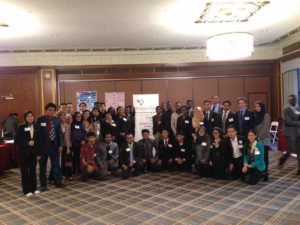
Leading with purpose means staying relentlessly mission-oriented. At the Resolution, we constantly check our decision against the mission we set out to achieve. That focus guides what we do and what we choose not to do. A good example of this is our approach to equity. Many of our fellows run for-profit ventures, and some of those companies have become very sizable. Collectively, they’re now valued in billions. Yet we’ve made a deliberate decision not to take equity in any of them.
We could have asked for a small percentage as a charitable gift—1% of future equity, for instance, and built a sizable endowment. But that would change our relationship with our fellows. Our goal has never been about the financial upside of their ventures. It’s about the impact of the experience itself.
Whether someone launches a billion-dollar company in India or runs a small tutoring program in rural Zimbabwe, we value both equally because each fellow is growing as a changemaker. Not holding equity means we can give them unconflicted advice. If shutting down the venture is the best decision for their well-being or future, we can support that without hesitation. It might not be a smart business move, but it’s the right mission decision, and that’s what leading with purpose looks like for us.
7. How do you define success for the businesses you invest in, and is it more about profit or impact?
At H/L Ventures, our firm is unapologetically commercial and aims to deliver market-beating returns for our investors, but we believe that profit and purpose can, and should, coexist. Our investments sit at the intersection of growth, impact, and diversity, with growth leading the way. We believe that aligning with values can strengthen a company’s long-term potential. We actively track impact metrics alongside financial ones, but our primary success indicators are financial outcomes within a values-driven framework.
On the other hand, at the Resolution Project, financial outcomes are not part of our definition of success at all. Whether a grantee builds a billion-dollar company or runs a grassroots initiative training women in rural communities, both are equally meaningful to us. We view impact investing as a broad continuum from pure philanthropy, where there’s no expectation of financial return, to venture capital that prioritizes both return and impact. What’s important is that we approach each model with intentionality.
8. What’s one challenge you think young leaders today will face that wasn’t as prevalent when you started out?
One of the biggest challenges young leaders face today is navigating a fractured and noisy information landscape. When I started my career in the late ’90s, most people still turned to a few widely respected news sources. There was at least a shared baseline of facts, even if people often disagreed on how to interpret them. Now, it often feels like we’re in a “war on reality.” You can find convincing content to back almost any belief, whether it’s rooted in science or misinformation. That makes it incredibly hard for young leaders to figure out what’s credible, how to form informed opinions, and how to build consensus in a noisy, polarized environment.
Social media adds another layer of distortion. Say something like “I’m an impact investor,” and half the audience will cheer you on while the other half might attack your motives or question the concept altogether. It’s not just disagreement anymore; it’s disagreement about the very definition of reality. That’s a hard climate to build anything in. I’ve always valued healthy skepticism and lifelong learning, something I learned from my scientist grandfather, but we also need some shared truths to build a better future. For young leaders, learning to cut through the noise and lead with clarity, integrity, and conviction will be one of the defining challenges of this era.
9. What hobbies/activities do you engage in that help you maintain a healthy work-life balance?
I’ve always found the idea of work-life balance a little misleading because let’s be honest, it’s rarely “balanced” in the traditional sense. I’m a workaholic by nature (just ask my wife), but I’ve learned that having outlets outside of work is essential for staying grounded. I love reading, especially science fiction. If I’m watching something, I want it to transport me into space, into other worlds, not just another version of city life I already know. I also treasure time with my kids. My son and I build train sets together, and at this point, it’s unclear whether the new track pieces are more for him or for me. Those creative, silly moments mean a lot.
Music is my other outlet. I sing, beatbox, play piano, and used to play the cello. There’s something about making music that helps me reset. I’ve noticed a lot of high-performing people have some kind of creative pursuit, and I don’t think that’s an accident, it keeps us human. I also play tennis, which is the only sport where I look remotely athletic. Without these little joys, I’d probably be in front of a screen 18 hours a day. The balance isn’t always perfect, but these activities give me perspective and energy to keep going.
10. Is there a particular book you would recommend to us and our readers?
Reading has always been part of my life. It runs in the family. I love books and truly believe there’s a book for everything. One I read recently, Invisible Rulers by Renée DiResta, takes a sharp look at how social media algorithms shape public perception and pull people further apart. It’s a fascinating and slightly unsettling exploration of how the way we receive information can distort our sense of reality. Another great read is Abundance, by Ezra Klein and Derek Thompson. It challenges the idea of scarcity and argues that we already have the resources to meet human needs. We just haven’t figured out how to use them equitably. It’s an eye-opener for thinking about what’s possible.
Reading hasn’t always been easy for me. I’m dyslexic, as are my mother and grandfather. For my mom, that meant she wasn’t a big reader growing up, but her brain worked in powerful visual ways, which made her an exceptional ultrasound analyst. That taught me early on that intelligence and insight aren’t one-size-fits-all. Books are one way to learn, but brilliance shows up in many forms.
On a related note, my own first book, Strong Floor, No Ceiling, is set to release this November. More information is at www.strongfloornoceiling.us.
11. What advice would you give to your younger self to set you up for success?
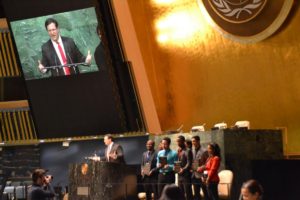
If I could give my younger self one piece of advice, it would be this: it doesn’t all need to happen so fast. I became a partner at 26, co-founded a nonprofit that same year, and spoke at the UN by 28. At the time, that pace felt like progress. But looking back, I see the value in slowing down. Many of my peers who started later, with more life experience and stronger support, caught up or even surpassed me. I made a lot of mistakes early on simply because I was in a rush. That urgency is even more intense today, with social media fueling the idea that success should be immediate. But real growth takes time, and the best lessons come from the messy parts.
I’ve also learned that no one builds anything alone. We love the myth of the self-made success stories, but behind everyone is a web of support from mentors, teams, family, friends, and a little luck. My grandfather used to say, “It’s better to be lucky than good, but best to be both.” Aim for excellence, yes, but stay humble. Recognize the people who help you along the way and understand that every journey is a collaborative effort. That mindset will keep your ego in check and your vision clear.
