
CATEGORIES
Leadership and Networking | People We Admire | Women EmpowermentOverview:
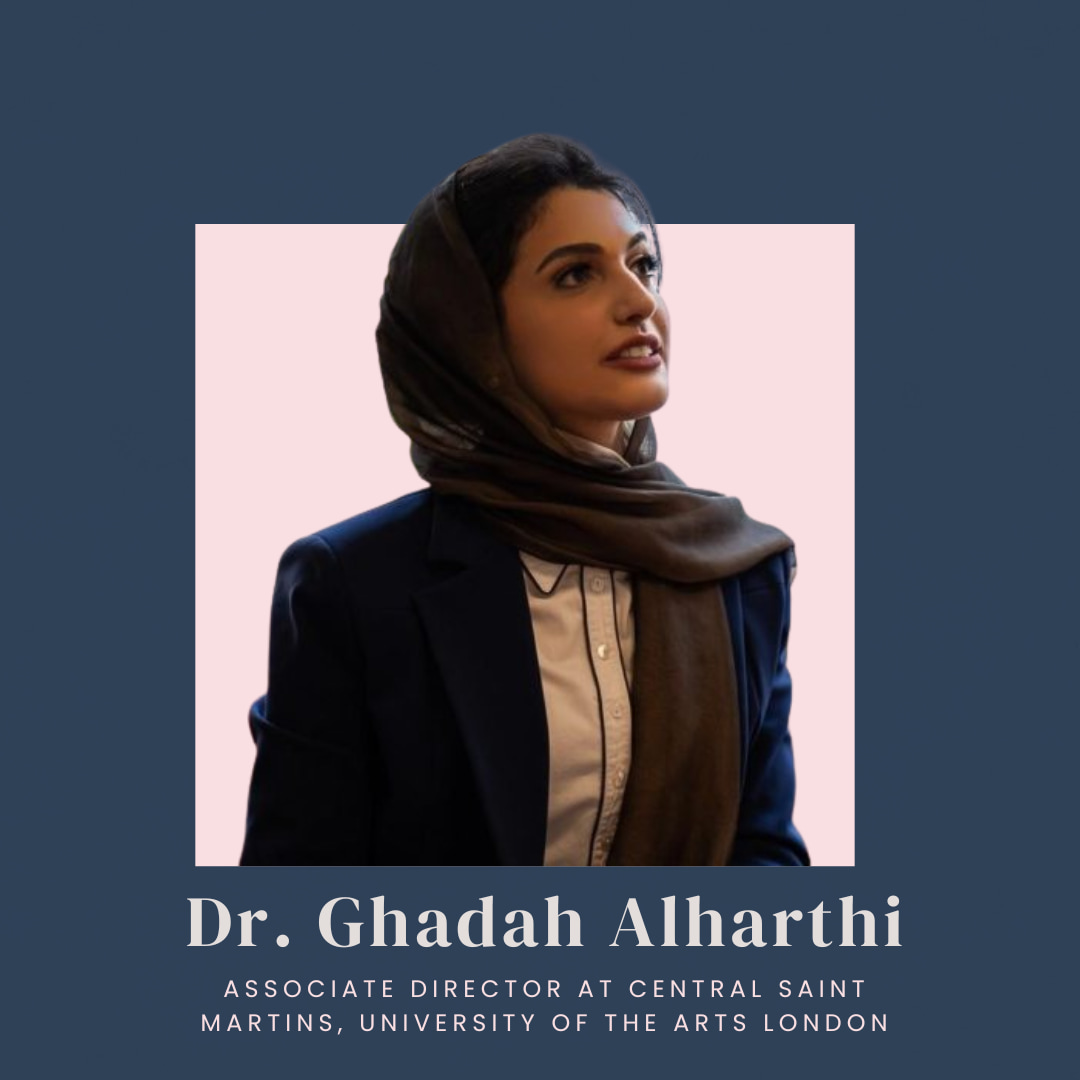
- Dr. Alharthi reflects on the lessons learned through crisis and rebuilding within a family business.
- For Ghadah, resilience is a balance of honesty, courage, and vulnerability rather than mere strength.
- The interview concludes with a message of gratitude, growth, and finding peace through purpose.
1. Could you provide insights into the developmental steps that should be prioritised to prepare future generations for future challenges?
Personal growth in many ways depends on the community one builds inside and outside office walls. It’s important to seek out mentors and role models whose work, and values resonate with your own. After all, if I can see it, I can be it.
Equally, joining societies, and mentorship programmes can be transformative. For instance, here in the UK, networks like NXT GEN – an inclusive platform supporting professionals in the first five years of their careers in the visual arts – or AWITA (the Association of Women in the Arts), which I’m a part of, have provided opportunities for exchange and mentorship.
Volunteering and engaging with social enterprises can also play a defining role in one’s journey. Such experiences allow us to give back to the community and shape our understanding of social responsibility and philanthropy- values that continue to underpin my work today.
2. What first inspired your interest in social innovation and cultural development? How have you seen these two areas evolve over time?
My interest in social innovation and cultural development began when I worked in London with a social enterprise that supported creatives. That experience inspired me to pursue a PhD focusing on social innovation and the creation of ecosystems where social and cultural initiatives can thrive.
Over the years, I’ve witnessed both fields evolve from niche topics to integral parts of public policy and international strategy. In the Gulf, cultural development has become central to economic diversification, while globally, there is a growing understanding that innovation without cultural context lacks substance, and that culture without innovation risks stagnation. I see my role as helping to bridge these two sides, building projects with strong roots while designing for new futures.
3. You have worked with cultural experts, academics, and policymakers. Who or what has had the biggest influence on your leadership and communication style?
My leadership and communication style have been deeply influenced by the research I’ve undertaken and the teams I’ve engaged with. For example, my work on cultural entrepreneurship and family businesses in AlUla, a thriving creative hub in Saudi Arabia, has shown me how different actors, governmental, private, and non-profit, can work collaboratively to drive sustainable cultural development.
This has reinforced my belief that collaboration at all levels, from grassroots to international networks, is essential to achieving the desired impact. Having worked on projects across the US, London, Paris and the Middle East, and now teaching at Central Saint Martins, I’ve learned to navigate and communicate across highly diverse cultural and professional environments.
4. You’ve been involved in many culture initiatives in the Gulf and around the world. How do you see cultural diplomacy shaping cultural identity and social conversations today?
Cultural Diplomacy is one of the bridges that we can continue to count on even when official dialogue can become much more challenging. I think making the point of keeping that lifeline and that pipeline going would be something that, personally, I would like to support and see more of.
When we preserve or promote culture and heritage, we are safeguarding the identity of one community or nation as well as a shared human story. This belief aligns with UNESCO’s vision that culture and heritage belong to the world.
Recently, in a roundtable at 7th German-Arab Gulf Dialogue on Security and Cooperation in Berlin, I explored precisely this theme: how cultural diplomacy and joint global initiatives create connections across borders , an essential way to address the global challenges of our time.
5. In your work with international consultancies, what do you think is the biggest misunderstanding Western organisations have about the Middle East, especially around social impact and innovation?
I’ve facilitated and successfully managed cultural projects that introduce and connect companies and institutions between the Middle East and Europe. Through this work, I’ve learned that one of the most important aspects is recognising the deep history of knowledge exchange that has long existed between these regions, as well as understanding the modern frameworks shaping the Middle East today, particularly when collaborating with governments.
6. As a woman working in global academic and consulting fields, what challenges have you faced, and how have you stayed true to your values while overcoming them?
Working internationally, particularly in a city like London, can be highly competitive and demanding. Maintaining a commitment to excellence has been crucial in navigating that landscape.
Mentorship and community have also been instrumental. I serve on the Young Patrons Committee at the Victoria and Albert Museum and am a patron of the Royal Academy of Arts, both of which allow me to contribute to the wider cultural ecosystem. Earlier in my career, I was selected as a Young Adviser at Chatham House, a formative experience that enabled me to work closely with senior leaders and policy experts.
Reflecting on these experiences, I encourage supporting institutions and communities in your field while continuing to open doors for others.
7. As an associate professor at Central Saint Martins, you teach and supervise dissertations on social networks, culture, creativity, and social innovation. How do your teaching and research contribute to shaping the next generation of innovative leaders?
My academic and professional work are deeply interconnected. The research I conduct informs my teaching, and my supervisees’ perspectives often inspire new lines of inquiry. For example, during Frieze Week, we organised a symposium titled Art and Innovation: New Directions from the Middle East and Asia. The event was positively received in the media and successfully highlighted major regional initiatives and visions supporting the sector’s growth, alongside recommendations for its further advancement.
Through educating, speaking at events, contributing to international publications like Arab News and leading live projects with global companies, my aim is to challenge learners to think about how innovation can serve social and cultural purposes.
Conclusion:
Through every challenge, Ghadah has come to see that growth is rarely loud or glamorous. It’s often quiet, steady, and deeply personal. And with each chapter, the goal becomes less about proving something and more about living in alignment with who you really are.
