
CATEGORIES
#Feminism #Inclusion and Impact #Social ImpactOverview:
-
- Lincoln’s unchanging faith in liberty still drives today’s fight for gender equality.
- Contemporary feminism upholds this belief by challenging both visible and hidden violence against women.
- Equity remains an unfulfilled promise, demanding cultural change, equal opportunity, and shared responsibility.
- The power of voice fuels today’s movements, turning silence into action and truth into reform.
- Together, the pillars of freedom, fairness, and voice guide us toward a more just and inclusive future.
“Those who deny freedom to others deserve it not for themselves.”
When Abraham Lincoln uttered these words in 1859, he was not just condemning slavery. He was setting a moral standard for humanity. For Lincoln, freedom was not merely a political issue but a divine right of every human being. More than a century later, this moral compass still guides women’s movements against systems that restrict, oppress, or silence them.
Lincoln’s legacy serves as a reminder that the release from bondage is never a single triumph. It’s an ongoing process, an everlasting reframing of justice through the ages. Today, feminists are still fighting for gender equality. The same powerful Lincoln’s vision of freedom, justice, and the power of voice still resonates today. Together, they invite us to extend equality’s reach to everyone.
Freedom: The Silent Revolution Within
History shows that freedom is never given freely; it’s always fought for. Lincoln’s fight was against human bondage and slavery. He believed that no human being should be owned, silenced, or constrained by another. Likewise, feminists are torchbearers of the fight for freedom in the 21st century. Where Lincoln confronted slavery, today we are fighting against the subtle forms of social, economic, and cultural oppression. The forces that restrain women and marginalized genders all over the world.
Inspired by the spirit of Lincoln’s vision, we understand that “True freedom is not merely the absence of oppression, rather the active presence of opportunity. It is a society where girls are free to dream without fear, and women can lead without an apology. It is a place where every person has the right to decide their own destiny.”
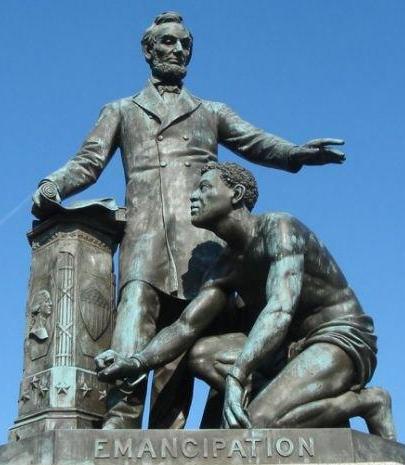
Image Credit- Wikipedia
Freedom today may look different, but it is no less urgent. The feminist movement today is about women’s right to education and their right to equal pay for equal work. It’s about the freedom to say no without consequences and yes without being judged. It is meant to break the constraints imposed by society. It is a privilege to be in a public space without being terrified. It is liberty to choose one’s own way, whether this involves having a job, staying at home, or doing both. To understand why empowerment must go beyond surface-level symbols, explore Empowerment Is Not Pink Lipstick and Hashtags.
Malala Yousafzai was only fifteen when she was shot for advocating girls’ education in Pakistan. Ruth Bader Ginsburg challenged laws in the U.S. Supreme Court that treated women as dependents instead of equals. These tales reflect Lincoln’s opinion that liberty is not bestowed; it is claimed, usually at the cost of one’s life. They embody the same Lincoln spirit, reminding us that every nation must continually reevaluate freedom to match its aspirations.
Thus, equality was, and still is, the boldness to proclaim that the right has to be experienced, not merely announced. Nonetheless, in several regions of the globe, the battle for women continues. But they continue to confront the tyrannies, and at the same time, they break the patriarchy.
Fairness: A Promise Still in Progress
Lincoln’s quest for fairness was moral and political. He stood against a system that dehumanized people by denying them basic human rights. He dreamt of a “new birth of freedom and fairness” that would sustain democracy. He envisioned a society where merit came first, and birthright was nothing. A world where their aristocratic lineage does not determine a person’s justice and worth.
But even in his time, fairness was just a fragile promise. The idea of justice was nothing more than a shadowy hope. More than a century and a half later, that promise still waits to be fulfilled. The gender pay gap persists globally. Maybe it has taken a different form and name now, but it cannot be denied. Women still lack political representation, and reaching the top of corporate leadership is still a dream for many. We have conveniently ignored the role of women’s unpaid labor in our economic statistics. Though they are obliged to handle household chores and take care of their parents or family members. Yet, it is recognized as the foundation of any society.
This condition of society is reflected by the World Economic Forum’s 2024 Global Gender Gap Report. According to it, if we continue to grow at the same pace and if the current trend continues, “It will take over 130 years to achieve full gender parity.” That means no woman alive today will see true equality in her lifetime — unless we accelerate change.
But fairness isn’t just about numbers. It’s about culture, empathy, and opportunity. Feminism extends that moral revolution to gender relations, demanding fairness not only in law but in life.
At Girl Power Talk, fairness isn’t a policy on paper — it’s a lived practice. Young women are not just given seats at the table; they’re invited to lead the conversation. The organization operates on Lincoln’s core belief that equality must be active, not theoretical. Every project, mentorship, and leadership initiative is designed to ensure that talent and purpose — not gender or background — determine success.
We also see fairness in the quiet revolutions happening every day. It exists when fathers teach their sons to respect consent, when men advocate for paid parental leave. It thrives when women lift other women rather than compete in scarcity. Fairness begins when equality stops being a “women’s issue” and becomes a human one.
The Power of Voice: A Modern Emancipation
Which weapon was the strongest of all for Lincoln? The answer is very simple: his words. His words were the ones that stirred hearts, shifted moral indifferences, and led all to think about freedom. He was fully aware of the power that words could have over people. He was aware that the words that people feared or dismissed could actually awaken conscience and alter a nation’s destiny. From his Emancipation Proclamation to the Gettysburg Address, he was not only an eloquent speaker of freedom, but he also called freedom into being.
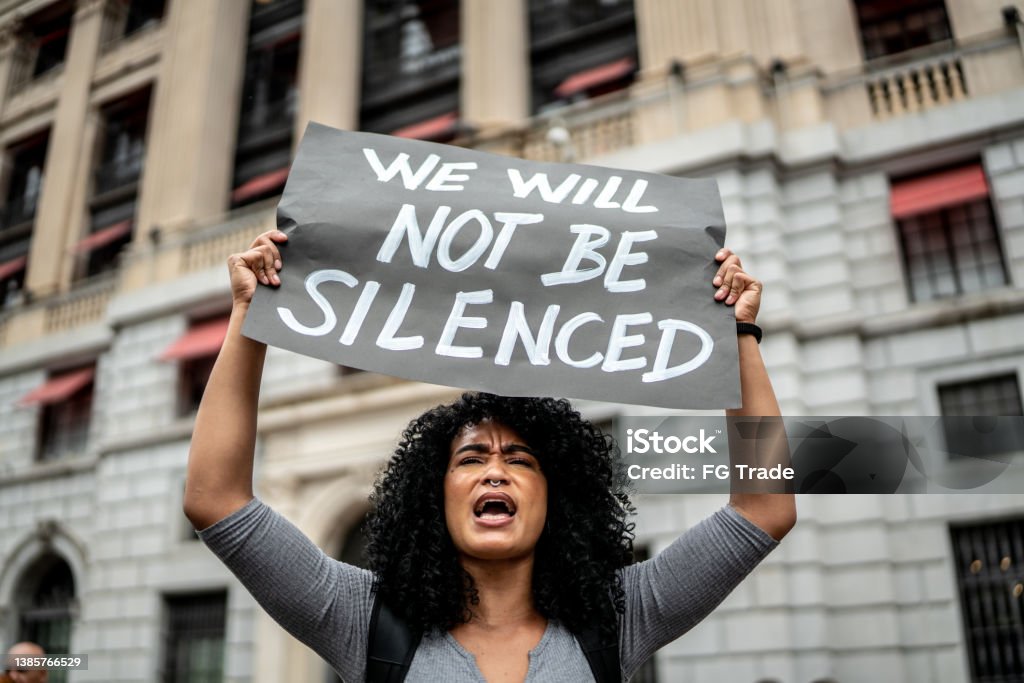
Image Credit- Getty Images
Similarly, feminism’s biggest revolution in the world today is voice. It is the dare to speak, to write, to protest, and to question. To name what has been hushed. To regain the right to tell the truth. To ask in loud demands what has been whispered. The feminist echo of Lincoln’s vision reverberates through every voice that is heard. Spanning from the suffragettes a hundred years ago, who chained themselves to railings. To the #MeToo movement today, whereby survivors all over the world have been united regardless of their industry. When women speak, they not only tell us their stories but also characterize the sound of power. It is recognized each time a woman allows herself to be heard. When she says yes to the truth instead of advocating for silence. It is heard in the very classrooms where girls are fighting for their right to education. In every boardroom where women assert their claim to the position. Also, in every society where the youth are speaking against the gender-based discriminatory practices.
The real strength of voice is exactly that: it changes the suffering into a quest for a purpose. Even with smaller volumes, voices are really impacting the world, changing it. When a girl in Africa chooses to have a podcast to talk about the issues of menstrual health. Or when a girl in Kenya develops an app for reporting gender-based violence. Or when a student does a bizarre thing of challenging those sexist textbooks — that’s the feminist echo of Lincoln’s vision. Every single act of expression contributes to the lowering of the walls of silence, hence bringing us closer to freedom.
Therefore, Lincoln believed that the existence of a democracy was only on the condition of a dialogue. Brave citizens would be the ones who would speak the truth to the very people who had the power. Thus, real feminism is about giving a voice to those who have been historically silenced.
Reclaiming Lincoln’s Legacy
If Lincoln were alive today, he would see that the battle for liberty is still ongoing. He would probably consider feminism as the development of his principles rather than a deviation from them. The conflict over slavery was the first step towards the recognition of human rights for all. The evil doers may have changed, but the call for justice has not diminished.
For a deeper look at the values that shaped his leadership and why he remains a moral compass for many, read Why We Love Lincoln: Lessons From Character, Resilience, and Humanity.
The feminist aspect of Lincoln’s vision is not about looking back — it is about going forward with his values. It is about guaranteeing that liberty is not granted to a few and justice is not applied to some. Every human being, no matter his or her sex, is respected when speaking. Feminism takes over that torch, claiming that freedom and fairness must be total, not fractional, not selective, not conditional.
To honor his legacy, we must continue to ask: Who is still excluded from freedom today?
Perhaps the girl whose dreams have been considered unreal just because they do not fit somebody else’s expectations. The woman whose gender is the only reason for her being denied the right to education. The LGBTQ+ person who has lost a job because of the way they live. The girl whose aspirations are not only not supported but also actively denied by the society she lives in. Empires of freedom will not be able to arise until the liberation of all is done. The understanding of all and the point of justice cannot coexist as long as some remain unheard.
And here is where Lincoln’s vision and feminism come together — in the realization that justice is not a given. It is the result of compassion, accountability, and the bravery that comes with thinking outside the box. Justice lies in tackling inequality that is ‘hidden’ in plain sight.
Image Credit- Canva
The Work Ahead: Reimagining Equality
The path to equality is not linear. It has been dragged back and forth, and some of the conditions actually demanded the use of force. Nonetheless, when the voices come together, the movement will be up the hill for sure.
In the 1800s, Lincoln reset America’s concept of freedom. Now, in the 21st century, feminism is reestablishing itself worldwide over the coming century. Both campaigns rely on the theory of moral evolution. Both thrive in the belief that mankind must continuously grow its area of compassion till nobody is left outside it.
That means raising boys to be allies and redesigning workplaces to support working parents. Its about increasing women in leadership, and ensuring equality education changes minds—not just checks boxes. It also implies that the feminist paradigm is not a battleground between women’s “victory” and men’s “defeat”. Rather, it is about a world where no one has to lose their humanity to have their rights recognized.
As the feminist writer Chimamanda Ngozi Adichie puts it, “Culture does not make people. People make culture.” Lincoln was aware of that, too. Laws can liberate individuals, but it is culture — our collective values and voices — that maintains their freedom.
Investments in digital access and economic equality are not just moral imperatives — they are powerful economic levers. According to the UN, the global gender digital divide could add an estimated $1.5 trillion to the world’s GDP.
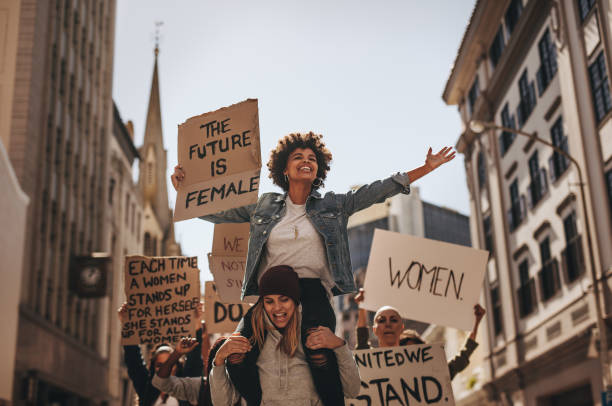
Image Credit- Getty Images
A Shared Legacy
Lincoln’s words ripple through time, expressing a universal truth that freedom and justice are the most precious goals of mankind. Feminism is their living continuation — a reminder that equality must never sleep.
At Girl Power Talk, we see that truth every day. In young leaders who mentor one another across continents. In women who rise in industries that once shut them out. In conversations that transform workplaces into communities of purpose and respect.
Freedom. Fairness. Voice. These were Lincoln’s pillars, and they are feminism’s too. Together, they build a world where dignity isn’t a dream — it’s a daily reality.
Conclusion
Freedom is our heritage. Fairness is our duty. Voice is our power.
And when we use all three, we don’t just echo Lincoln’s vision — we fulfill it.
