
CATEGORIES
#Family & Relationships #Fatherhood #ParentingOverview:
-
- Fatherhood reshaped through raising a daughter, not expectations
- Presence matters more than perfection in parenting
- Learning patience, empathy, and emotional awareness
- Redefining “home” through a child’s sensitivities
- Growing a deeper understanding of spouse and self
- Cherishing the fleeting time as a child’s whole world
- Fatherhood reshaped through raising a daughter, not expectations
In this article, a father reflects on the quiet, transformative lessons learned from raising his daughter. From understanding her sensitivities and redefining what “home” means, to discovering deeper empathy for his wife and himself, Johnny Borrelli’s account shows how true fatherhood isn’t about perfection but presence. It’s a candid, emotional account of patience, growth, and the fleeting beauty of being your child’s whole world.
When my daughter was born, I thought I understood what fatherhood would look like. I was wrong. Seven years in, I’ve discovered that raising a daughter teaches you things no parenting seminar could capture—especially what it truly means to be present.
The Gift of Adoration
My daughter doesn’t see me as a figure to idolize from a distance. She sees me as someone she can admire, someone she cannot bear to disappoint. When I show up at her school lunches, the entire world stops in her eyes. She smiles and gets excited as if she hasn’t seen me in months. This reaction used to confuse me. Now, it humbles me.
There are no time limits on how long she wants to spend with me. She would choose to be with me every single day if she could. Together, we’ve created something sacred in our home—a place where she feels completely safe. It’s where she acts herself, lets everything out, and doesn’t have to perform or pretend. I’ve come to understand that this freedom, this willingness to be vulnerable with me, is one of the greatest gifts a father can receive.
What Home Really Means
At age five, my daughter already understood something profound: the world has rules about how to behave, and home is where you don’t follow them. Two years later, at seven, she’s even more aware. She holds me accountable—not just for what I say, but for what I do and fail to do. She notices everything. She remembers everything. And she expects consistency.
Home, I’ve learned, is not just a place. It’s an outlet. It’s where we all bring our rawest selves, and for my daughter at this stage in her life, it’s where she can finally exhale. What strikes me most is that even at her age, she already knows this instinctively. The same child who is “the perfect kid” at school—sweet, well-behaved, no issues—is also the one who melts down at home over the smallest things: choosing a shower instead of a bath, a clothing tag, the wrong socks, pants that don’t fit right. This isn’t defiance. It’s trust. She trusts that home is where it’s safe to fall apart.
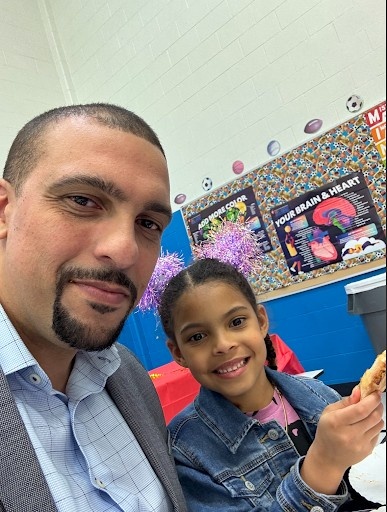
Father Daughter- Johnny Borrelli with his daughter
The Things I Had to Learn
I didn’t understand my daughter’s sensitivities at first. What looked like irrational tantrums around 10 a.m. were actually hunger signals. What seemed like stubbornness about clothing was actually tactile sensitivity—something I later learned had a name. Loud noises, toilet flushing, car engines, tags, poorly-fitted socks, specific textures on her legs, seams in her pants; each one triggered a response I couldn’t comprehend as her parent.
At age four, I started paying attention—really paying attention. There were days when she would scream for up to ninety minutes straight—especially when we had to wear dance recital costumes. There were car rides where she fought carseats and seatbelts, where she wanted to be naked at every opportunity. I thought she was being difficult. I was being impatient.
These sensitivities revealed something that parenting books don’t prepare you for: my daughter experiences the world differently than I do. And instead of trying to change her, I had to learn to accommodate her. We started buying the same shoes, just a size larger. We switched her lunch schedule to feed her earlier. We learned which pants worked and which didn’t. We held her legs before sleep and upon waking, understanding that her body needed a kind of regulation I’d never considered before.
At school, none of this was an issue. She was perfect—no behavioral problems, no meltdowns. But at home, she was struggling. And I had to make a choice: be frustrated by her behavior, or curious about its cause.
Over time, as I learned patience—as I chose patience—these intense moments began to diminish.
Little by little, they faded. And looking back now, I feel a complicated mix of emotions: gratitude that I eventually understood her needs, and sadness that I didn’t get there sooner. But also awareness that my own growth as a father has directly impacted her ability to manage her world. When I show up with patience and sensitivity, she learns that it’s safe to work through her challenges. When I lose my patience, I rob her of that lesson.
Understanding My Wife (and Myself)
Raising a daughter has taught me more about my wife than any educational seminar ever could. Watching my daughter’s emotional complexity—her sensitivity, her depth of feeling, the way she often processes the world through relationships and nuance—I finally understand aspects of my wife I’d been missing for years. And in understanding my daughter better, I’ve become a more empathetic person overall.
Communication, I’ve learned, requires much patience and sensitivity. It’s not about getting your point across quickly. It’s about meeting someone where they are, understanding their needs, and responding with presence rather than reaction.

A picture of the Borrelli family
The Bittersweet Reality
I know what’s coming. In a few short years, the teenage years will arrive, and my daughter won’t be as excited to see me. She won’t smile the same way at school lunches; she’ll likely be more annoyed, more withdrawn, less interested in my presence. That’s the journey of growing up, and I know it’s inevitable.
This knowledge makes me sad. It also makes me fiercely determined to be present now, in this moment, while she still adores me without reservation. Because I know these days won’t last forever.
My New Role
Today, I’m not just her father. I’m her basketball coach, her Girl Scout troop supporter, her music fan. I’m the one building the memories that will become the stories she tells her own children someday—and the stories her children tell their children. I’m planting seeds that will grow through generations.
All I want is for her to remember these moments as I do as a child—with fondness and warmth. I want her to share these memories with her own kids, to pass down not just stories, but the feeling of being loved unconditionally by a father who showed up for her.
A Confession of Love
Having children is unbelievable in ways I never expected. There is nothing in this world that I love and cherish and care for more than my daughter. There’s nothing I wouldn’t give up for her. She has changed not just my life, but my perspective on how I communicate, how I listen, how I love.
My daughter forgives me for my imperfections. To her, I’m just her “big teddy bear dad”, the one who’s a goof, who’s present, who cares deeply about her day. And I am grateful for that grace every single day.
What I’ve realized about being a girl dad is this: it’s not about being perfect. It’s about being present. It’s about learning her language, understanding her needs, and showing up again and again, even when you get it wrong. It’s about knowing that right now, in this moment, she thinks you’re her whole world.
And someday, when she’s older, I hope she’ll understand that she was mine.
I’ve got her back forever. And my greatest hope is that she’ll always know it.
