
CATEGORIES
#Health and Wellness #Social Impact #Well-BeingOverview:
- Sensory marketing capitalises on human senses to influence emotions and decisions.
- Brands create deeper recall by engaging more than one sense.
- Emotional memory takes over rational judgement.
- Sensory branding helps products stand out in a saturated category.
In most rural communities, oral diseases remain largely undiagnosed and untreated. Low and middle-income groups miss out on oral treatments due to a lack of insurance, fewer dentists, overconsumption of sugar, and less water fluoridation. The higher rates of dental caries are proving to be even more debilitating for the livelihood of many people.
Amidst rising healthcare costs, volunteer dentistry is an amalgamation of professional treatments with civic engagement. Volunteer dentistry prioritizes spreading dental health awareness, providing clinical instructions, distributing dental care kits, and offering affordable dental care. This article illustrates how volunteer dentists bring about real change that transcends socio-economic borders.
The Need for Volunteer Dentistry
Our oral cavity is central to the quality of our interactions with the physical world. The appearance of our teeth reflects the quality of the lifestyle we lead. According to the World Health Organization (WHO), oral diseases affect around 3.7 billion people. Consequently, untreated tooth decay in permanent teeth has become one of the most common health conditions in the world.
As with most diseases, oral diseases are most prevalent in children living in poverty, racial minorities, the destitute elderly, and other marginalized groups. This has a ripple effect on their way of living. Children are unable to go to school, eat their required nutrients, and concentrate on their studies. Like a snowball slowly accumulating its mass, the underprivileged sections of society face institutionalized barriers to accessing preventive and other requisite dental services.
Poor dental health and expensive treatments take a heavy toll on the productivity and confidence of many young adults in low- to middle-income groups. The pressure around teeth appearance seeps into decreasing class performance and botched interviews. Apart from dental aesthetics and pressing toothaches, oral health remains largely neglected by a staggering number of people. This reflects a damning indictment of global health aid initiatives that often prioritize other health issues over oral health.
Who Are Volunteer Dentists?
Volunteer dentists are dental professionals whose primary objective is to offer dental care for underserved communities worldwide. Their mission is simple: To ensure unbiased oral healthcare for everyone, regardless of age, sex, gender, religion, or race. From general dentists, specialists, and hygienists to dental students, the practitioners of volunteer dentistry are diversely equipped to educate and treat the masses on dental upkeep.
They are encouraged by a multitude of reasons, including but not limited to: a selfless desire to help improve oral health across boundaries, hone their skills in dynamic contexts, and gain a broader understanding of dental health problems in cross-cultural spaces.
Over the last two decades, the call for better oral health across the globe has been heeded by many organizations. For instance, Dentists Without Borders aligns local and volunteer dental teams for professional cleanings, extractions, and fluoride treatments for residents across several communities.
How Volunteer Dentistry Works
Volunteer dentistry requires efficient planning and execution to treat people in need. This means setting up mobile dental clinics for easier transportation, selecting appropriate locations that have been historically untreated, securing permits from local authorities, and ensuring widespread accessibility for patients. Volunteer organizations often partner with dental supply companies to secure dental tools and supplies for various treatments. Equipment and dental care kits are acquired through donations and discounts.
The scope of oral care offered by volunteer dentists is often customized to the specific needs of the community. The only constant services are cleanings to help prevent periodontal diseases and extractions for critical and urgent cases involving advanced tooth decay and infections. Moreover, preventive practices such as fluoride varnish applications can dramatically reduce cavity rates in areas with high risks.
Stories of Impact
Last year, a research team led by The Conversation discovered that fluoride varnish applications in lower-income and high-risk communities saw a drop in new cavities by 32% in permanent teeth and 25% in baby teeth. Fluoride varnish applications appear as a veritable solution to dental caries due to their affordability, accessibility, and effectiveness.
The positive impact of volunteer dentistry has been considerably undervalued. On ground level alone, countless children have benefited from the diligent efforts made by these conscientious practitioners. A highly successful program known as Give Kids A Smile helped around 340 elementary school children from the Jackson Public School District get cleanings and fluoride treatments by the School of Dentistry students.
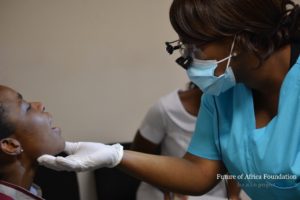
Many volunteers find themselves enriched with not only experience but warmth and satisfaction.
Illustratively, here’s what Michael Passof, a volunteer dentist from Montreal, had to say about his experience with Global Dental Relief: “As a dentist, I have treated and cared for many patients; however, nothing can compare to the sense of fulfillment that comes with volunteering your time and skill to ease the pain and suffering of others. It never ceases to amaze me what can be accomplished when surrounded by dedicated, caring, and talented volunteers, such as those I met in past international dental clinics with GDR.”
“It has been 10 years since going to a dentist due to the expenses from my last dental experience. I knew I really needed dental care. Today I fearfully went for my first visit. The staff was absolutely amazing. Kind, respectful, professional, and patient. The dentist explained everything and gave me ideas to fix my teeth at costs that are affordable. I am so grateful for the staff. I wish I had gone sooner. I’m thankful for not being judged. Thank you. I feel blessed today.”
~ Faith F, a patient from volunteer dentist campaigns held by Mercy Dental Missions.
Challenges Faced
Motivated by their altruistic need to help, volunteer dentists spend long hours in mobile stations treating patients continuously, often without taking breaks longer than 15 minutes. While emotionally fulfilling, volunteer dental campaigns are incredibly grueling for practitioners. Volunteer organizations also require a lot of manpower to figure out solutions for customs restrictions, limited water, and power supplies.
On the other hand, international dental relief organizations face their own barriers. Many rural communities across the globe are resistant and untrusting of modern oral treatments. Rural elders prefer traditional remedies, and the young generations tend to follow their lead. Locals also fear the stigma associated with care perception and accepting “help from charity”.
Volunteer dentistry further poses the problem of longevity regarding the prevention and avoidance of dental problems. Most volunteers spend their time providing pain relief and short-term immediate care for the patients. Due to time and geographical constraints, they also spend only a few weeks at a particular location. In this short period, only a handful of the entire local community get to be treated. Furthermore, oral upkeep and dental treatments tend to fall off the to-do list only a short while after the volunteers leave.
The Bigger Picture: Creating Lasting Change
While volunteer dentistry encourages people to maintain their oral health, it often serves merely as a short-term solution. The persistent issues surrounding the sustainability of volunteer dentistry can be resolved through numerous ways. First, volunteer dentists must seek and align their campaign with local healthcare networks.

Establishing an effective framework with the local health professionals will strengthen community trust and enable long-lasting hygiene education programs. Local authorities and government institutions must also recognize the significance of oral health along with other health concerns. Public budgets can be updated to include dental relief treatments and be associated with volunteer organizations to ensure oral care spreads widely. Furthermore, tele-dentistry can be utilized for reaching all the corners of the world, even highly mobile populations or areas with extreme weather conditions.
Conclusion
Dental professionals seeking volunteer opportunities can reach out to organizations such as Alliance for Oral Health Across Borders, International Medical Relief (IMR), Global Dental Relief, and Dentists Without Borders, amongst many other local dental relief campaigns.
Ultimately, improving global oral health shouldn’t fall on dentists alone; other members of society must do their part through donations, sponsorships, and publicly supporting awareness campaigns. Spreading smiles from children to the elderly is the raison d’être of volunteer dentistry
