

CATEGORIES
Education and Life Skills | People We Admire | Social ImpactOverview:
In this candid interview, Pradeep Poonia shares his journey through India’s education system, from Kota and IIT to becoming one of the strongest voices critiquing exploitative edtech models. Drawing from personal experience, activism, and systemic insight, he reflects on how education has been reduced to a business, how social media and AI are reshaping attention, and why meaningful reform requires courage, resistance, and collective awareness.
Can you tell us about your childhood and how your education shaped who you are today?
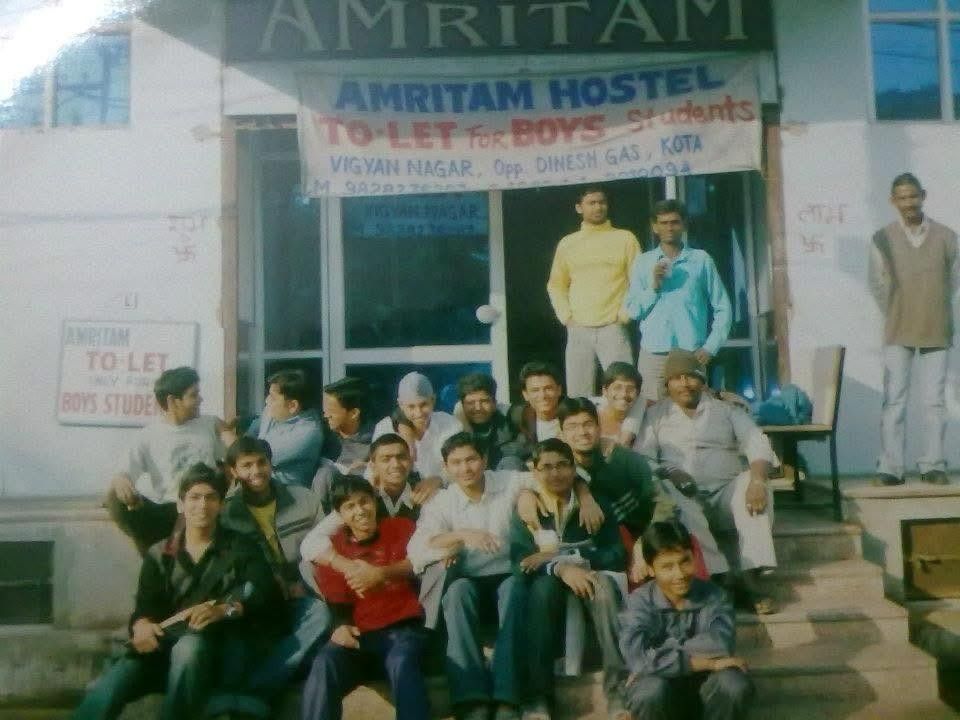
I was raised in a middle-class family. My early schooling was modest, but after the second standard, I moved into a better school. Later, I went to Kota, Rajasthan, during the peak of the coaching culture. At that time, not many students from my hometown chose that path, so it felt like a big leap. Kota was intense, but it shaped how I saw competition, pressure, and the cost of chasing a single outcome.
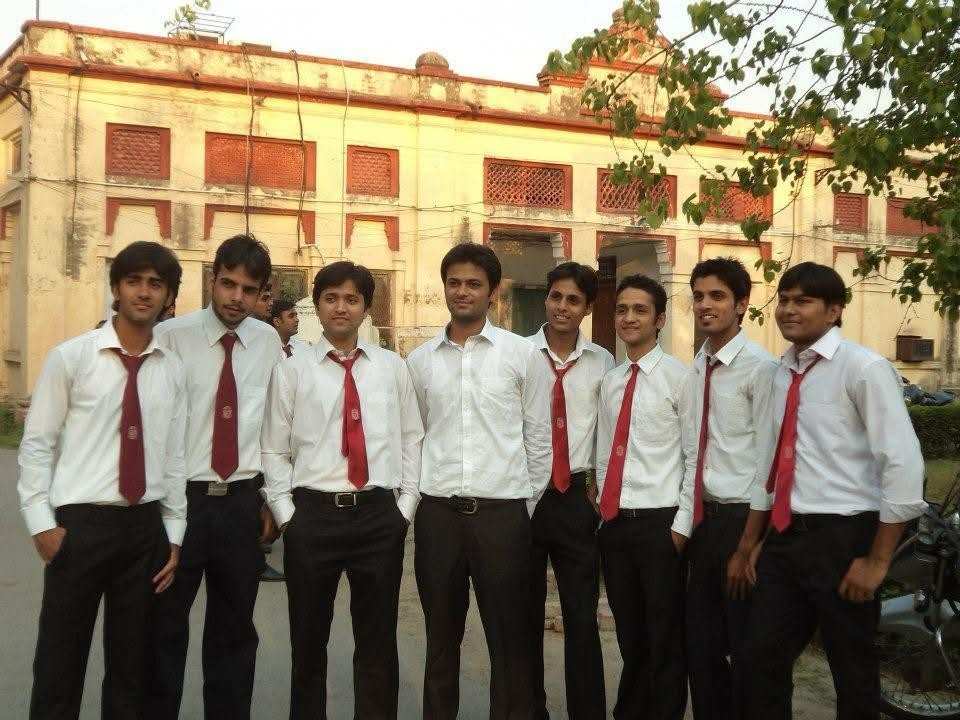
From there, I went to IIT, took up multiple jobs, moved into the tech sector, and eventually became involved in what many would call activism. Looking back, my journey through these institutions helped me understand how deeply flawed our education system is, not just structurally, but philosophically.
How did your professional journey begin, and what led you to the edtech space?
I started my career in IT as a software developer. At one point, I prepared for the UPSC civil services, believing that change could come from within the system. After nearly two years, I realised that path wasn’t for me.
That’s when I decided that if I wanted to make a difference, I would try to do it in the private sector. I joined an edtech company and quickly realised that its core focus wasn’t education or technology. It was sales. Schools were being sold products that students didn’t even use. I talked to the students, asking them if they even knew that their school had this e-learning product. They told me our teacher keeps it in the corner and we are not allowed to touch it.
So, “e-learning” often meant a smartboard sitting unused in a corner while parents were charged extra fees. Seeing this disconnect firsthand made it clear to me that education, specifically ed-tech, had become a branding exercise rather than a learning process.
From there, I realised how this whole organised education system works. I worked there for a few more months and then left that company. As for the modern ed-tech, in terms of brands like ByJus, etc. I first came across them in COVID through advertisements, which became my first introduction to them.
What is a project you worked on or something you observed that shaped your understanding of the edtech sector?
In edtech, one of the biggest problems is how content is produced. In many companies, content creation is fragmented across multiple teams, writers, editors, designers, presenters, and marketers. Somewhere along those layers, the soul of the lesson is lost. There is a huge mismatch between the teams and the different people working on it.
In contrast, YouTube creators often work end-to-end on their content. They understand the topic deeply and control the narrative. That’s why their videos feel more alive. Edtech companies prioritise speed and scale over depth.
From this example, I proposed to build a small team and train them to have control of the whole pipeline. However, the idea was never implemented because the goal was to sell the availability of the “complete curriculum” to schools, and not to ensure students actually learn.
What policy-level changes could improve accountability in edtech?
Right now, everyone is selling yearly courses from 2-3 lakhs to 2-3 thousand. Once a person buys a course, the accountability of the provider is over because they don’t have to keep selling it to them.
A simple solution would be to enforce monthly or quarterly subscription models instead of long-term prepaid courses. If parents could opt out easily, companies would be forced to care about whether students are actually learning.
Right now, once a course is sold, students are often forgotten. Mentorship systems are advertised but rarely implemented meaningfully. Monthly accountability would keep companies on their toes and innovate to make sure students actually derive value from their platform to keep coming back.

You faced serious backlash for criticising large edtech companies. How did that unfold?
Initially, I wrote anonymously, and no one in my family or friends knew. But once my identity was discovered, the response escalated quickly. It started with a senior speaking to me, advising me against continuing my criticism. But I persisted, using online platforms as my main tool.
I was surprised that at that time, there were no critics for companies at that scale. But when my content was taken down across platforms, including on Reddit, Twitter, LinkedIn, and YouTube, multiple times, I understood how critical content was routinely taken down by these companies.
What shocked me was how efficiently this censorship happened. Entire channels disappeared overnight and reappeared just as easily when journalists stepped in. That’s when I realised how power actually operates behind the scenes in digital spaces.
My family only found out when the company sued me. But what really kept me going, in part, was the power of social media itself, ironically. Unlike earlier whistleblowers, I could reach people directly. Every legal move against me generated more public scrutiny and bad PR for the company involved.
Eventually, they realised that silencing me was doing more harm than good, and the case was withdrawn. But that period taught me how fragile free expression can be when corporations hold disproportionate power.

What is your current focus or idea you are developing?
The idea I am currently exploring is what the meaning of education is, especially with AI and social media. What education used to mean was knowing the capitals of all states in the world, repeatedly doing maths and physics questions, all of which taught us the importance of problem solving, critical thinking, and enabled us to gain confidence through that level of practice.
Today, with AI and the ability to get yes or no answers, the ability to logically progress from point A to B is being affected. And our curricula are lacking in that aspect as well. We have failed in teaching basic subjects such as civic sense or becoming good citizens, but are instead just preparing students to crack entrance exams. Students do not know how to think beyond degrees or marks, and that is also not the focus of our systems at all.
What do parents and students still fail to see about education and technology?
What most parents and students fail to understand is that social media platforms are not designed to help them in any way.
I tell many parents something very simple, and it shocks them. I say: don’t obsess over marks, ranks, or percentages. If by the age of 16 or 18, you have managed to ensure that your child is not addicted to social media, you have done an extraordinary job. That achievement matters more than scoring 95% cracking any exam.
We are already seeing very disturbing trends. Children are focused on becoming famous. Pre-teen children are being exposed to content that is completely inappropriate for their age. Parents themselves are sometimes using their own children as content, pushing them into reels and videos for likes and validation. AI is now being used to make children look “cuter,” which raises serious ethical and psychological concerns. The question we should be asking is: why is a child not enough as they are?
For children, social media is their world and the influencers their ideals. Their lingo has come from the internet, and they are not learning a lot from it. In the doomscroll, after hours, you won’t even remember what you watched.
Governments could intervene if they wanted to. Social media is just as addictive as cigarettes, alcohol, or drugs, substances that are banned for minors. But no such restriction exists here. Platforms have complete control over what appears next when you scroll. At the very least, governments could enforce rules ensuring that a significant percentage of content shown to minors is educational or constructive. But they won’t, because there is no political will to do so.
As a result, a child’s psychology today is effectively in the hands of an algorithm. Whatever that algorithm decides to reward is what the child learns, imitates, and aspires to become. That is an extremely dangerous place for any society to be.

What do you think are some of the greatest challenges facing our education system?
To name a few, the government investment in the sector is very limited. An educated population is more vocal and demanding of their rights, and that is not on any political agenda.
Moreover, ed-tech and coaching companies are gaining profits on a bottleneck. The worse the health of our education sector. The fewer the seats or opportunities, the more the dependency, and the greater their profits. This is a deep structural flaw that needs to be addressed.

What advice would you give to young people navigating today’s system?
When people hear the word corruption, they usually associate it with fear, helplessness, and despair. And rightly so. Corruption creates an unequal system where power and money dominate. But what many young people don’t realise is that corruption is not indefinite, and they have the power to challenge and expose it if they are resilient enough to do so.
There is so much corruption in this country that there are endless cracks through which truth can emerge. One can expose food safety violations, education scams, police misconduct, local governance failures, and corporate wrongdoing. The system is fragile because it relies on silence and distraction. That said, it is risky, and that risk is real. Which is why many young people hesitate.

The bigger problem, however, is distraction. Today’s youth is constantly divided, left versus right, ideology versus ideology. If you look closely, both sides actually agree on most core issues. Almost everyone wants cleaner air, clean drinking water, better education, jobs, infrastructure, safer cities, and less corruption. These are common goals.
But instead of focusing on these shared priorities, we keep fighting over three or four polarising issues. Neither side is willing to compromise even temporarily. And that suits those in power perfectly. While people argue endlessly, nothing changes. Distraction benefits power. Division benefits authority.

If young people could step back and say, “Let’s focus on what we agree on for even one or two years,” real change could begin. Elections will come and go, ideologies will remain different, but basic human needs should not be politicised. Unfortunately, the system is designed to keep youth emotionally charged, angry, and distracted rather than united and focused.
Conclusion:
Pradeep’s journey reveals an uncomfortable truth: education in India isn’t failing accidentally it’s not a bug, it’s a feature. Through lived experience and resistance, he challenges us to rethink learning, accountability, and courage in a system that rewards silence more than integrity.
