
CATEGORIES
Inclusion and Impact | People We Admire | Women EmpowermentOverview:
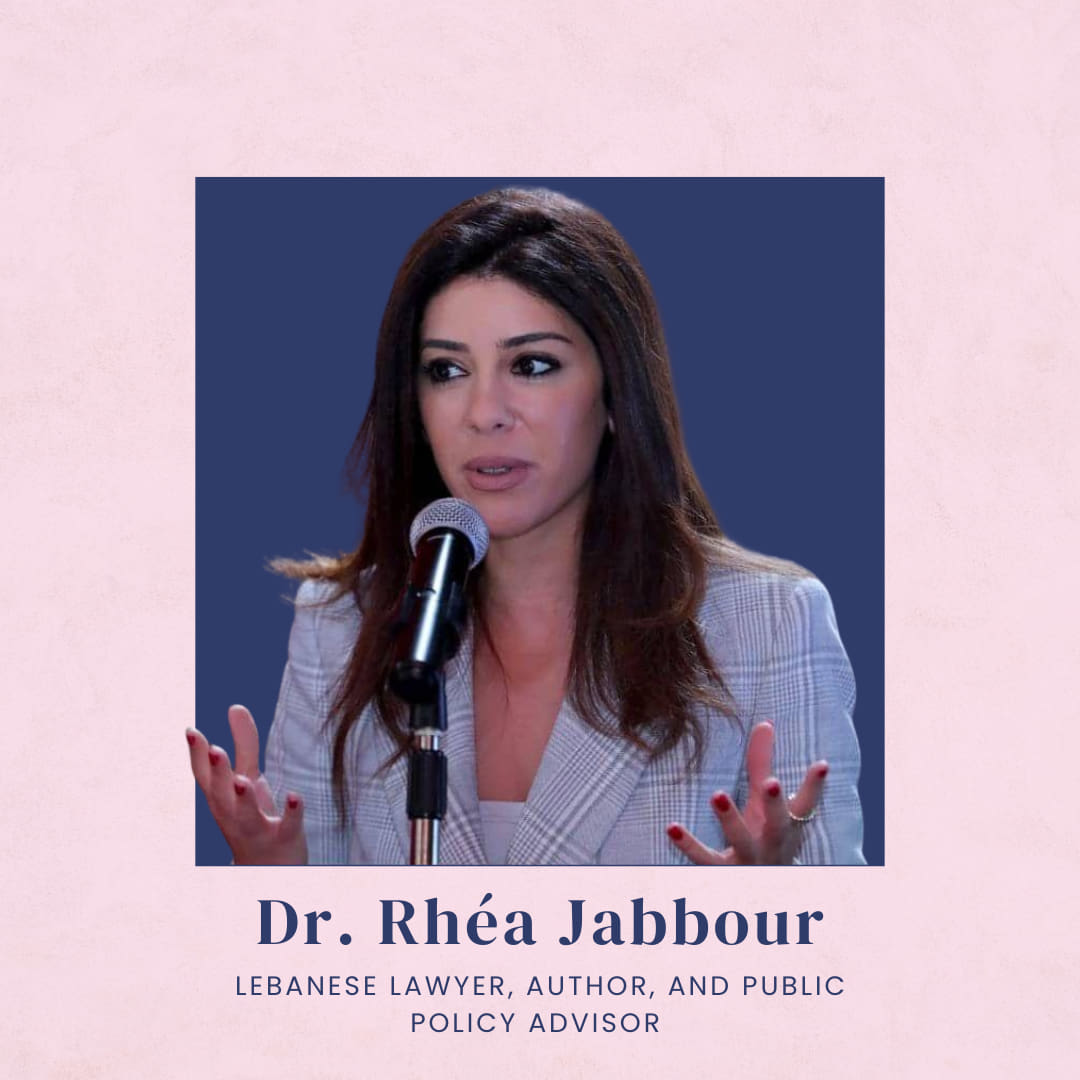
- In this conversation, she reflects on the inner voice that guides her, the power of manifestation, and why holistic change through policy, awareness, and societal change lifts us all. Rhéa Jabbour’s story is one of intuitive courage and multidisciplinary integration.
- Growing up attuned to life’s unfairness, Rhéa channeled her innate empathy into a dynamic, cross-border legal career spanning New York, Lebanon, and Dubai.
- Rhéa has built a dynamic career as a cross-jurisdictional lawyer, policy advisor, mediator and children’s books author.
- She blends her legal skills with advocacy for children’s and women’s empowerment and education against discrimination and harassment.
1. You are qualified to practice law in New York, Lebanon, and Dubai, and you have worked in different roles and capacities. Your past and current work spans business law, commercial law, entertainment law, public policy, and mediation. Can you walk us through your professional journey and what inspired you to pursue such a cross-border, multidisciplinary legal career?
I’ve always been sensitive to unfairness. While I learned early on that life is unfair, there are some forms of unfairness you can try to prevent at a small scale.
From a young age, I was drawn to the notion of inclusion, whether it was by noticing social exclusions or working as a camp instructor with children from diverse backgrounds. Although I’m not a typical lawyer, and I don’t like being confined to one box, the idea of justice and inclusion led me to law in the first place.
During my first Master’s degree at McGill University, I took a class in discrimination law, which became a turning point for me. I later pursued a PhD on lookism, which is essentially discrimination based on physical appearance, in the workplace, through a comparative analysis of the French and American employment law. After the completion of my PhD, I pursued another master’s at Columbia University, New York, and joined the NY State Bar association. Over the past 15 years, I worked in different roles: associate in law firms, in-house counsel in multinational companies, independent legal consultant for the World Bank and other clients. I worked across different industries and practices such as public policy, family businesses, finance, investment management, retail, fashion, beauty and film production.
Living between these two realities, the unconditional acceptance at home and the conditional acceptance of the outside world, shaped me profoundly. It made me observant, empathetic, and eventually fearless. Most importantly, it taught me that silence can wound deeply, while speaking up has the power to heal, not just oneself, but entire communities that have been taught to feel unseen.
2. Can you tell us more about your thesis and PhD on lookism in the workplace? How does that research continue to influence your work today?
My thesis was primarily legal, focused on employment law, but lookism and discrimination in general are inherently multidisciplinary. My research also drew from sociology, human resources, marketing and psychology especially around how unconscious bias shapes hiring decisions and workplace opportunities.
What struck me most was how early these biases are formed. The stories we read, the movies we watch, and the messages we absorb as children shape how we associate physical traits with character and ability. Over time, this translates into unequal access to and missed opportunities not just at work, but across life, including access to education, healthcare, and social interactions. What begins as bullying in childhood often evolves into workplace discrimination and social exclusion later in life. Bullying is a form of harassment, and harassment is a form of discrimination. That insight led me to write a children’s book on bullying, ‘The Little Voice Inside’. The story is about a bird that looks and sounds different from the others. He is mocked repeatedly because he is fragile, doesn’t fit in, and cannot fly properly. He feels isolated, but throughout the story, an inner voice empowers him to believe in himself and stand up for who he is. Throughout the story, he realizes that what was perceived as a flaw is actually one of his superpowers.
Through this story, I try to raise awareness around discrimination, harassment and exclusion at an early age.
Bullying is widely recognized as a serious problem because it causes immediate and long‑lasting emotional and physical harm, and in the most tragic cases, its impact has been so devastating that it has contributed to children and teenagers losing their lives to suicide.
At its core, my work on lookism reflects what has always driven me: inclusion and equality, particularly in employment. That’s why I try to align almost everything I do with these values. It’s why I wrote my first children’s book, and why I moved into public policy focused on women’s rights as employees or entrepreneurs.
3. From your experience, how can we empower women worldwide while helping them preserve their unique strengths and support one another professionally?
My work as a legal advisor on women’s rights at the World Bank for over five years focused largely on policy. I concentrated on creating an enabling environment through legal and policy reforms, drafting laws and amending existing laws. I also worked closely with the private sector, civil society, and academia to identify gaps in women’s economic empowerment and figure out how to address them and also to build capacity to women entrepreneurs and employees through awareness sessions and trainings.
What I realized over time is that policy work alone is not enough. Laws are essential, but if women and girls do not feel empowered at their core, they may never fully benefit from those laws and policies. That’s why empowerment has to be approached in parallel across multiple dimensions. You need policy-level reform, but also social change. This means raising awareness, changing mindsets, and challenging deeply rooted gender norms. It also means working within institutions and companies by training human resources, ensuring fair practices, and sometimes even introducing affirmative measures to truly level the playing field. Creating safe environments, free from violence and sexual harassment, is another critical dimension that I worked on extensively.
Finally, and to me this is the most important dimension, education. Empowerment has to start early. Working with children, on their conscious and subconscious beliefs about gender roles, possibilities, and futures, is essential if we want long-term, sustainable change.
4. How do your interests outside the law contribute to maintaining balance and perspective in your professional life?
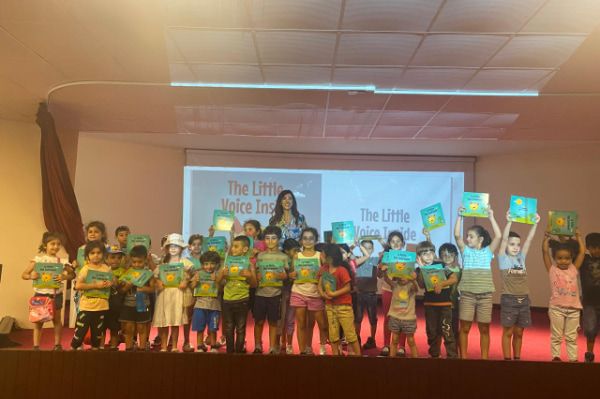
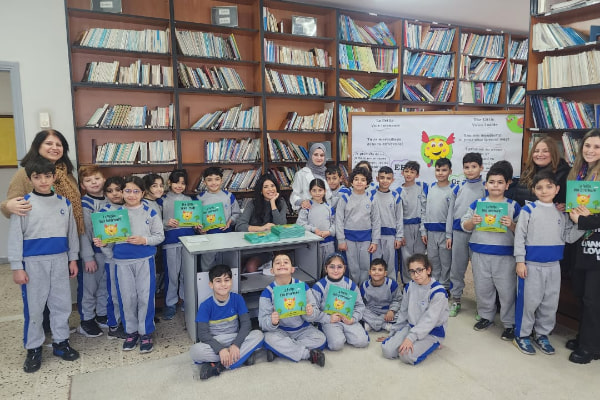
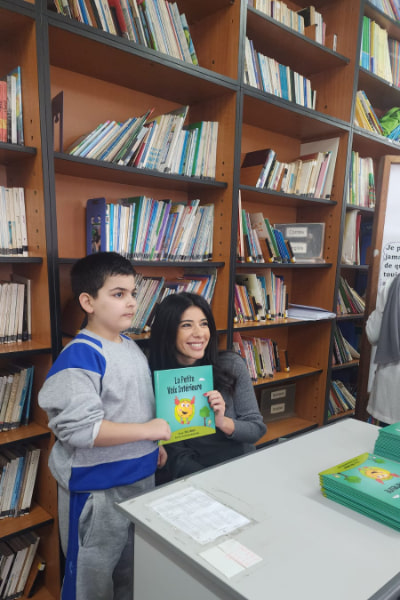
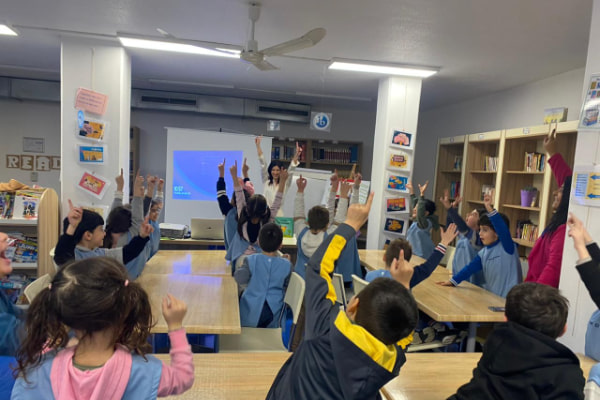
My creative pursuits give me a deep sense of fulfillment. As a hobby, I visit schools and camps where I conduct interactive storytelling sessions. I share my book on a big screen and then engage children in open discussions around themes such as confidence, accepting differences, tolerance, and forgiveness, which is also an important part of my book.
I’ve written The Little Voice Inside, about bullying and self-belief, and A Dream in the Sky, about God. For me, these books are a way of translating my values into stories that can shape how children understand the world and human interactions from a very young age.
These experiences allow me to try to create impact (even it might be very small) at a very human level, outside the formal structures of my career. They ground me and they’re fun!
5. What do you think is the most important quality in a lawyer?
First, I’d like to say that I’m not a typical lawyer, not in the traditional sense of the word, and I don’t like being confined to one box.
Throughout my career, I’ve worn many hats in different sectors. Each of these roles requires a different mindset because you’re advising people who think differently, speak differently, and have different priorities. A businessperson thinks differently from a film director, who in turn thinks differently from a policymaker.
Across all these experiences, there is one common quality that I believe defines a good lawyer: the ability to really listen to and understand your client. In order to offer advice that is aligned with your clients’ real needs without disrupting their businesses or projects, you need to understand who you are speaking to, their line of business, their needs, and their concerns. That requires active listening. Law is not just about knowing the rules; it’s about understanding clients.
I genuinely love being a lawyer, even though it can be challenging at times. What I value most is the relationship of trust you build with clients. When a client stays with you over time, that trust becomes the most rewarding part of the profession.
6. Is there a guiding principle, philosophy, or quote, whether legal, academic, or personal, that has consistently influenced the way you approach your career and your advocacy work?
If I had to choose one guiding principle, not necessarily a quote but a piece of advice that I try to live by and continue to work on, it would be this: always listen to the little voice inside your heart. Whether it’s about career choices, how to position yourself in a difficult situation at work, or where you see yourself in ten years, over time, I realized that the truth is already within us. Unfortunately, we’re often either too afraid to hear it or too distracted to pay attention to it.
Looking back, every major decision I made based on intuition rather than fear turned out to be the right one on the long run. Listening to that inner voice takes courage, but it’s one of the most powerful tools we have for making choices that are truly aligned with who we are.
7. Based on your diverse experience, what advice would you give to youth or women who are just starting out and trying to find their own path in the legal profession?
This is something I feel strongly about, and it’s advice that goes beyond the legal profession.
Women bring unique strengths to the table. As a general observation, and of course with exceptions, women often possess skills that men may not possess, just as men have strengths that women may not have. What matters is recognizing and valuing these differences. As women progress in their careers, it’s essential not to lose what are often considered feminine strengths. Emotional intelligence, empathy, peacemaking, strong communication, balance, and attention to detail are powerful assets. These qualities should not be suppressed or overlooked in the pursuit of success. It’s also important to remember that there is room for everyone. The world is abundant, not scarce. When women support women, we all rise.
My other most practical piece of advice for women and men is: keep a diary. I’ve had one since I was ten years old, and I’ve kept a new diary every year since then. Best decision of my life! There is real power in putting your aspirations into words. Writing them down increases your chances of achieving them. It also allows you to track your growth over time. When you reread old entries, you begin to see patterns, progress, and change.
What fascinates me most is that sometimes you write something you want, forget about it entirely, and years later it materializes in your life. When you look back, you realize it was there all along, planted in your subconscious through writing.
Another piece of advice is: do what you love, and don’t be afraid to change your mind. It’s okay to evolve, to discover new interests, to shift directions, or to redefine what success means to you. In my field, the traditional path is often very linear. That path is valid, but it’s not for everyone. It’s okay not to want the same things as others. It’s okay to take risks, follow your heart, and trust your inner voice. Don’t try to fit into someone else’s version of success, and don’t compare your journey to anyone else’s.
Another one I feel strongly about and had to learn the hard way: don’t let your identity or self-worth be defined by your professional achievements and success. Ambition, work and professional success are all important and meaningful, but they’re not everything life is about. You will need to think about my well-being, personal life, and self-worth beyond professional success.
And finally, especially for lawyers, work on your soft skills. Technical skills are essential, but they are no longer enough, particularly in a world shaped by AI. Soft skills, emotional intelligence, and the ability to connect with people are what will truly set you apart.
Conclusion:
Rhéa ’s journey is marked by transformation, from advising businesses, to piercing the veil of workplace discrimination to shaping policies Through law, policy, and storytelling, she has stayed grounded in the human impact of her work, whether advocating for women and children, advising business clients or filmmakers, or speaking to children about confidence, belonging, or equality and inclusion. Her work reflects how purpose-led choices can shape impact.
