
CATEGORIES
#Family & Relationships #Gender Equality #ParentingOverview:
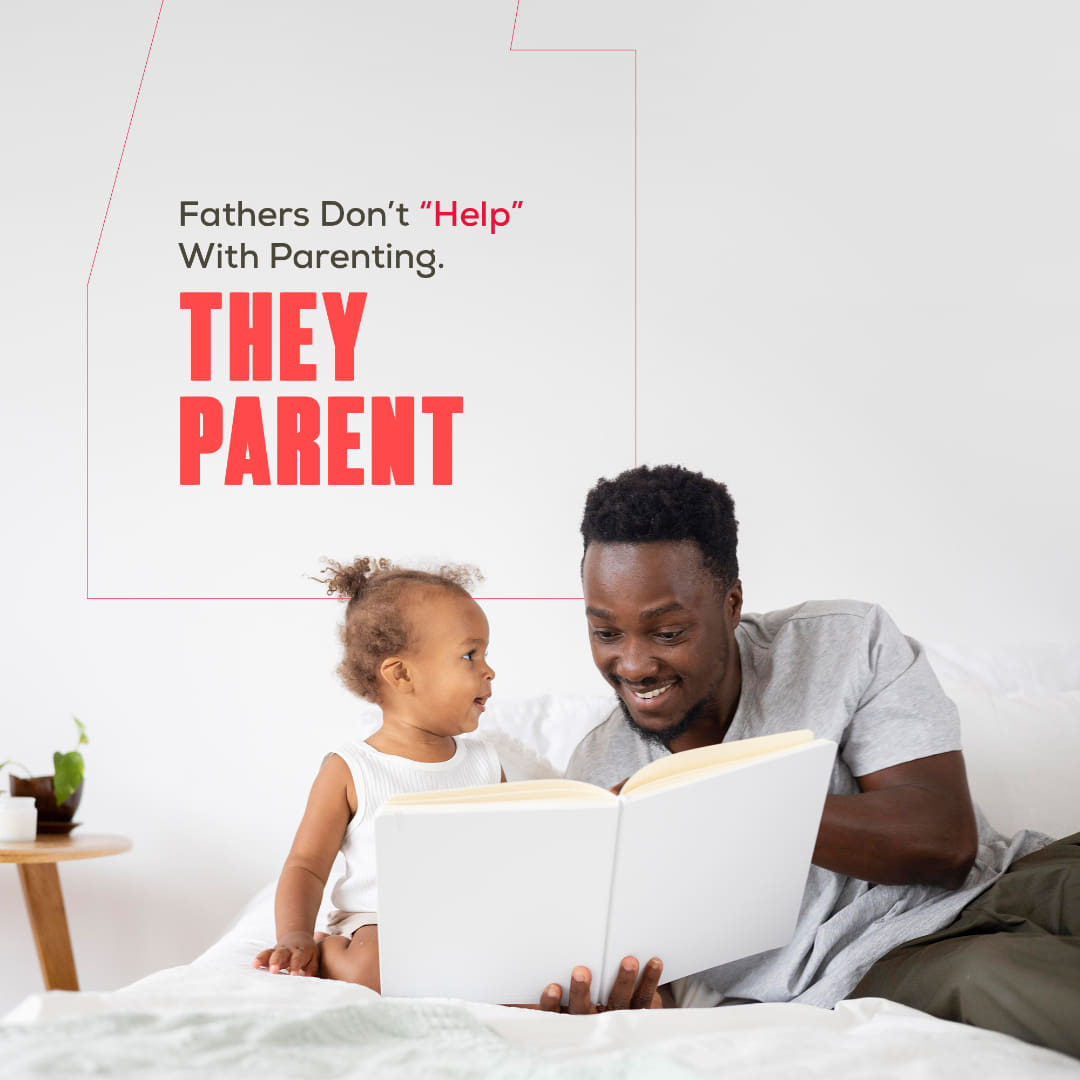
- Society praises fathers for “helping”, but parenting is their duty too.
- Mothers carry an unequal mental and physical burden after childbirth.
- Fatherhood extends far beyond financial provision at every stage.
- True parenting requires shared accountability, not occasional support.
The Problem With the Word “Helping”
“He’s so good! He actually helps with the baby.” Sound familiar? This sentence is spoken every day. It is spoken with warmth and admiration. Yet buried inside it is a deeply troubling assumption: that childcare belongs to the mother. And whatever the father does is considered to be generous.
Let’s be clear. When a man changes a diaper, he is not doing his wife a favor. He is not going above and beyond. He is simply being a parent, which is exactly what he signed up for the moment he became a father.
The language we use shapes the way we think. Consequently, it also shapes what we accept as normal. When we call a father’s involvement “helping”, we reinforce the idea that mothers are the primary caregivers and fathers are optional participants. Furthermore, this framing lets fathers off the hook and silently places an impossible load on women.
What Happens to a Mother’s World After Birth
The moment a woman becomes a mother, her life drastically transforms. Her sleep fades away. Her sense of self, her hunger, and her thirst are all overlooked. Her body has just gone through one of the most physically demanding experiences imaginable. However, society expects that she will recover and retake responsibility with no difficulty.
Managing household responsibilities while caring for a child creates an invisible burden known as the “mental load.” There is no debate about this: women carry far more of the mental and emotional burden than fathers.
After becoming a mother, all of a sudden a woman is deprived of a very basic thing needed to function properly: her sleep. She may also have to adjust her diet while breastfeeding. Imagine the weight carried by someone who is already mentally and physically exhausted.
In a situation like this, anyone would break down.
Therefore, to normalize a mother’s exhaustion as “just part of the job” is not only unfair but also dangerous for her physical and mental health. In such situations, men have to be strong allies to their partners.
The Father’s Role From Delivery to Postpartum
A father’s role is crucial from the time of delivery to the weeks of postpartum recuperation. No man can fully understand the emotional and physical reality of childbirth. He is unable to comprehend what it means to develop life within his own body. That does not, however, justify his absence.
Many new mothers suffer from postpartum depression. A partner who is present and actively participating might have a profound impact during this time. Parenting includes bathing the infant, changing nappies, and managing night feedings. These don’t qualify as gestures of kindness.
A mother’s body is still recovering during the first few months. Her mental health is fragile. Additionally, she is learning an entirely new version of herself. At this stage, she does not need a helper. She needs an equal partner who shows up without being asked.
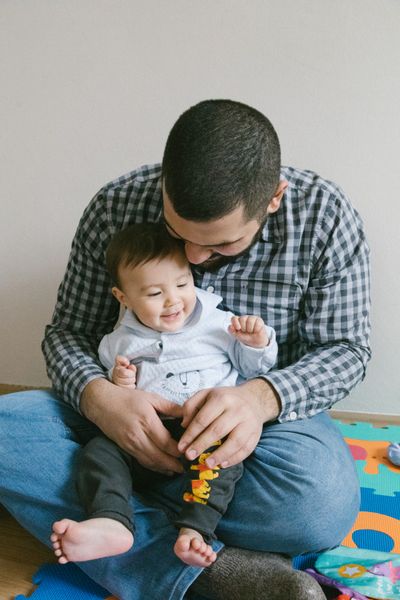
Image Credit: Pexels
Every Phase Has New Challenges and a Father’s Place in Them
As a child grows, fathers often begin to step back. The reasoning is simple: the mother seems more settled now, so the urgency fades. However, what fathers frequently miss is that parenting does not get easier; it gets different.
Every developmental phase brings its own set of challenges. The infant stage gives way to the toddler years, then school transitions, adolescence, and beyond. Specifically, the father’s involvement must evolve through each of these stages but not disappear once the acute crisis of the newborn period has passed.
Shared parenting is not a phase. It is a commitment. Moreover, a father who engages only when it’s convenient is not co-parenting. He is guest-parenting. Just like a mother’s presence, a father’s presence cannot be replaced. He needs to spend time with his children for their better growth and development. What fathers need to realize is that presence is more important than perfection.

Image Credit: Magnific
Society’s Rules Are Costing Women Their Identity
“Childcare is a woman’s job.” This rule was not written in law. But it’s reinforced every single day in the conversations we have and in the praise we give fathers for just showing up.
So a father who is disconnected from day-to-day parenting is not doing his job. He is reducing it to financial support.
What makes this especially painful is that women themselves have internalized this belief. Mothers-in-law reassure their sons: “Don’t worry, we’ll take care of the baby.” Instead of teaching fathers to be present, they are quietly excused from responsibility. As a result, the cycle continues.
Under the weight of this expectation, women lose themselves. They lose their careers, their ambitions, their health, and their sense of identity. The mental and physical burden is treated as normal. However, it is not normal; it is a systemic failure dressed up as tradition.

Image Credit: Magnfic
Financial Provider vs. Present Parent
There is a persistent myth that the primary duty of a father is financial. He brings in the income, so he’s fulfilled his share of the responsibility. This narrative is outdated and stressful. Finances are no longer just a man’s domain today, allowing modern mothers to hold strong financial backups instead of simply depending on a provider. Just as earning is no longer a one-man job, motherhood cannot be the sole responsibility of a mother.
Diapers aren’t free, but they cannot substitute for a father who bathes his child, reads them a bedtime story, or notices when something is amiss. Most importantly, children need emotional presence, not mere economic security. Mothers need partners, not just providers who punch out at the door. Part of parenting is making a living. This is not all of it.

Image Credit: Pixabay
Time to Rethink: From Assistance to Partnership
Words matter. When we say a father is “helping”, we and the world tell him that parenting is not really his job. Therefore, we must stop using that word in this context. We need to replace “helping” with “being a parent” and “lending a hand” with “sharing responsibility.”
Modern families cannot function on the old model of one exhausted mother and one absent father who occasionally does the dishes. The next generation learns from what they see at home.
Two people became parents together. So parenting through every sleepless night, every school run, and every emotional crisis is a shared responsibility.
Conclusion
Fatherhood is not a supporting role in someone else’s story. It is a full and equal responsibility. The word “help” needs to retire from our parenting vocabulary because fathers are not volunteers in their children’s lives. They are parents. Shared accountability is not a favor to the mother; it is the foundation of a healthy family. Until we change our language, we cannot truly change our culture.
