
Overview:
- Loneliness can become a teacher instead of an enemy.
- Faith is an inner courage, not limited to religion.
- Solitude sharpens observation and creativity.
- Sensitivity grows when faith replaces fear.
- Daily rituals can transform isolation into meaning
I was sitting down with a book after a long time. Yes, a paperback that I picked at one of the theaters I visited. I was immediately interested in the title, and I went ahead and purchased it on the spur of the moment. Then I understood that this was not my impulse but a stronger inclination towards what my soul needed at that time. That is faith.
When I find myself at the juncture of something new, I tend to succumb to the lack of societal structures for support. With no social systems to aid me, I have attempted to evoke something in me that drives courage. That is, for me, faith.
We are so focused on constant growth that we forget the importance of release. Sometimes, Unlearning to Grow becomes essential. Letting go of learned loneliness, rigid beliefs, and emotional fear has helped me time and again, which is why I feel compelled to share this reflection.
The book, “Scorsese on Filmmaking and Faith,” is a conversation between filmmaker Martin Scorsese and Antonio Spadaro on his journey of how his faith and early days at Church shaped the ‘Iconic Scorsese Cinema’ that we see today. Initially, I wondered how someone who portrayed violence, bravado, and heroism, among other nuances in his films, integrated faith. However, Scorsese underlines that his art has been deeply shaped by it. Even his courage to walk on the path of his calling stemmed from his faith.
Reflection: Faith is not bound by religion or virtues; it is finding the courage within to sustain your love. It is love for your people, your dreams, your coffee, your rights, and ultimately, the bigger picture called humanity.
Image Credit- Freepik
Navigating Loneliness Today
In an era of rapidly expanding technology and artificial intelligence, our daily lives seem to be missing something. Human vulnerability and community are things we have as a safety net, a knowledge-sharing platform, and an outlet for creativity. Today, I somehow feel a little more lonely. Maybe it is because we barely have interactive communities in real time beyond our screens. Friends and family meet over video calls, but reaching out to them in a moment of vulnerability feels burdensome. We share spaces with people, but somehow live in our isolated bubbles today. This feeling becomes more prominent over time as we grow in life, in our careers, and even in our relationships. Is it because we are gaining more agency, or are we too afraid to lose it? I’m still questioning that. Maybe you are too.
Escape and Reality
We often find ourselves at the cross-road of a new situation. We tend to surround ourselves with people, organize activities and night-outs, and escape to another world, which is not always good. Community and celebrations are meaningful when the ties are real and not based on the fear of missing out (FOMO).
The next time you are feeling entirely desperate or just bored, ask yourself this before contacting or planning: Am I celebrating my relationships, honouring them with true presence, and leaving something as a deposit in my emotional bank? Or is it another effort to escape my loneliness?
In reality, loneliness is not a foe. It is a friend.
The Art of Accepting Loneliness
Most of us forget that part of adulthood and the broader human reality is experiencing loneliness. It is not because the world is a bitter place that conditions you to become so. Rather, it is because, as adults, we must listen to the voice within, in a world full of noise. Our actions must be led by heart and conscience, even when there are social conditions and obligations. Loneliness is a boot camp preparing us exactly for that: to sit in uncomfortable silences.
Adulthood is all about making choices. And those choices will only be aligned to give maximum fulfilment when we have a moment to pause, question, reflect, and even offer gratitude.
Rather than being uncomfortable filling the gaps, we must let these moments sit and form their own shape within us.
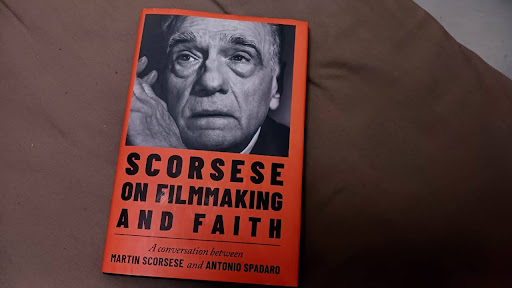
Image Credit- Girl Power Talk
Loneliness Teaches You Observation
Scorsese discussed his childhood loneliness caused by asthma. He wasn’t allowed to play like a ‘normal child’ in a dangerous neighbourhood. However, the loneliness allowed him to become more observant and ask critical questions. These questions later shaped him into an artist and a better person. He didn’t try to run away from his violent streets. He initially protected himself but later used his experiences as inspiration to show, through his art, how harsh that reality was.
I am not saying that we should isolate ourselves and avoid seeking help. What I’m trying to say is to stop convincing ourselves that we must fill the loneliness with constant actions or engagement. It can be like a symphony to sit with it and befriend loneliness.
Finding Faith and Sensitivity
Finding faith, or rather ‘revisiting’ faith, is a conscious activity. I say ‘revisiting’ because faith is often within. It is to try and fail, to act even when there is uncertainty. It gets maligned by the social constructs around it. But whether or not we believe in God or religious institutions, we still have faith. Because it is not something extrinsic.
In the sea of loneliness, one needs an anchor, and this anchor is faith. It is faith within ourselves that we’ll soar through this with some clarity and aligned action.
Finding faith is beautiful because it does not look the same for everyone. It is like interpreting a poem; it is absolutely personal.
It can be slowly building a life you want, failing multiple times, and still finding your value. Finding faith can be as spiritual as finding a connection with your body, consciousness, and the universe.
“If loneliness trains you to become observant, faith makes you more sensitive.”
Faith Re-Establishes Sensitivity and Self-Compassion
One of the major themes of why I’m writing this is not as motivation. This is more of a reminder that faith acts as a sword against fear. Faith serves as a life raft that we find ourselves returning to in moments of fear, for stability, and courage. Sensitivity refers to the realization of feelings, vitality, and delicacy in ourselves and others. Among many others, faith serves as a guideline to be sensitive and not feel guilty about it.
Sensitivity is tagged as a negative characteristic in most societies because it is essential yet difficult to understand. Imagine this:
“A child who gets too fidgety and won’t sit in one place is considered indisciplined. Parents often punish them for their hyperactivity. Raising a child with special needs means understanding that she doesn’t need to be disciplined but understood.”
Sensitivity is understanding this. As an adult, faith is re-establishing that hyperactivity is nothing wrong. It can be regulated with help but also channelized into self-compassion. Scorsese highlighted that he was able to appreciate his sensitivity while discovering faith and to express himself more creatively. For him, loneliness turned into an outlet for the world to witness his uniqueness.

Image Credit- Freepik
How to Apply It in Our Daily Lives
There is absolutely no listicle on how to apply faith in your daily life to drive you out of loneliness. It’s your playground to spend time with yourself and find yourself again at any age, at any juncture in your life. Go paint, sing, listen to music, sit in meditation, write a play, act again. Faith could also look like a void that’s fulfilling or simply sit with questions in your head. It doesn’t matter whether you are in a church, a temple, or at your meeting desk. Loneliness gives you a portal to finding yourself again, and faith is the force carrying you through it. More than understanding faith, it is more important to inculcate it and letting it unfold in time.
For me, faith has brought me closer to myself. It has taught me not to allow myself to turn bitter in a fearful situation or environment. Faith is more about a homecoming after a long, lonely night walk.
Conclusion
Loneliness can creep into our heads sometimes, even in a room filled with our loved ones. Clocking out and developing an inner voice are essential to find an anchor. Developing faith is a tool to strengthen your inner voice and make peace with where you are. What comes as a bonus is the clarity, strength, and resilience that you can harness from within. It might look like a journey, but so is navigating life. May we all find the strength within ourselves to keep growing, meeting the unexpected, and creating in uncertainty.
Trigger Warning:
Navigating loneliness is difficult. If you feel the need to seek professional help, please reach out without hesitation.
