
CATEGORIES
#Adulting #Young LeadersOverview:
- The article explores how the spy and action thriller genre in Indian cinema has been mirroring geopolitical conflict lately.
- Learn how contemporary conflicts are being transformed into compelling narratives for the masses.
- The piece analyses the role of popular media in shaping public perception, nationalism, and regional power dynamics.
- It also highlights storytelling as a lens to understand political instability and security anxieties.
- It is, therefore, a take on the evolving relationship between entertainment and geopolitics.
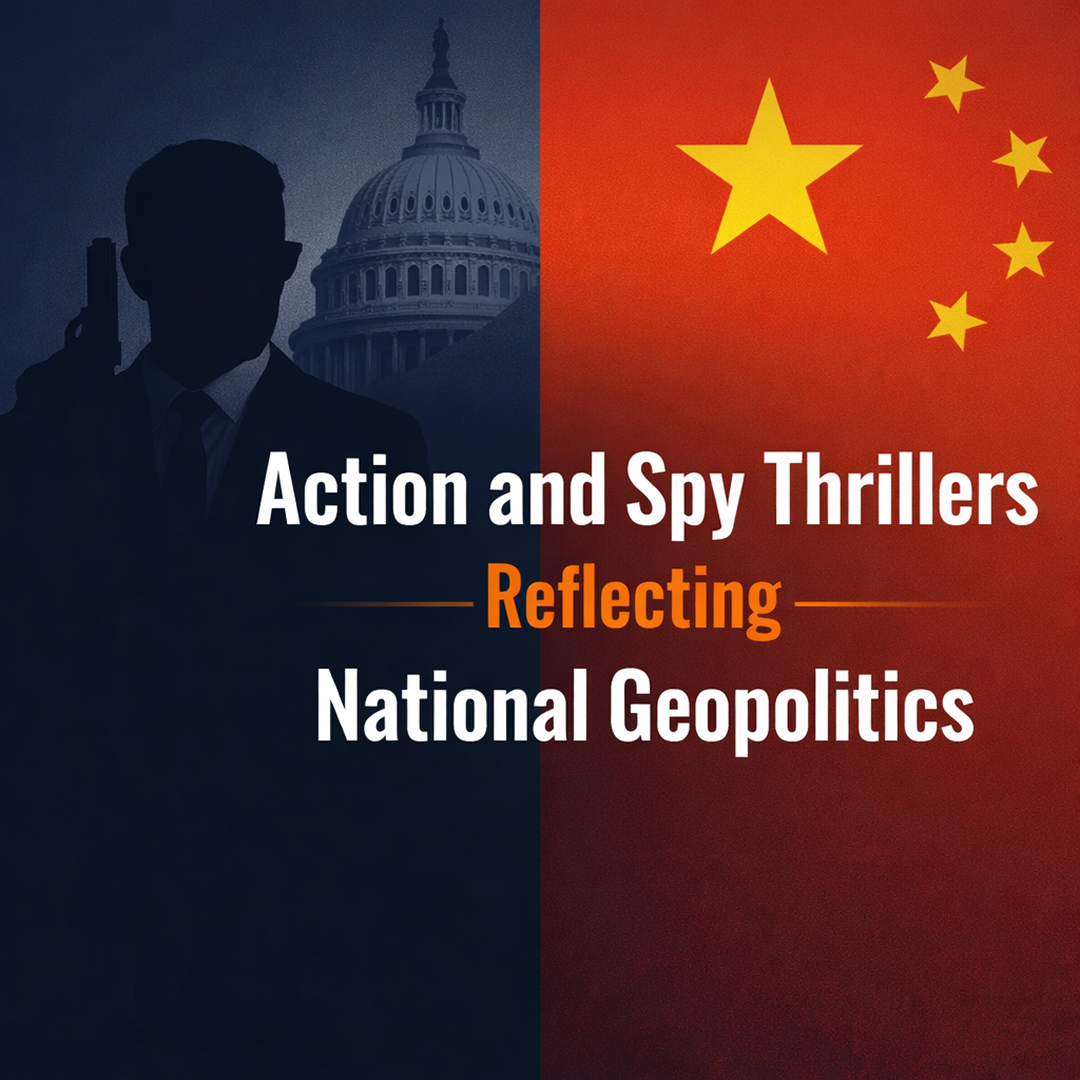
Espionage and spy movies in India have seen a notable rise over the last decade. Nationalistic sentiments have also seen a sudden surge. Hence, Indian cinema has taken the route of blending nationalistic sentiments with spy dramas.

Image Credit- Freepik
History of Spy and Action Thrillers in India
Early Indian espionage films often centred on India’s intelligence agency, RAW, and relied on unrealistic storylines. The transition toward more realistic, politically and factually accurate stories occurred after 2000. For a very long time, the Bond Series and Mission Impossible have served the benchmark for spy movies. These movies have continued to portray unrealistic versions of political or military espionage work. For many years, Indian spy thrillers remained far removed from the realities of diplomatic work carried out by authorities.
Socio-Political Context and Impact of Spy and Action Thrillers
The public’s interest in national security and defence themes has increased significantly in the past decade. There have been several ongoing conflicts across the globe, not just within India. Whether it’s the Israel-Palestine conflict or the Russia-Ukraine war, these stories are waiting to be adapted into films. From terror attacks in India to political upheavals in Pakistan, Bangladesh, and Nepal, every event awaits cinematic scripting.

Image Credit: Freepik
Contemporary Blockbusters Driving the Genre
Spy movies form a huge part of a common narrative for the masses. The narrative manufactures a controlled dissent or approval of policies and actions taken by global leaders. A major chunk of Indian cinema has been inspired by events occurring in real time. Themes which are common in Indian cinema are cross – border tension, acts of terrorism and threats to national security. When it comes to patriotism and state power, the media, therefore, has a role in shaping the expectations of audiences.
Uri, Pathan, Baaghi and the War franchise have been blockbusters in recent times. Thus, the life of a spy hero is often glorified as filled with action. However, reality is far from removed from what is depicted. The storyline often involves geopolitically charged villains and intelligence agencies that are hyper-styled and driven by questionable motives. These movies are also known to collaborate with ex-military consultants. The aim has been to use real intelligence insights to get facts as close to reality as possible.
Thematic Analysis of the Rise of the Spy Genre
Thematically analysing the thriller trope of the movies reveals how the spy is often the sole symbol of national pride. The geopolitical villainy often surpasses the storyline in mainstream Bollywood cinema. Antagonists are frequently linked to terrorism alongside border tensions.

Image Credit: Freepik
Moreover, surveillance, modern warfare technology and an intelligence network are also often depicted. The above, at times, may or may not be factually verified. This, in the end, reinforces the concept of the hypermasculine protector of the nation, seen as fragile without their presence.
Representation of Geo-Politics in Spy Movies
The impact of the rise in spy movies lies in the portrayal of India as a rising global player. Further, such cinema validates foreign policy narratives. India and its relation to neighbouring countries are often portrayed as grey areas. The movies deliberately blur the lines to avoid inciting conflict. Thriller and spy movies have therefore become a form of soft power projection, crafting and curating a patriotic cultural identity. There has been a growing interest among audiences in nation-first narratives. Young audiences are increasingly inclined to engage with defence culture and intelligence roles.
Audience Reception and Cultural Impact
There has been a growing demand for “nation-first” narratives in the mass entertainment sector.
The young audience seems to be more engaged than ever with defence culture and intelligence roles.
Online fandom and meme culture have also emerged alongside political endorsement of such films. Recently, the movie ‘Dhurandhar’ has dominated social media and broken box office records.
Criticisms and Debates
While spy movies have a huge fan base, there has been a flip side to it as well. There have also been groups of people who feel such movies are spreading propaganda or oversimplifying complex geopolitical realities. Criticism and debates surrounding such topics of national intelligence have also become prominent on national television.
Further, as certain groups of people are easily influenced, stereotyping of certain communities or regions has also been seen. There are also ethical concerns raised regarding the extreme militarisation of pop culture. These movies also involve high-budget productions, VFX investment, and global marketing strategies. Many critics have also been seen raising questions about the exorbitant amount of money invested and its worth. OTT platforms are also expanding the spy-action genre, further shaping the landscape for such movies.
Conclusion
The country’s evolving geopolitical anxieties and national aspirations are often mirrored by spy and action thriller films. Therefore, this genre of movies is shaping the future trajectory of cinema in India as a response to political discourse.
