
CATEGORIES
#Entrepreneurial Mindset #Entrepreneurship #TechnologyOverview:
- Understand what e-commerce outsourcing is and why it’s vital for growth.
- Explore key benefits like cost savings, scalability, and expertise.
- Learn how to choose the right outsourcing partner for your business.
- Avoid common challenges with proven strategies for smooth operations.
This article explores e-commerce outsourcing in detail. Readers will learn its benefits, risks, and when outsourcing makes sense, alongside practical guidance on selecting the right partner to ensure seamless workflows. As a purpose-driven organization, Girl Power Talk offers tailored solutions to help businesses succeed through professional support and strategic outsourcing services.
E-commerce outsourcing enables businesses to delegate non-core functions, such as customer service, order fulfillment, and inventory management, to specialized third-party providers. This approach is increasingly vital in a competitive global market, helping businesses focus on core activities and operational efficiency, while navigating challenges like communication barriers and data security.
What Is E-Commerce Outsourcing?
E-commerce outsourcing refers to the practice of delegating specific operational tasks to external service providers. By doing so, companies can focus on scaling their business while relying on experts to manage day-to-day operations efficiently.
Why Do Businesses Outsource E-Commerce Functions?
Outsourcing e-commerce functions is driven by the need to improve efficiency and focus on strategic priorities. Many businesses choose outsourcing because external specialists manage operational details more effectively and cost-efficiently. Beyond cost reduction, outsourcing supports scalability, allowing businesses to handle growth more flexibly. It also makes it possible to improve service quality through specialized skillsets.

When Does Outsourcing Make Sense for Your Online Store?
Deciding whether to outsource depends on several indicators, such as operational burden and resource limitations. If staff are overwhelmed with non-core tasks or customer support, outsourcing can reduce workload and improve focus on sales or marketing. Seasonal sales spikes or rapid scaling efforts may also signal a need for external support to ensure quality performance without over-extending in-house teams.
What Are the Pros and Cons of Outsourcing?
Outsourcing delivers immediate benefits, such as reduced costs and enhanced expertise, but also introduces potential risks. On the positive side, businesses can unlock cost efficiencies, gain access to global talent, and increase market agility. However, challenges like maintaining cultural alignment with external providers, ensuring data security, and managing quality can complicate outsourcing relationships. Proper planning minimizes these risks.
Benefits of E-Commerce Outsourcing
E-commerce outsourcing offers businesses financial, operational, and strategic advantages that support sustainable growth.
How Does Outsourcing Save Money?
Outsourcing reduces labor costs, infrastructure expenses, and the need to invest in specialized tools or resources. External providers often operate across economies of scale, resulting in lower unit costs and improved margins compared to retaining in-house staff for similar functions. For growing e-commerce businesses, outsourcing provides future-proof scalability without overstretching budgets.
What Expertise Does Outsourcing Bring to Your Business?
Third-party providers are industry specialists with state-of-the-art tools, processes, and domain knowledge. Their expertise enables advanced solutions that may not be feasible for businesses to develop internally. Outsourcing also introduces businesses to global talent pools, giving access to diverse skills and innovations that drive better results and customer satisfaction.
How Does Outsourcing Improve Scalability and Flexibility?
For e-commerce brands facing fluctuating demand, outsourcing is an invaluable solution. Providers can quickly scale up operations during peak seasons and shift resources as needs evolve. Businesses benefit by staying adaptable without absorbing the costs and commitments of full-time staffing during quieter periods.
Key Benefits of E-Commerce Outsourcing
Outsourcing provides measurable impacts for growth-focused e-commerce businesses. These include:
- Reduced operating costs due to lower labor and infrastructure investments.
- Access to top-tier talent and cutting-edge technologies.
- Faster launches for new products, supported by expert providers.
According to a 2024 industry report from the Global Retail Innovation Council, outsourcing improves operational efficiency by up to 38%, allowing businesses to outperform competitors in time-to-market performance.
Common E-Commerce Functions to Outsource
Choosing the right tasks to outsource is crucial to maximizing the advantages of external support.
What Tasks Are Commonly Outsourced?
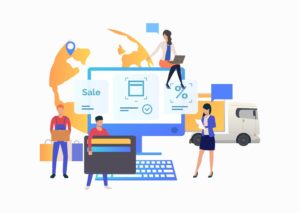
Customer service outsourcing remains a priority for many e-commerce businesses, as it ensures 24/7 multilingual support for global markets. Fulfillment and logistics tasks are also frequently outsourced, as they require significant infrastructure and operational expertise. Outsourcing high-stakes but repetitive functions, like returns management, provides measurable efficiency gains.
How to Prioritize Your Outsourcing Needs?
To determine what to outsource, businesses should analyze tasks that distract from their core strategies. Non-essential operations such as back-office processes, inventory tracking, and routine customer inquiries are ideal candidates. Conversely, specialized or brand-centric functions, like product development or personalized customer engagement, are best retained in-house.
Commonly Outsourced E-Commerce Services
- E-commerce businesses frequently delegate the following functions to external service partners:
- Order fulfillment and returns management.
- Product listing optimization and content creation.
- Inventory and warehouse management.
- IT infrastructure and technical support.
According to a 2023 McKinsey study on operational scalability, logistics-related and customer support tasks deliver significant ROI when outsourced due to their high demand and complexity
How to Choose the Right E-Commerce Outsourcing Partner
Successful outsourcing depends on selecting a dependable partner who understands your business’s needs.

What Factors Should You Consider in Selecting a Partner?
Experience is critical when evaluating outsourcing providers. Businesses should prioritize vendors with demonstrated success in the e-commerce industry, a clear understanding of their niche and also evaluate different outsourcing pricing models. Additionally, cultural compatibility ensures smooth collaboration, minimizing misalignments in communication or priorities.
How to Set Clear Expectations With Your Provider?
Fostering transparency and accountability within partnerships starts with clear service-level agreements (SLAs). SLAs should detail performance expectations, timelines, and resolution processes. Open communication, supported by regular reviews, ensures that all stakeholders align on mutual objectives and adapt workflows as needed.
What Steps Should You Follow During Partner Evaluation?
Thorough due diligence during partner selection is vital. Review references and case studies, and consider conducting pilot projects to gauge fit before committing to long-term arrangements. A well-planned onboarding process facilitates strong transitions, helping teams acclimate to new workflows efficiently.
Common Challenges in E-Commerce Outsourcing
Outsourcing unlocks opportunities but also presents distinct challenges. Addressing these early ensures smoother operations.
What Are Common Communication Barriers?
Collaboration with external partners can suffer due to unclear messaging, language differences, or mismatched time zones. To improve communication, businesses should establish protocols using shared tools like Slack or Microsoft Teams. Regular updates and aligned schedules foster transparent workflows.
How to Mitigate Data Security and Privacy Risks?
Protecting sensitive data is crucial when outsourcing. Businesses should implement strict confidentiality agreements and select providers who follow recognized cybersecurity frameworks like ISO 27001. Partnering with vendors experienced in compliance safeguards customer trust and operational transparency.
What Are Strategies to Overcome Quality Concerns?
Quality can fluctuate without consistent checks. Defining benchmarks for performance early in the partnership reduces risks. Routine feedback and performance evaluations ensure that any gaps are addressed swiftly, maintaining the overall integrity of outsourced tasks.
The Future of E-Commerce Outsourcing
Evolving trends place e-commerce outsourcing at the forefront of innovation and adaptability.
What Are Emerging Trends in Outsourcing Services?
AI and automation technologies are disrupting outsourced operations. In 2025, tailored integrations of AI in customer engagement and inventory forecasting are increasingly common. Additionally, remote outsourcing models continue to expand, catering to global work environments and economies.
How to Stay Competitive With Outsourced E-Commerce Strategies?
Adaptability defines the outsourcing landscape. Businesses should invest in long-term partnerships rooted in flexibility to match the pace of market change. Outsourced teams must embrace innovation and continuously evolve in service delivery, ensuring relevance despite shifting trends.
Conclusion:
E-commerce outsourcing offers businesses transformational benefits when done strategically. By entrusting non-core operational tasks to experienced providers, companies can improve efficiency, save costs, and grow sustainably. Girl Power Talk specializes in empowering global e-commerce businesses, delivering tailored support services to help organizations thrive in an ever-evolving digital space.
