

Overview:
- An introduction to Sylvia Plath’s fig tree analogy
- Fig tree analogy resonates with those torn between many possible futures
- Reframing multipassion as capacity rather than confusion
- Embracing a layered, plural life where different ambitions can unfold at different stages.
Art and literature have a way of making you feel things you didn’t even know were sitting inside you. Some metaphors do not simply pass through the mind; they embed themselves within its folds. They sit there, quietly shaping how you see your own life.
That is what happened when I first encountered Sylvia Plath’s fig tree analogy.
When a Metaphor Refuses to Leave You
Sylvia Plath, author of The Bell Jar, writes about seeing her life branching out before her like a fig tree. On every branch hangs a different future. A husband and children. A brilliant academic career. A life of travel. Lovers with strange names and extraordinary stories. Recognition. Achievement. Adventure. Beyond them, there are even more figs she cannot quite make out.
Each future beckons.
And yet she sits beneath the tree, starving because choosing one fig means losing the others. As she hesitates, the figs wrinkle, darken, and fall.
It is one of the most unsettling metaphors ever written about ambition and possibility.
Because the real fear is not failure. It is abundance.
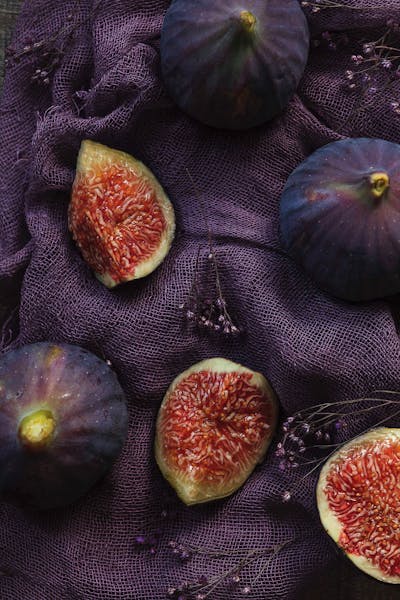
Image Credits: Pexels
The Paralyzing Pressure of Possibility
Some people are afraid of having no options. Others are terrified of having too many.
For those who have always enjoyed multiple things at once. For those who have felt equally alive writing, building, imagining, learning, creating, the pressure to choose can feel suffocating. Becoming singular feels like shrinking. Reducing oneself to one clean title feels incomplete.
There is something deeply uncomfortable about answering the question “What do you do?” with only one word. As if that word is meant to contain the entire landscape of a person.
Writer.
Engineer.
Founder.
Mother.
Artist.
Why must these exist in isolation?
Growing up with many interests often means being labelled indecisive. The assumption is that a lack of singular focus signals confusion. But what if it signals capacity instead? What if the hunger to experience multiple dimensions of life is not scattered-ness but depth in another form?
The world tends to reward specialization. Focus is praised, and narrowing down is considered maturity. Yet the grief of that narrowing is rarely acknowledged. To choose one path can feel like quietly burying several others.
The fig tree captures that grief perfectly.

Image Credits: Pexels
The Fear of Becoming “Just One Thing”
There has always been something frightening about the idea of becoming only one thing.
Not because commitment is undesirable and discipline is unwelcome. But because identity has never felt small enough to fit inside a single definition.
One version of life leans toward writing with words that linger and make someone feel like they belong. Another imagines a café with mismatched chairs and warm lighting. There is the artist creating quietly at the edges compelled by curiosity and the need to make sense of the world. There is the mother building a home of softness and strength, and the woman tending a garden wide enough to breathe.
None of these futures contradict one another. They simply coexist.
Why must one future cancel the others?
The unfinished proverb “jack of all trades, master of none” is often used as a warning. Yet its full form reads: “oftentimes better than master of one.” The latter half acknowledges something important: that breadth is not incompetence. It can be adaptability, creativity, and synthesis.
Multiplicity does not automatically mean lack of direction. It can mean refusing to amputate parts of oneself too early.
The Figs Will Rot But So Will the Fear
There is urgency embedded in Plath’s metaphor. The figs do not remain ripe forever. Time passes whether a decision is made or not; youth shifts, energy changes, and opportunities eventually evolve.
The jasmine blooms briefly. The body at twenty-five will not return. The particular light that falls across a kitchen table in September will never be identical again. Everything feels fleeting, and that impermanence intensifies the pressure to choose correctly.
But perhaps the lesson is not that one must choose perfectly. Perhaps the lesson is that waiting indefinitely is the only true loss.
A fig tree does not bear fruit only once. It blooms in seasons. Fruit falls, and new fruit grows. The tree does not panic when one harvest ends; its roots remain.
Life can function the same way.
The problem is not wanting many figs. The problem is believing they can only exist in a single, irreversible moment.
Image Credits: Pexels
Embracing a Multipassionate Life
The desire to live expansively does not have to result in paralysis. It can become a framework.
The point is to understand that each interest informs the next. Nothing exists in isolation. The intersections are often where innovation lives.
Exploring multiple disciplines does not dilute identity; it enriches it. The journey of self-exploration through learning and experimentation is not a distraction. It is actually data collection. It is building a toolkit broad enough to design a life that feels authentic. Society may prefer clean trajectories, but real lives are rarely linear. They are winding, chaotic, and layered. They include detours that later reveal themselves to be foundations.
To embrace multipassion is to accept that not everyone will understand. There will always be those who question the lack of singular focus. Yet individuality is not validated by consensus; it is sustained by alignment.
Conclusion
Strong women rarely followed one narrow script. They evolve, shift directions, build, rebuild, and reimagine themselves across decades. Their power lay not in choosing perfectly, but in continuing to move.
A life can be plural.
It does not need to shrink into one noun to be meaningful. It takes courage and willingness to reach, even imperfectly. The figs are ripening regardless. The question is no longer which single life to live forever.
The question is whether to begin.
