
Overview:
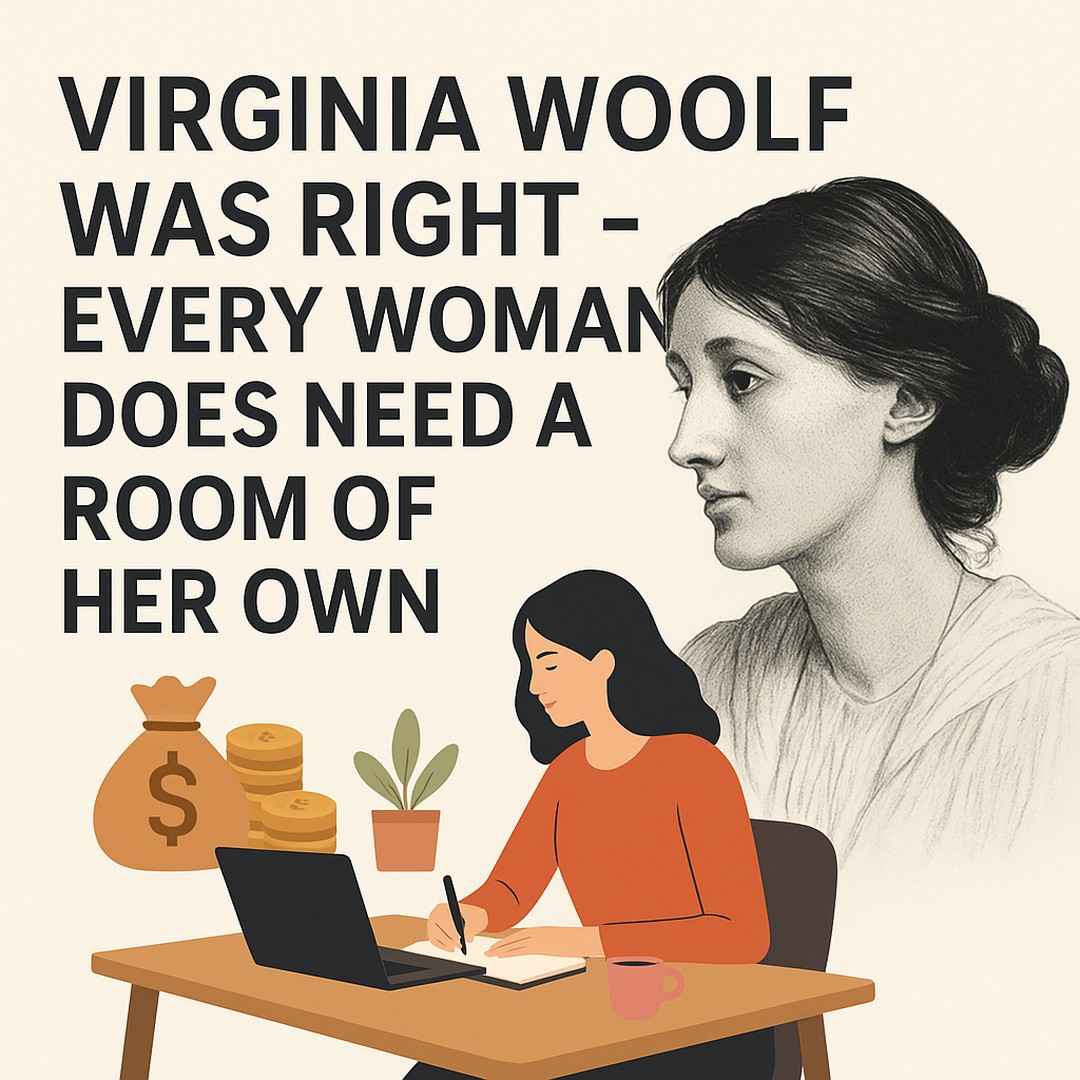
- Women must have a room of their own and financial control over their money.
- If women today want to access this basic right, it cannot happen in the absence of money.
- Women carry 70% of the unpaid care work; now is the time to be really mindful about where we are investing our energy.
- It’s high time women leave resources for their sex so they can also build on their legacy.
- Now, we collectively as women should start claiming the spaces around ourselves.
The Room Is a Symbol
Ninety-six years later, Virginia’s argument for women’s space and financial independence remains powerfully relevant. When I read Virginia’s work a year ago, it pushed me to see life through a feminist lens. I had no background in feminist thought at that time. Engaging with her work more deeply changed my understanding. When she was standing in front of Newnham and Girton colleges, she argued for more than creative space. She spoke about the survival of her sex.
She insisted women need a room of their own to create, dream, and think freely. A room allows a woman to exist for herself without any obligation or expectation. She linked the room to financial independence for women, as it’s not possible to own in the absence of it. She sounds angry because women are expected to create beauty without knowing peace themselves. She calls out the injustice in sharp clarity and frustration. Her voice still echoes in every single woman today. It echoes in women overwhelmed by constant demands and expectations. It echoes in every home filled with noise. It echoes in the workplace that drains energy and dignity. It echoes in a world ready to judge every single woman.

Money Brings Freedom
Woolf famously wrote, “Women must have money and a room of their own if she is to write fiction.” This sounds like common sense today, but it was radical, especially when said in the 1920s. It was the time period, when women were often denied personal money or property rights. Even today, accessing this basic right requires resources and permission. Patriarchy today has its own layers for subjugating women. Then Woolf went on to explain how she came to develop this radical idea. She shared that she was unable to walk because of the density of her own words for days to come. For context, it was the time when women were not even allowed to enter libraries without permission.
In her time, a woman’s economic future was tied to fathers, brothers, or husbands. While the form of dependency has changed, unfortunately, the reality remains similar. Financial freedom still limits women’s empowerment and the ability to exercise agency and choice. Woolf argued that with her own income, no matter how small, she could claim a personal space. This space could offer more than comfort. It brings with it the right to refuse, choose, and think. In doing so, she created for generations to claim their autonomy.

Women & Unpaid Care Work
Globally, females perform almost 70 percent of the unpaid care work, including caring, cleaning, and emotional labour. Their personal spaces, if they exist at all, are more often shared with chores and interruptions. As society primarily sees women as nurturers rather than individuals with their own identity. While feminist movements have achieved progress, millions still lack autonomy over their agency and time.
The idea of women having a few hours to themselves can feel like indulgence rather than restoration. Woolf recognized this struggle long before modern research or language existed to describe it. Her essay was not just about writing fiction; it was about the survival and self-determination of her peers. Her revolutionary argument for women’s education and scholarship to build independence still resonates today.
Women and Scholarship
Woolf reflected on her generation, who cared for others and created opportunities, yet neglected their own peers. They overlooked the need for resources and recognition for their sex to secure an equitable future. She noted men built and inherited wealth for future male generations, while women rarely left similar legacies for their own.

They focused on building men’s legacy when they could have pursued intellectual and material freedom for themselves. Woolf’s reflection reminds us today of our responsibility towards our peers. Today, it is on us to create opportunities for our own future generations and build an equitable future. Thus, we not only honor those who paved this way before us but we also carry forward their legacy.
Conclusion:
Virginia’s work has endured the test of time. It continues to be read today by millions around the world. It addresses issues beyond just writing fiction like agency, freedom, independence, and opportunity for women. Today, we recognize that females need personal space, resources, and recognition to build scholarship. Not just for herself but for her peers to ensure a more equitable future. Her work connects the struggles of the 1980s to the modern challenges being faced today. Including unpaid care work, limited access to space, financial independence, and the importance of claiming both.
Let us promise ourselves to claim our spaces, private rooms, and simple rights. Building autonomy for our peers is a collective responsibility. And it begins when each of us commits to doing our part. By creating and protecting these spaces, we honor those who came before us.
