
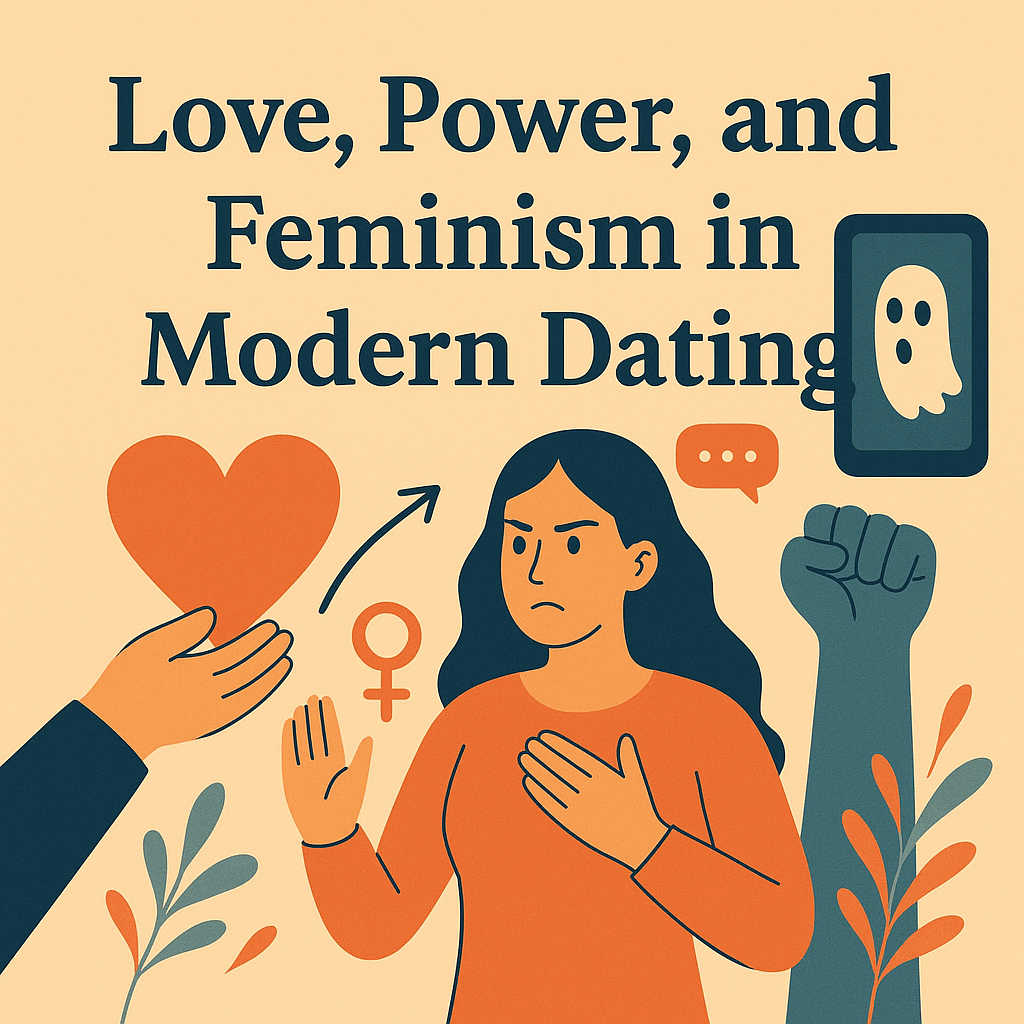
Overview:
- Ghosting, love bombing, and avoidance reveal hidden power dynamics in dating.
- Women still shoulder emotional labor, while men retreat from accountability.
- Dismissing feminism often masks entitlement and a lack of respect.
- True love is not about power, but equality and respect.
The Swipe That Said It All
Like most modern dating stories, it started with a right swipe. The banter felt easy, the conversations flowed, and soon he was everywhere, even in my daydreams. But between late-night FaceTimes and good morning texts, there was one thought of his that led to our first “disagreement”.
He said, “I believe in feminism, but I am not a feminist. Modern feminists are too aggressive”.
At that time, we brushed it off, thinking we’d eventually find a middle ground to accept each other’s ideologies. After all, he seemed thoughtful, attentive, and endlessly available. But looking back, that statement was the first red flag. It was a quiet warning disguised as casual honesty. Because what does it mean when men reject feminism yet expect women’s patience, care, and emotional labor in a relationship?
This story is not just about one man or a failed early 20s romance. It is about power, intimacy, and the way feminism is rewriting the rules of modern love. Dating apps, ghosting, love bombing, and attachment styles are not just personal dramas. They’re the actual battlegrounds where equality is tested every day. And for Gen Z women, reclaiming that agency is becoming just as important in love as it is in life.

Fireworks That Burn Too Fast
At first, it felt like I was stepping into my own version of a Jane Austen novel. He texted and FaceTimed constantly, and introduced me to his friends as though I had already secured a permanent place in his life. He even posted about me on his socials and made it official before we had even met in person.
For someone like me with an anxious attachment style, this excessive attention was intoxicating. It felt secure, like I was finally being chosen. Every ping on my phone was a tiny rush of validation, convincing me that this is what love is supposed to feel like.
But here is what most of us miss: women are socially conditioned to mistake intensity for intimacy. From books to movies, we have been fed the narrative that grand gestures equal genuine affection, and that fast-burning passion means “soulmate energy.” When in reality, love bombing is often less about connection and more about control. It creates a kind of dependency before the trust has had a chance to grow.
Why ‘Not a Feminist’ Is Never Neutral
Looking back, the red flags were not hidden. His early rejection of feminism as “too aggressive” ought to have been a warning indication of a serious ideological and moral misalignment. That remark demonstrated a discomfort with women’s voices being loud, forceful, and unapologetic.
Love bombing, in this context, masked entitlement and not just romance. It was a performance of care designed to draw me in quickly, before deeper questions about equality, respect, and emotional responsibility surfaced.
This is a familiar pattern: men perform wokeness and drop lines about “believing in equality” and “supporting women.” But they retreat the moment accountability enters the picture. They want the benefits of intimacy without the work of true partnership.
And while fireworks light up the sky, they also burn out fast. This, I would learn, was only the beginning of that cycle.

The Night We Met
We eventually got to meet with the enthusiasm and giddiness of teenagers after weeks of late-night calls, incessant texts, and unceasing adoration. It was almost cinematic to see familiar faces finally sharing the same air with the comfort of closeness that had only been seen on screens before. And at the time, it appeared to be the next natural step of a narrative that had been picking up speed from the beginning.
But the shift came almost immediately after. The man who had once been available 24/7, the one who had chased, suddenly seemed busy, distracted, and distant. Messages that once came in seconds now took hours. The warmth I had been wrapped in for weeks started to cool, leaving me questioning what had changed.
It was confusing because nothing had happened to explain it except that we had crossed a threshold from digital fantasy to physical reality. That was the ending of the chase for him and the beginning for me.
Roles Reversed
Where he had once pursued me with urgency, I now found myself seeking clarity, pushing for conversations, and holding on to the connection we had built. My anxiety filled the silence, while his avoidance created more of it. The roles had reversed, he was pulling back, and I was trying to hold us together.
This dynamic mirrored a classic anxious-avoidant dynamic. While avoidant partners back off when intimacy gets too real, those with anxious attachment styles yearn for closeness and assurance. He retreated the more I reached out, and I reached out the more he withdrew.
Looking at this from a feminist lens, the burden of “relationship maintenance” still falls disproportionately on women. We are the ones conditioned to check in, to fix what feels broken, to communicate and initiate the real conversations. Men, meanwhile, are often excused for retreating under the disguise of being “busy” or “not ready.” Women, meanwhile, get branded as “desperate” or “too much” for simply asking for clarity.
I wasn’t just facing one man’s avoidance but a cultural script where women bear emotional labor while men evade responsibility.

The “Daddy Issues” Dismissal
What began as a playful back-and-forth slowly transformed into something heavier. The respectful tone that once defined our conversations turned into tension-filled exchanges. Every attempt of mine to seek clarity was met with coldness and dismissal from his end.
The contrast was shocking: the same person who once flooded me with affection now measured his words like they were a burden. He seemed to become even more withdrawn as my need for communication grew. It became evident that he used my openness as a weapon against me; the more exposed I was, ready to be liable.
The moment that stung the most came when he threw my relationship with my father into an argument. I had once shared pieces of my past with him, things I rarely discussed with anyone, and he used them against me as a weapon.
“Daddy issues”, he said, reducing my hurt and my humanity to a cliché.
This was not an act of personal animosity, but rather tapped into a broader cultural trend. Women’s emotions are often dismissed as facile tropes like “too emotional,” “daddy issues,” “crazy ex,” and “hysterical.” Reducing a woman to a stereotype is easier than taking responsibility for the harm she has experienced. By pathologizing women’s reactions, these words minimize and repress their suffering. The social narrative he connected with makes fun of women for the same flaws that males exploit.
Through this one phrase, he aligned himself with a societal script that ridicules women for the very vulnerabilities men exploit.

The Deployment of Misogyny
There was a moment when the performance of “woke boyfriend energy” completely cracked. It was when he said, “To use a woman, there should be something good in her”.
In that one statement, entitlement stood naked. I was not a partner; I was an object to be evaluated, something to extract value from. The sweetness of love-bombing, the charm, the intensity, everything collapsed under the weight of this misogynistic comment.
When men lose ground in an argument, they usually turn to body shaming, subtle jabs, outright insults, and disrespect. It is not about truth, but about shrinking women back into insecurity so that men can reassert power and control.
This is when the link became clear: rejecting feminism often means rejecting accountability. Instead of engaging with the substance of women’s pain, these misogynists retreat to ridicule by sexualizing, pathologizing, or body shaming. All of it dehumanizes and is meant to silence and take back control.
In his eyes, I was not someone to respect but someone to “use”. Someone whose worth could be reduced to appearance and discarded when no longer useful.
Conclusion
This began with a swipe, but it was never just personal. The performance of “woke boyfriend energy” collapsed into entitlement, exposing how deeply cultural scripts still shape love. Feminism in relationships is not about splitting bills; it is about insisting that our humanity is non-negotiable.
The real red flags are not just in the insults hurled at the end, but in the casual dismissal of equality at the start. When someone says they are “not a feminist,” they are telling you what kind of partner they will never be. The power lies in hearing that clearly, refusing the trope of being “too much,” and walking away before the performance cracks.
My attachment style is not a flaw; it is a mirror of self-awareness. The shame was not mine to carry. I was not “too much.” He simply lacked the courage to meet vulnerability with respect. Feminism is the window to see my emotions not as liabilities but as truths.
Because love, in its truest form, is not about power. It’s about respect. And that is the standard we get to set. This time, on our terms.
