
CATEGORIES
#Careers #Education and Life Skills #EntrepreneurshipOverview:
- Learn how nearshoring outsourcing to nearby countries optimizes collaboration, time zones, and communication.
- Nearshore models offer agility, reduced turnaround times, and cultural alignment — ideal for startups and scaling firms.
- Compare nearshore vs. offshore outsourcing models to make informed decisions on cost, efficiency, and strategic fit.
- Discover provider selection tips, transition best practices, and insights from real-world case studies.
This article explores the differences between nearshore and offshore outsourcing, highlights the unique benefits of nearshore BPO, and offers guidance on provider selection. For startups and established companies alike, making the right outsourcing decision is crucial for sustainable growth. At Girl Power Talk, we empower businesses with tailored nearshore solutions to ensure efficiency, scalability, and measurable success.
Nearshore Business Process Outsourcing (BPO) provides companies with a strategic alternative to traditional offshoring by outsourcing operations to nearby countries. This model emphasizes cost optimization, real-time collaboration due to shared time zones, and strong cultural alignment. As organizations seek agile and scalable solutions, nearshore outsourcing stands out for its ability to meet business needs while maintaining operational efficiency.
What Is Nearshore Business Process Outsourcing?
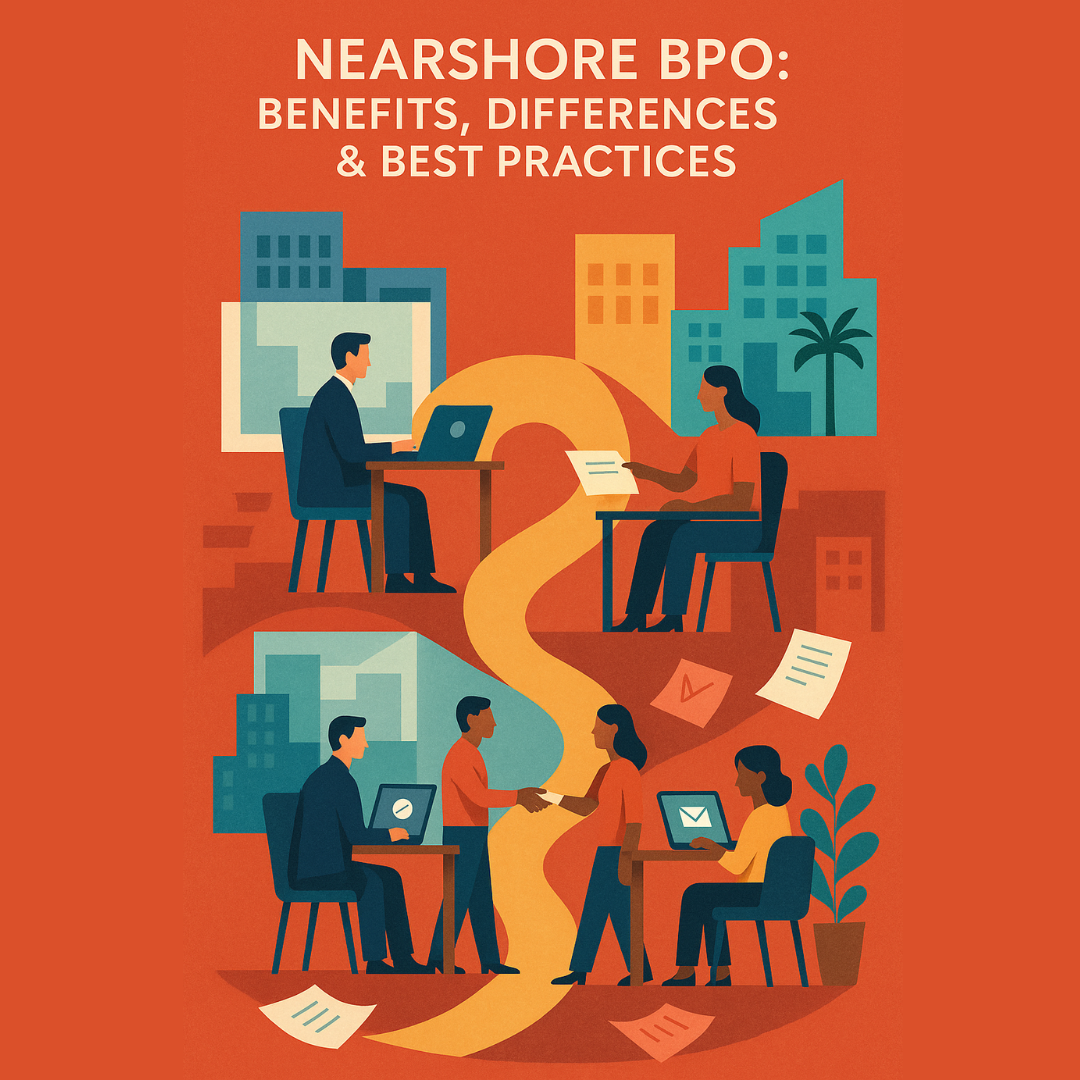
Nearshore Business Process Outsourcing refers to the practice of delegating business processes to service providers in geographically close nations. This model takes advantage of proximity and overlapping working hours to facilitate seamless communication and collaboration between businesses and outsourcing teams.
What Services Are Typically Offered in Nearshore BPO?
Nearshore service providers offer a broad range of functions that enable businesses to streamline operations. This typically includes:
- Customer Support: Handling customer inquiries and ensuring service excellence.
- IT Development: Software development, tech support, and infrastructure management.
- Human Resource Management: Recruitment, payroll processing, and employee onboarding.
Some providers specialize in areas like process optimization, where they use tools like HubSpot or automation to enhance efficiency.
How Does Nearshore Outsourcing Work?
Nearshore outsourcing relies on flexible engagement models tailored to specific business goals. Companies usually engage providers through fixed contracts, dedicated teams, or hybrid solutions.
The overlapping time zones of a nearshore arrangement allow for real-time collaboration, faster decision-making, and reduced delays in addressing operational needs.
Why Is Latin America a Key Hub for Nearshore Outsourcing?
Latin America has emerged as a leading nearshore destination due to its skilled labor pool and integration with global markets. For instance, its multilingual workforce and high level of English proficiency make it an ideal partner for firms in North America. Industries such as technology development, fintech, and customer experience enhancement have successfully leveraged nearshore services from this region.
What Distinguishes Nearshore BPO From Offshore Outsourcing?
The core difference lies in geographical proximity. Nearshore outsourcing facilitates closer collaboration compared to offshore models, which typically involve greater time zone disparities. Moreover, nearshore providers often share cultural and regulatory similarities with their client companies, reducing risks of misalignment.

Image Credits: Freepik
Benefits of Nearshore BPO: Why It’s a Strategic Choice
Nearshore BPO offers distinctive advantages over other outsourcing models by prioritizing both efficiency and alignment with business operations.
What Are the Core Advantages of Nearshore BPO?
- Cost Savings: Nearshore solutions are often more affordable than onshore services without compromising quality.
- Proximity & Time Zone Compatibility: Shorter distance and overlapping work hours foster seamless project coordination and faster workflows.
According to a 2024 MIT study on business operations, companies using nearshore models reported a 30% reduction in project turnaround times.
How Does Cultural Affinity Improve Collaboration?
Shared cultural values and communication norms ensure smoother interaction between teams. Cultural alignment reduces misunderstandings, improves customer satisfaction, and enhances operational outcomes. For example, nearshore teams often adapt more effectively to a client’s brand tone, creating better customer relationships.
What Is the Scalability of Nearshore Models?
Nearshore BPO allows businesses to adjust resources based on demand. Companies can scale operations up or down without significant delays, ensuring better alignment with growth stages. This scalability is particularly advantageous for industries like e-commerce, where seasonal activity requires operational agility.
Why Should Startups Consider Nearshore Outsourcing?
Startups often benefit from nearshore BPO due to cost controls, access to experienced talent, and quick speed-to-market solutions. By outsourcing processes, startups can maintain focus on core competencies while their nearshore partners handle essential back-office tasks.

Nearshore vs. Offshore BPO: Key Differences and Considerations
Comparing nearshore and offshore BPO highlights differences in cost, communication, and operational efficiency. Each model has unique advantages depending on business objectives and industry demands.
What Are the Key Differences Between the Two Models?
- Cost Structures: Offshore solutions may offer lower base costs due to cheaper labor markets, but hidden expenses like long onboarding timelines can negate savings.
- Operational Efficiency:: Nearshore BPO allows greater collaboration with fewer time zone challenges.
- Relationship Management: Proximity in nearshore setups often fosters direct, long-term engagement.
What Benefits Does Offshore Outsourcing Still Offer?
While nearshore outsourcing excels in real-time collaboration, offshore outsourcing remains viable for companies prioritizing low initial costs or looking to tap into large, diverse labor markets. Some sectors, like high-volume manufacturing, still prefer offshore models for this reason.
Why Are Forward-Thinking CFOs Favoring Nearshore BPO?
Finance leaders value nearshore BPO for its ability to align with strategic planning. Nearshore partnerships reduce financial risks, improve data security through shared regulatory frameworks, and enhance operational agility.
How Do You Choose Between Nearshore and Offshore BPO?
Businesses should assess factors such as their industry requirements, data sensitivity, and communication needs. For customer-centric sectors, nearshore providers may outperform offshore alternatives in cultural alignment and responsiveness.

How to Choose the Right Nearshore BPO Provider
Selecting the right partner is essential for achieving long-term success with nearshore outsourcing.
What Factors Should You Evaluate in Potential Providers?
When vetting outsourcing providers, businesses should analyze:
- Their expertise in the relevant industry or domain.
- Proven track records indicated by client testimonials or case studies.
- Scalable solutions that can grow with the business.
Transparency in pricing and communication should also be prioritized to prevent issues down the line.
What Are the Best Practices for Transitioning to Nearshore Outsourcing?
The best outsourcing practices start from mitigating risks and clear onboarding strategies. Businesses should define key performance indicators (KPIs) and establish frameworks for collaboration and knowledge transfer. Regular reviews and feedback loops help ensure alignment as operations scale.
What Are the Risks of Nearshore Outsourcing, and How Can They Be Mitigated?
Potential risks include language gaps or overdependence on a single provider. Businesses can reduce this by diversifying providers or conducting regular risk assessments. Clear contractual agreements outlining service levels also minimize misunderstandings.
Practical Tips for Seamless Provider Selection
Startups and enterprises alike can benefit from:
- Pilot Projects: Testing small-scale projects before committing fully.
- Leveraging case studies and client reviews to evaluate performance.
Lessons Learned and Examples From Nearshore Outsourcing
Companies adopting nearshore outsourcing report significant efficiency gains and operational improvements.
What Is the ROI of Nearshore Outsourcing?
Success metrics such as operating cost reductions and resource efficiency indicate strong return on investment (ROI). According to a 2024 Gartner report, nearshore BPO clients reported 20-25% average cost savings across operational functions.
Case studies: Successful Transitions to Nearshore Outsourcing
Examples of businesses transitioning to nearshore BPO demonstrate measurable benefits such as shortened project timelines and reduced employee workloads. Notably, sectors like customer service and IT have shown exceptional results.
Final Best Practices and Trends to Watch
Emerging technologies such as AI and automation are increasingly incorporated into nearshore outsourcing. These advancements streamline repetitive tasks and allow providers to focus on delivering high-value services.
Conclusion:
Adopting nearshore BPO enables companies to reduce costs, improve collaboration, and access skilled talent pools in key hubs like Latin America. Strategic provider selection and adherence to best practices ensure a smooth transition and consistent success. Girl Power Talk delivers tailored nearshore BPO solutions that empower businesses to achieve efficient, scalable growth.
