
CATEGORIES
Law and Technology | People We Admire | Women Empowerment1. Please tell us a bit about your childhood and the values that shaped the person you are today.
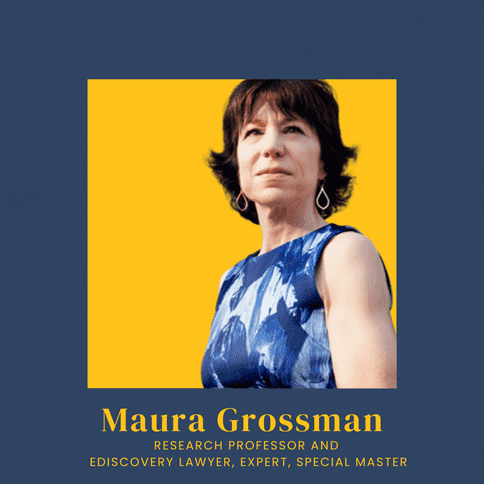
My background is interesting. My mother was a Holocaust survivor. She came to the United States from East Germany when she was eight years old, escaping on the underground. She didn’t talk about it much when I was growing up, but I’m sure it shaped a lot of who I am. Sometimes when I read about the characteristics of first-generation Holocaust survivor children, I recognize myself in them.
My mother was a psychologist and a professor, and my father worked in insurance and financial consulting. I found psychology fascinating, and insurance very boring! So, I decided early on that I wanted to become a psychologist. I think I was also drawn to it because I wanted to understand my mother’s psychology—what she had gone through, and why she was the way she was.
I worked in inner-city hospitals and mental health clinics in Bedford Stuyvesant, Brooklyn, and the South Bronx, helping people from marginalized communities who faced multiple challenges, such as poverty, substance abuse, and racial discrimination. While it was meaningful work, I gradually realized that being a psychologist wasn’t the best fit for my personality. Therapy required patience and passivity, waiting for people to grow at their own pace, and that wasn’t me. I preferred solving problems more directly.
Then the U.S. healthcare system had also changed, making therapy more limited and formulaic. That frustration, combined with a growing sense that I needed to do something different, led me to look for new directions. And that’s when I found myself drawn toward law—a field where I could still help people but in a more active, problem-solving way.

2. You began your academic path in psychology before transitioning into law and technology. What led to this transformation?
By the time I decided to study law, I was in my early thirties and managing 12 mental health centers in the South Bronx. Many thought I was crazy to leave that stability and move into a dorm as a 32-year-old student at the Georgetown University Law Center—but I did it anyway.
Initially, I thought I’d go into health law, but I found it uninspiring. During a summer at a litigation firm in New York, however, I discovered that I loved litigation. It was fast-paced, unpredictable, and intellectually demanding. I joined one of the most prestigious law firms in New York and practiced there for 17 years. But after some time, I realized that I didn’t actually like conflict. Looking back, I think I would have made a great judge because that role combines empathy, logic, and problem-solving without the win-at-all-costs mentality.
A mentor once told me that to survive in law, I needed to specialize. Generalists, he said, can always be replaced, but specialists become indispensable. That advice changed my life. Around that time, technology was just beginning to intersect with law, and my mentor suggested I explore this “electronic stuff.” I attended The Sedona Conference, one of the first groups to explore issues at the intersection of digital data and the law.
I came back fascinated. I devoured everything I could find on computers and law, hired a tutor to teach me how computers worked, and even attended computer science conferences. Eventually, I met Gordon V. Cormack, a leading expert on spam filters at the University of Waterloo. I realized that separating spam from real emails wasn’t so different from separating irrelevant documents from evidence in legal cases. Together, we built a system that applied spam-filtering technology to legal document review—what became known as Technology-Assisted Review (TAR). Our research proved that AI could outperform lawyers at identifying relevant evidence in massive datasets. The paper we published in 2011 became highly influential and was cited by courts worldwide.
That’s how I found myself at the crossroads of law, technology, and artificial intelligence—a space that has continued to define my work ever since.
3. How do you continue to evolve your career, especially with your current work in AI, ethics, and the law?
When Gordon and I got engaged, I moved to Waterloo, Canada, and joined the University of Waterloo’s School of Computer Science. Many assumed I was just a “spousal hire,” but I was determined to prove otherwise. I quickly realized that many computer scientists were not thinking about the ethical implications of what they were building—issues like privacy, bias, and societal harm.
So, I began teaching courses on responsible AI, helping students question not just how to build, but whether they should build in the first place. I also started teaching at Osgoode Hall Law School in Toronto, helping lawyers understand the technology they’re expected to regulate.
In recent years, my focus has turned to AI as evidence, especially deepfakes and their impact on the justice system. I now train judges to recognize and deal with deepfakes in court. I recently received a major research grant to develop systems that will help courts and self-represented litigants address these challenges.
Today, I balance teaching, research, consulting, and serving as a special master—a court-appointed neutral who handles complex technical disputes. It’s a role that lets me use both my legal and psychological training, and I love it.
Over the years, I’ve learned two major lessons: First, specialization can actually give you more freedom than being a generalist. When you’re one of a few experts in your field, opportunities come to you.
Second, adaptability is essential. The world is changing too fast to stay static. Young people today will need to reinvent themselves repeatedly, as I have, to stay relevant and fulfilled.

4. You’ve often been described as a “superstar among superstars” in eDiscovery — how do you stay grounded amid such high praise and recognition?
I teach my students about something called imposter syndrome—that feeling of being a fraud who’s about to be found out. I don’t think I’m a fake, but I do understand the feeling of never being good enough.
That goes back to my childhood. My mother, being a Holocaust survivor, was emotionally scarred in certain ways. No matter what I did, I could never quite make her happy. Not because of anything I did wrong, but because she carried her own pain and trauma, so I grew up constantly trying to prove myself. Having one doctorate wasn’t enough; I had to get another. Every time I achieved something, I was already thinking about what I needed to do next.
So, when people call me a “superstar among superstars,” I honestly don’t feel that way. I’m always chasing the next goal, asking myself, What more can I do? What more impact can I have?
In a way, it’s what keeps me grounded, because I don’t really see myself as having “arrived.”
There’s also a downside to doing many different things. In law, the pinnacle is often becoming a partner at your firm. But that wasn’t in the cards for me. In my first firm, I felt like a hockey player on a baseball team. I was great at what I did, but my firm was focused on corporate mergers and acquisitions, not technology law. They didn’t need a “hockey player,” not even a great one.
So yes, I never got the brass ring that many lawyers chase, and that stung for a while. But looking back, I realize that if I had become a partner, I probably wouldn’t have done the fascinating things I do now. Training judges, speaking all over the world, teaching about AI, or even having conversations like this one.
I do still feel pressure. I’m always wondering what my next act will be, afraid of becoming irrelevant or outpaced by younger generations. But that pressure keeps me moving. I’m still chasing the bus, and maybe that’s not such a bad thing.

5. As technology becomes deeply integrated into legal work, what ethical considerations should lawyers and technologists keep front of mind?
I worry about a few things. Many people fear that technology will take over the world. I’m not as worried about some kind of far-off dystopia, although I’ll admit that reading recent reports about AI systems learning to deceive is deeply unsettling.
What concerns me more are the real, present issues already shaping our world, such as algorithmic bias. For example, if you ask an image generator to “show me four lawyers,” you might get four middle-aged white men. But if you ask for “four felons,” it may return images of four young Black men. That kind of systemic bias embedded in our tools is dangerous. The troubling part is that many computer science students don’t see it as their responsibility. They think their job is simply to make the technology faster or more efficient, not to worry about what’s in the data. I keep telling them: if you build it, the bias becomes your problem too.
Another ethical issue is what I call “data colonialism.” When tools like ChatGPT were trained using reinforcement learning with human feedback, people in the Global South were paid mere pennies an hour to review extremely distressing and harmful content—violent images, abuse, atrocities—so that this material wouldn’t end up in the training data. Meanwhile, the profits from that labor were extracted to Silicon Valley, enriching billionaires while exploiting vulnerable workers. This same pattern repeats often, and it’s something I think about a lot, especially when I see countries like India being drawn into this dynamic.
Then there’s the problem of deepfakes and the erosion of trust. We’re rapidly losing the ability to tell what’s real and what’s not. I also worry that we’re de-skilling an entire generation. Students now outsource much of their writing and problem-solving to large language models (LLMs). There’s solid neuroscience showing that the brain simply doesn’t engage in the same way when you let AI think for you. But the problem goes even deeper than that. Because students outsource, they don’t remember, they don’t integrate, and they don’t learn. That’s a catastrophe, both personally and socially.
And finally, there’s the growing loss of privacy. In some countries, surveillance has reached levels that are deeply alarming. Inequality widens, and power becomes concentrated in the hands of those who control the data.
These are not abstract risks. They’re immediate, tangible, and deeply human. That’s why I teach a course called “Discrimination and Surveillance in AI,” where we explore exactly these issues—bias, exploitation, invasions of privacy, and the social consequences of our technologies.
6. Is there a quote or guiding principle that you live by?
I try to be a good person. I’m not always successful, but I try. I guess you’d call it virtue ethics—imagining what a good person would do, and then trying to live up to that image.
My mother was a straight shooter, maybe a bit too blunt at times, and I’ve definitely inherited that quality. I don’t do politics very well. If you ask me a question, I’ll probably give you a brutally honest answer. My husband even jokes that I’m a “soul crusher.” He’ll come running in with what he thinks is a great idea, and I’ll just blurt out, “That’s the stupidest thing I’ve ever heard.” I don’t mean to be cruel, but honesty is just second nature to me. It’s probably, in part, due to my background as a psychologist, which taught me to prioritize authenticity above all else.
But I do have the humility to admit when I’m wrong. I’ll come back later and say, “Sorry, you were right.” Integrity matters to me even if it sometimes costs me popularity or makes me appear too blunt.
I try to live by the Golden Rule—do unto others as you would have them do unto you.
And whatever I take on, I give it everything. If something’s worth doing, it’s worth doing well. Otherwise, don’t do it.
One thing I’m still learning is how to say no. I’ve spent much of my life saying yes to too many things—too many speaking engagements, too many commitments—and I’m trying to change that. These days, I ask myself: Will this move me forward personally, professionally, or financially? Is it meaningful in some way, or is it simply a friend asking for a favor?
If the answer isn’t a clear yes, then it should be no.
7. Outside of your remarkable professional life, what hobbies or interests bring you joy?
My husband and I have a tandem bicycle, but it’s not your usual front-and-back tandem. Ours is side-by-side—two bikes connected next to each other. It’s called a Buddy Bike. We ride it everywhere, to the grocery store, around town, and it’s such a conversation starter. People do double takes, smile, wave, and sometimes even stop to ask questions. It makes people so happy, and that, in turn, makes me happy. We actually have three of them now. Whenever we find one on sale, we go get it, wherever it is located.
And then there’s my second hobby, which is a little more unusual. I love demolition derbies. Yes, the ones where cars race in figure eights and smash into each other until only one survives! My husband and I went to a few this year, and they’re mesmerizing. There’s absolutely no logic to it—it’s pure chaos and entertainment. Watching those buses and cars collide is a total escape from the heaviness of the world.
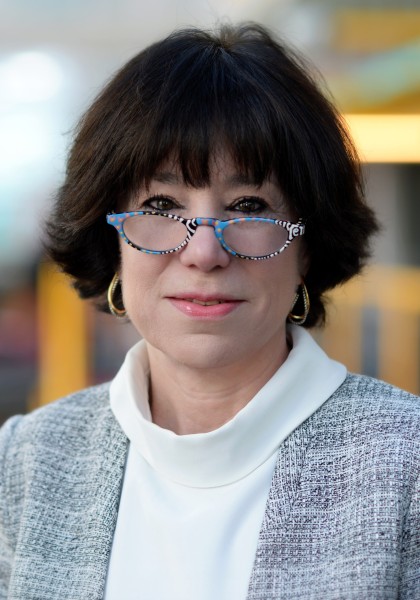
I also love shopping, especially for unusual clothing and eyeglass frames. I own around a hundred pairs of glasses! (Although these days, I mostly wear the ones that actually help my vision.) Shopping, like biking or derbies, completely takes my mind off the serious things. The world can feel so heavy at times. Sometimes you just need to do something absurd to stay grounded.
And one more thing, style… When I worked at my law firm, I used to dress all in black, trying not to be noticed. But now, I dress entirely for myself. When I go on stage, I wear oversized jackets and bold, unusual outfits, not for attention, but because they make me feel good. Having your own style says something about who you are. And I think people would say I definitely have a style these days.

8. What are your goals for the coming year, or any fears that you have? And overall, what kind of legacy do you hope to leave for yourself?
I’m not sure what I’m going to do in the next year or two, to tell you the truth. I’m a little tired right now, so I need to take a breather and give myself some time to regroup. I’ve been running so fast for so long.
Right now, I feel like I’m at the height of AI and all this related work, so it’s hard to step back. But I’m excited about this grant we’ve received, focused on deepfakes. I’m working with a team of technical experts to try to build an open-source detector that courts and people without lawyers can use to verify whether something is real or fake. I’m a little nervous because no one has been able to do that thus far. But we’re going to try. That’ll be my main focus for the next year or two since it’s a two-year grant.
Having an impact really matters to me. It’s an important part of my legacy. Sometimes I tell my husband, “So-and-so got this award,” and he says, “Yes, but what’s their result?” Many people get awards, but they don’t have any results. I’m proud that I’ve had results. I’ve changed how electronic discovery is done globally and how courts handle AI evidence.
I do want to continue my work with the courts, but I may slow down a little on teaching. Teaching takes a lot of energy and preparation.
And of course, I’ll keep looking for and doing meaningful work wherever I can.
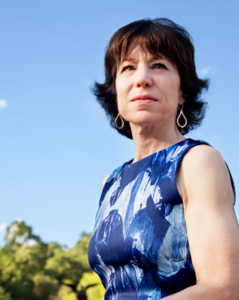
9. If you were to advise your younger self—or people our age who are at the intersections of law and technology and perhaps dealing with a bit of “AI anxiety”—what would you say?
Being comfortable with who you are is really important. You have to realize that you bring something to the table as you are. You don’t have to be like everyone else, and you certainly don’t have to conform. Not everyone needs to be a politician or follow the same path. Do what you love, what you’re good at, and the money will follow.
When I was younger, I probably would have ended up at a different law firm if I’d listened to my heart. The firm where I practiced for 17 years, Wachtell, Lipton, Rosen & Katz, is considered one of the most elite firms in the world, and that mattered to me a lot back then. But I didn’t love the kind of litigation we did. We mostly represented corporations, and I felt like I was just moving money from one hand to another and not doing any real good.
If I could go back, I’d tell myself to put prestige and money aside. Because while that firm paid incredibly well and gave me the financial freedom later to take a teaching job that barely covered the cost of my haircuts, it wasn’t fulfilling work.
I probably would have chosen a law firm that did more interesting or meaningful work, like white-collar crime. I’ve always found it fascinating to figure out “who did what to whom.” But I didn’t pursue that because I was chasing prestige and the kind of success that’s ingrained in us to chase. If I’d listened to my instincts more, maybe I’d have become a judge instead of joining a corporate law firm. Or maybe I would have realized earlier that psychology wasn’t the best fit for my personality.
But I learned those lessons the hard way, and then I repositioned. So, my advice would be: learn who you are and what you like earlier, before you make the same mistakes. It will make a big difference.
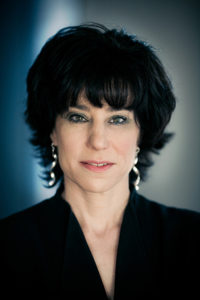
10. What would you say to people who are afraid of pivoting or changing directions in their careers?
It’s scary to pivot, I won’t deny that. But you have to think of it this way: What’s the worst that could happen?
If I pivot and it doesn’t work, I can always go back. But if I don’t pivot, I might get to the end of my life and regret not trying. That, to me, is the bigger loss.
I do regret that I didn’t become a judge when I was young enough for it to make sense. So, I would really encourage people to take those leaps and not feel like they have to stay on one path, or on the path that others tell them is “right.”
My parents wanted a daughter with a doctorate by the time she was 25. I had one, but it was the wrong doctorate. Maybe if I’d taken a year off to “find myself,” I would’ve realized that and chosen differently.
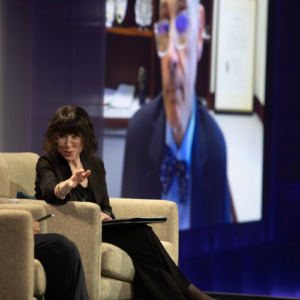
So, my advice is: don’t be afraid to pivot. I hear people say, “I’m 30-something, I can’t go back to law school now.” And I always ask—why not? What’s the worst thing that can happen? You lose a year and some money, but you learn something important, even if that something is that this wasn’t the right path for you.
When I went to law school, I had worked for five years and saved the money to go. So, if it hadn’t worked out, I’d only have lost five years of savings, but it, in fact, turned out to be the right decision.
If you want to do something, just go for it.
Conclusion:
Maura Grossman has continuously reinvented herself, guided by a deep commitment to integrity, impact, and intellectual curiosity. From pioneering the use of AI in legal evidence to educating judges, lawyers, and technologists on ethics, bias, and responsibility, her work has reshaped how institutions engage with emerging technologies. Her story is a reminder lasting legacy is built not through recognition alone, but through creating tangible change
