

CATEGORIES
Careers | Leadership and Networking | People We AdmireOverview:
- In this insightful interview, Mark Beebe reflects on the experiences that have shaped his leadership philosophy.
- From a childhood rooted in Midwestern values and competitive wrestling to his over a decade-long career in finance.
- Mark opens up about how his understanding of success has evolved and why impact matters more than titles and money
- Mark emphasizes the importance of listening, honesty, and transparency as the cornerstones of trust.
1. Tell us about your childhood and how it has shaped who you are today.
I grew up in a small town in Wisconsin, and I had a pretty classic Midwestern upbringing. I was drawn to sports early on, and I happened to land in a school district where wrestling was important. Getting good at it taught me lessons that still stick with me today. One of them is that you have to work for what you want. Nothing is handed to you because of where you’re from or who your parents are. You have to put the work in.
Wrestling opened the door to college athletics, which pushed me even harder, both physically and academically. I did not have a clear direction at first. I considered medicine or teaching, but a finance class really clicked for me while my classmates struggled with it.. That same work ethic carried into my studies and eventually into my career.
Along the way, I’ve learned that hard work doesn’t mean you’ll always win. You will fail. You will get knocked down, it is the ability to get up after getting knocked down that defines long-term success. You certainly need friends, colleagues, and peers who can help you grow, develop, and become a better person by giving guidance. While mentors and peers can offer guidance, you have to get back up on your own. That ability–to recover, reflect, and keep going–is something I’m proud of. It’s shaped my career and how I show up for others, too.
2. How has your perspective on success evolved throughout your career? What does success mean to you, either personally or professionally?
Earlier in my career, success was all about titles and promotions. Even in my first job, when I was in an entry-level finance position, titles and more money were all I could focus on. I had this idea that by 35, I needed to be a vice president, and that thinking drove me for a while. Eventually, that shifted. I started wanting real decision-making power. In hindsight, I realize how naive it was. But even that mindset changed once I worked with people who helped me see things differently. Currently, success has become about the impact I can make on others. When I say others, I mean “people”; it can be organizations, but organizations are a conglomerate of people. So you’re affecting people and making an impact in a positive way on those people.
Now, success for me is about impact. A positive impact I can make on people. That might be business owners, helping them reach their goals, or employees who are early in their careers. I try to offer the kind of guidance that helped me figure out things that are truly valuable to me. It’s not telling them what to do but helping them figure out how to get where they want to be.
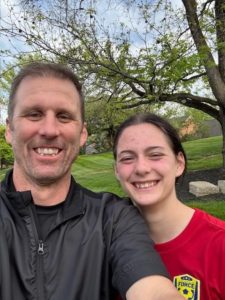
Personally, it’s the same. As a father, I define success by the impact I can have on my daughters. There will be ups and downs, but if I can help shape their growth in a meaningful way, that’s what matters most. At work or home, it’s really about helping others move forward.
3. What have you unlearned recently either in your professional life or in business?
I’m not sure I fully believe in “unlearning.” I think it’s more about adjusting or refining what you already know. It’s like sports: at five or six years old, you do your best with the basics. As you grow, the fundamentals stay, but you adapt how you apply them to get better results. So it’s less about unlearning and more about evolving.
The biggest area where I’ve had to rethink is parenting. I have two daughters, and their experiences as teenagers are completely different from mine. I have to let go of the idea that what worked for me will work for them. They’re their people, with their own perspectives. And that’s a good thing. I have to take what I learned in my childhood, reshape and apply it to my two daughters. Like with sports, they are failures, things you look at and say “why did I do that?” I then hope and try not to make the same mistake again.
The real shift has been learning to step back. Whether as a parent or a leader, I try to share my experiences and allow them to make their own decision, even if that means they’ll make mistakes. That’s how people grow. Of course, in high-pressure situations, you still have to step in, but when there’s space, letting others find their way is often the best thing you can do. We all still want to do the right thing and be good people. There are just different ways to get there.
4. Have you had a mentor who has made an influential impact in your life?
I’ve been shaped by a lot of people, not just one. Even this morning, I talked to my dad for about 30 minutes. I don’t know what we talked about, but it reminded me how much I value those conversations. I’ve come to appreciate my parents more now that I have daughters of my own. I appreciate the sacrifices they’ve made for me, but I probably didn’t realize how much they gave up until I had my own kids.
On the professional side, one of the most influential people in my life is Jim Smith. I met him over ten years ago when he became the CEO of a company I worked for. He had an impressive background, but you’d never know it from how he treated people. He’s humble, approachable, and always respectful. Despite his accomplishments, he never acted like he was above anyone. What stood out about Jim was how genuine he was. He’s incredibly well-connected in the sports world, but he never made that his identity. We’ve both moved on from the company, but we’ve stayed in touch. He’s just a good person. That’s why I cherish that. I’ve learned a lot from him because he’s one of the smartest people I’ve ever met.
Jim taught me that success isn’t about your title. It’s about how you treat people and the impact you have on them. That’s what I’ve taken away from knowing him, and why I value our relationship so much.

5. From your experience, how do you think leaders can earn trust with their employees or colleagues in times of change?
It comes down to three things: listening, transparency, and honesty. People want to trust you, but unfortunately, with many situations in the business world, people see that leaders abuse that trust. That can mean different things to different people, but you see it with corruption/fraud/theft. So I think employees can be hesitant to give leaders trust, and rightfully so.
Trust has to be earned, especially in the workplace, where people have seen it abused through corruption, dishonesty, or poor leadership. So it makes sense that employees are cautious.
In my experience, earning trust starts with listening. Everyone’s opinion matters regardless of their role or tenure. That doesn’t mean all perspectives carry the same weight, but they all deserve to be heard. The goal is to understand, not just respond.
Next is transparency. Share what you know, even if it’s incomplete. Sometimes admitting, “I don’t know yet,” or “We’re still working through it.” Being transparent builds confidence.
Then there’s honesty. That means clearly explaining your position, especially when you disagree or can’t move forward with a suggestion. Don’t sugarcoat or sidestep it–be respectful and direct. When people see that you genuinely listen, share openly, and communicate honestly, trust begins to build even during uncertain times.
6. Which global challenge do you feel most strongly aligned to?
Human rights. It’s a broad area of social movements, but it comes down to one simple idea: You treat others the way you want to be treated. If that principle guided how we approached issues around race, gender, identity, or any socioeconomic challenges, a lot of problems would be less severe or disappear entirely.
I am not concerned with your sexual orientation, gender identity, or religion in a way that changes how I treat you. To be very clear, I am not saying that I don’t care about those, I am saying that who you are, what you believe doesn’t change that fact that you deserve to be treated with respect and dignity – everyone deserves respect and decency. That mindset is foundational to how I live and lead. It’s not complicated, but it’s powerful. We would be in a much better place if more people practiced it.
7. What is the best thing about working in the finance industry?
The best part is that no two problems or days are ever the same. Even small changes in assumptions or data can lead to completely different outcomes. Whether it’s shifting interest rates or a slight tweak in a model, you have to think critically and adapt.
That constant variation keeps me engaged. I enjoy having to rethink things, adjust my approach, and keep learning. If every day looked the same, I’d get bored pretty quickly. The dynamic nature of finance is what makes it rewarding for me
8. What is something you believed early in your career that you no longer agree with?
I used to think you had to always have the answers. But over time, I’ve learned that you don’t. You just need to know where to find them or who to ask. It’s completely okay to say, “I’m not sure, but I’ll find out,” even in a meeting with the CEO. Pretending to know can actually cause more problems.
That lesson applies outside of work, too. As a parent, I used to think I had to have all the answers for my kids. Now I know it’s fine to admit when I don’t and to follow up later; but you have to follow-up. It’s not avoiding responsibility. It’s being honest and thoughtful in how you respond.
9. Outside of work, how do you recharge?
I recharge by staying active. I enjoy working out, coaching high school wrestling, and playing some golf when I can. I think it’s important to make time for the things that bring you joy, even if it’s not every day. I’m not out golfing all the time, but I commit to it when I can and make sure I enjoy it. It’s really about making a mental commitment to do the things that help you reset.

10. What is something you used to value that you no longer value?
Earlier in my career, I placed a lot of value on titles. I thought success meant climbing the ladder as quickly as possible. But almost 30 years out of college, I see it differently. Titles can have meaning in certain contexts, but they’re not what matters most to me anymore.
With age and experience, you realize there are far more important things to life like purpose, relationships, and the impact you have on others.
11. What is the best piece of advice you’ve received?
About a dozen years into my career, I was still focused on titles and decision-making. I got some valuable coaching from a few leaders I worked with who told me: Take the time to really get to know the people you work with.
At the time, I was focused on performance–driving results, improving processes, and hitting financial goals. I wasn’t ignoring people, but I wasn’t truly connecting with them either. I didn’t get to know them or understand what’s important to them.
The advice shifted my mindset. Getting to know what matters to people, both in and outside of work, helps you understand how to support and lead them more meaningfully. If you understand people and the impact you can make on them, then that is way more satisfying and impactful than the other stuff.
Now, years later, I still stay in touch with former colleagues. In fact, I’m having lunch tomorrow with two women who used to work for me and are now retired. We don’t meet up because we worked together. We meet because we genuinely enjoy each other’s company. We still laugh about how we used to work together and the funny situations that happened. That kind of connection has been far more rewarding than any title or accomplishment.
Conclusion:
Mark Beebe’s journey is a testament to the value of hard work, continuous growth, and staying grounded in what truly matters. His story reminds us that leadership is not about having all the answers or climbing a ladder of titles, but about the positive impact we leave on the people around us. From the wrestling mat to the boardroom, he has carried the same lessons: get up when you fall, stay committed, and always treat others the way you want to be treated.
