
CATEGORIES
Entrepreneurship | Leadership and Networking | People We AdmireOverview:
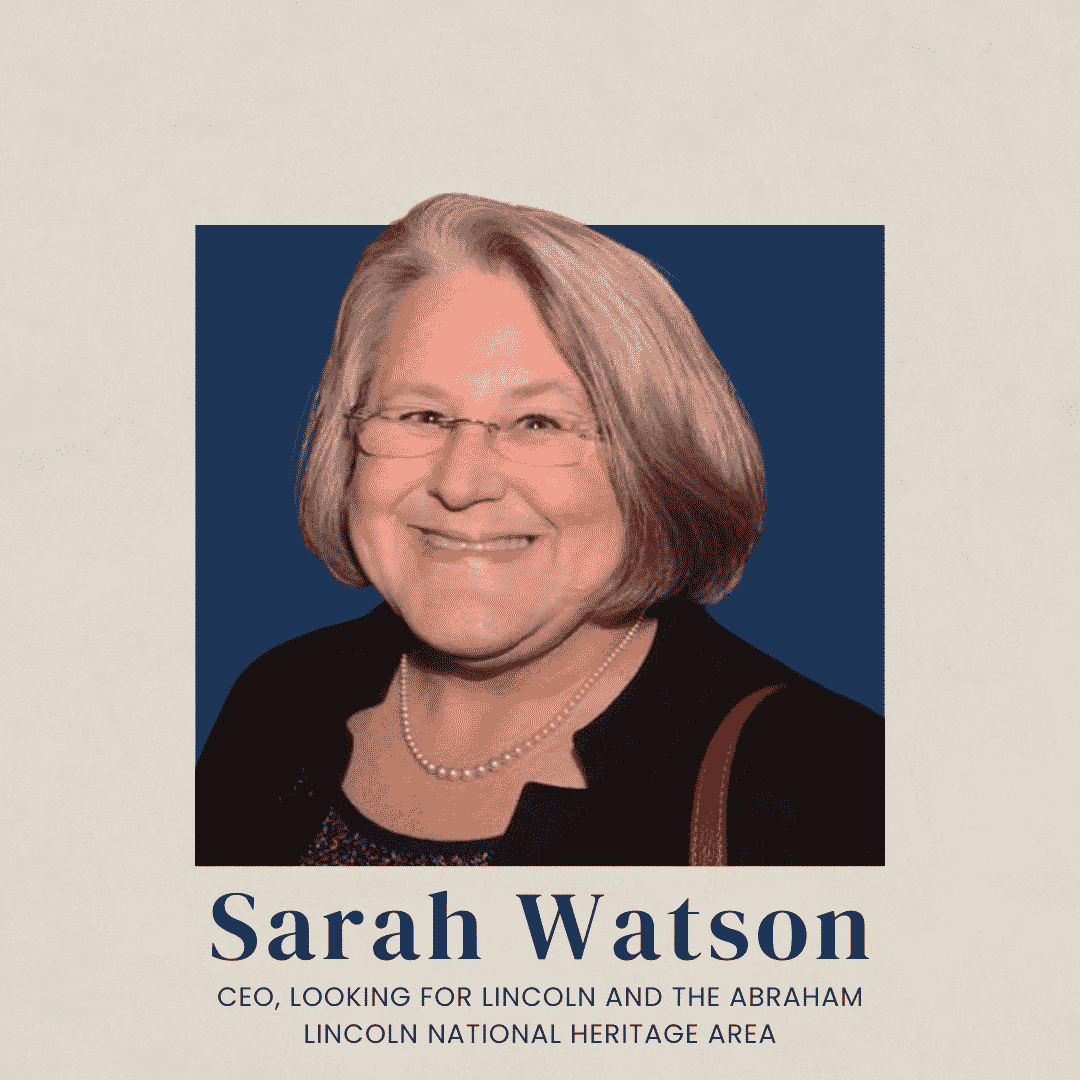
- Sarah Watson openly shared how her childhood, values, and personal experiences shaped her into the person she is today.
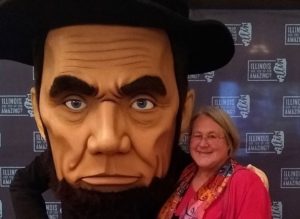
- She finds deep fulfillment in sharing Abraham Lincoln’s life and legacy.
- For Sarah, Lincoln grounded in compassion, honesty, integrity, and perseverance, serves as a compass for leadership and purpose..
- She emphasizes that a purposeful life is one centered on making a meaningful impact in the lives of others.
1. Tell us about your childhood and how it influenced the person that you are today?
I grew up in a small town in Illinois, where my father ran our family’s 100-year-old business and my mother taught kindergarten. They were, and still are, two of the most inspiring people in my life. I had a happy, supportive childhood. I have two siblings, and while we had our share of squabbles growing up, we’re very close now. Despite living in a small town, I had exposure to the wider world, which gave me a strong sense of both groundedness and possibility. It was a safe, open environment where I could ride my bike to the pool, explore, and just be a kid. Most of all, my parents encouraged me to go after what I believed I could do, and to always give it my best. That foundation shaped everything that came after.
2. How do you define the core mission of Looking for Lincoln today, and how has that evolved?
Looking for Lincoln began in 1998 as part of an Illinois State Heritage Tourism Grant and later became a 501(c)(3). Over time, the organization pursued and received federal recognition as a National Heritage Area–one of only 62 in the country.
What makes us unique is that we’re the only organization dedicated solely to telling the story of a person- Abraham Lincoln. That alone is a testament to his enduring national significance. By law, we’re designated as the coordinating entity for the National Heritage Area, which spans more than half of Illinois. While the Heritage Area refers to the physical landscape, Looking for Lincoln is responsible for carrying out the work outlined in the legislation.
Our mission boils down to the three core goals: preserving and sharing the life, time, and legacy of Lincoln; helping communities tell their own authentic Lincoln stories in engaging ways; and using heritage tourism to support local economic development. In essence, it is about honoring history and also inspiring future generations.
3. Tell us more about Best in People and how it functions.
Best in People isn’t something I’m actively pursuing right now, but it was a venture I created when I was exploring a more entrepreneurial path. It was essentially a one-person consulting firm focused on helping organizations and leaders bring out the best in their people, just as its name suggests.
I drew on my background in human resources and adult learning to work with businesses on maximizing their greatest asset: their people. That meant helping them hire the right talent and then supporting that talent’s growth and development. Like much of my career trajectory, another opportunity came along that was exciting, so I shifted gears. But the passion behind Best in People never really left. These days, I bring the same approach to my work at Looking for Lincoln.
4. Who has had the greatest influence on your professional journey, and how did they shape your path?
I would say my late husband was the person that had the greatest influence on me. We met in college, married right after, and really grew up together. He became an attorney, and we both worked for a year before he started law school.
He was my mentor, my cheerleader, and my best friend. He encouraged me to keep trying new things, even when it was hard. He had that mix of tough love and unwavering belief in me, and that made a real difference. Of course, my parents played a big role too. They’re both 94 and still give me advice. But, my husband was the one who truly pushed me to pursue my path and keep going.
5. How did the LEAD Academy come to life, and why did you choose to focus on Lincoln’s leadership traits to inspire eighth graders?
Like many other good ideas, the LEAD Academy was born out of conversation and collaboration. I’ve always cared deeply about how we engage youth, and I saw a gap in how history is often taught. It tends to focus on dates, battles, and events rather than making it feel relevant or personal. With LEAD, we wanted to change that. We use Lincoln’s leadership traits–honesty, integrity, perseverance and empathy–to teach about him and help students see those same qualities in themselves.
We chose eight graders because research shows they’re at that sweet spot: still curious and open to learning, but mature enough to reflect and grow. We also intentionally focused on students who might not already be seen as leaders and just need someone to recognize their potential. My own son had strong leadership qualities, but didn’t always see it in himself. I know how powerful it can be when someone says, “I see this in you” and that is the heart of LEAD. It is a week-long program on a college campus, where students explore Lincoln’s life- not simply as a historical figure, but as a human who struggled and grew. By the end, they leave with a real sense of their own leadership potential to lead in school, their community, or even in their sports team.
6. Your team is just three people—how do you juggle program development, communications, and fundraising? What’s your secret to making it all work?
There’s no single answer, but a few things make it work. First, we keep our core team intentionally lean, especially since we’re publicly funded. That gives us flexibility and helps us avoid tough decisions like layoffs. For special projects, we bring in consultants with the right expertise, which keeps us agile without stretching the staff too thin.
What really makes it work is that the three of us in the core team have different but complementary strengths. Our program manager handles all the programmatic work, our business manager keeps the financials and reporting in order, and I focus on big-picture strategy, partnerships, and fundraising. We respect each other’s lanes, and we’re all willing to pitch in wherever needed.
We’ve also worked together for more than a decade, which builds a level of trust and rhythm you can’t manufacture. Combined with strong relationships across the communities we serve and support from volunteers statewide, we’ve built a foundation that allows us to do a lot with a little.
7. Can you share an example of a lesser-known Lincoln story from one of the 43 counties that really surprised or inspired you?
There’s one from Metamora, Illinois, that has always stuck with me. Metamora is home to one of the last remaining courthouses where Lincoln actually practiced law. In one case, he was defending a woman who had killed her abusive husband. Everyone in town knew about the abuse, but legally, she was still facing a murder charge.
During a break in the trial, she told Lincoln she wanted a glass of water. He told her he’d heard the water in Tennessee was excellent. When court resumed and the judge asked where his client was, Lincoln said something like, “I’m not sure–she seems to have slipped away.”
Nothing more came of it. Today, it would likely be seen as a case of self-defense. But what struck me was his quiet compassion. He saw someone who had suffered deeply, and he helped her find a way out. That story’s always stayed with me. It’s not just for what it says about Lincoln, but for the humanity which made itself felt that day in that courtroom.
8. What are your top priorities for Looking for Lincoln in the coming years?
Our top priority right now is diversifying our funding. Historically, we have relied on federal support, especially for operating costs, but that’s becoming uncertain. This year in particular has been challenging, with funds allocated by Congress being delayed or withheld. So one of my main goals is to secure more sustainable, diversified funding sources for operations which are harder to fund than programs.
On the programmatic side, we’re staying true to our mission and legislative mandate, which continues to guide our decisions. But within that framework, we’re definitely growing. Youth engagement is our big focus. We’ve also had huge success with our traveling exhibit on the Underground Railroad in Illinois which is already reserved into 2027. It is a strong example of how we can support local communities with resources they couldn’t produce on their own. Our next traveling exhibit will likely focus on Lincoln’s family. So while we’re staying on our path, we’re expanding what we do within it.
9. Given your background in communications with Springfield Public Schools and statewide literacy initiatives (Illinois Reads), how do those skills support your current work?
My career path hasn’t been traditional, but it’s been the right fit for me. I started out as a second grade teacher. After teaching one year, we moved to Des Moines where there were no teaching jobs available, so I pivoted to grad school. That opened the door to a series of roles where I built new skills at every step. I’ve worked in education, corporate HR, state government, and community outreach. Each role taught me something different, and together, they shaped how I lead today.
When I worked in the school district’s communications office, for instance, I focused on changing the narrative around an inner-city school system that people had written off. That experience, along with leading statewide literacy efforts, taught me how to communicate purposefully, build trust, and bring people together around a shared mission. Those skills directly carry over into my work with Looking for Lincoln. And while I may not have planned this career path, I wouldn’t trade it. It’s been full of meaningful work and unexpected opportunities.
10. What is something you are most grateful for, either professionally or personally?
Professionally, the most rewarding part is seeing communities take pride in telling their own stories. We’ve always tried to work from the ground up, not dictate from the top. So when a local community creates something meaningful and we’ve helped support it behind the scenes, that’s incredibly fulfilling.
One moment that really stuck with me was in Metamora, where they produced a film about their Underground Railroad history. Families whose ancestors were part of that network were featured. The turnout was unexpected! It was a Sunday afternoon in a town of 2,000 people and over 700 showed up to the premiere. We don’t need to be front and center. The most rewarding part is knowing we helped make it possible and that moments like that can inspire the next generation to connect with their local history.

11. In your years of telling Lincoln’s story, how has your own understanding of leadership or resilience changed?
Growing up in Central Illinois, Lincoln was always part of the landscape. His values-honesty, integrity, perseverance and empathy, were ones I saw in my own parents, and they’ve stuck with me. My husband was also a huge Lincoln fan, and when I took this job, he was probably more excited than I was. What’s deepened over the years is my appreciation for the 30 years Lincoln spent in Illinois before his presidency. That part of his story often gets overlooked, but it’s where you really see how he grew into the leader we remember.
For me, Lincoln has become a kind of compass. When I face tough choices, I often think What would Lincoln do? Not because he was perfect, but because he led with a rare mix of strength and compassion. His story continues to remind me that leadership is not about titles but character, and how you show up when things are hard.
12. When you think about impact, was there a moment that made you feel like, this is why I do what I do?
The Metamora film premiere stands out to me because seeing over 700 people turn out in a small town to honor their local Underground Railroad history was incredibly moving. Moments like that remind me that the work we do matters. We may be behind the scenes, but we’re helping communities tell their stories and preserve history in ways that bring people together.
I’ve known for a long time that I’m not driven by money or titles but by purpose. And while we are not solving life-or-death issues, we are preserving something meaningful: Lincoln’s legacy, community memory, and local pride. That’s what keeps me going, knowing that in some small way, we’re helping people feel connected to their past and empowered to shape their future.
13. If you could have dinner with Abraham Lincoln, what’s the one question you’d want to ask him?
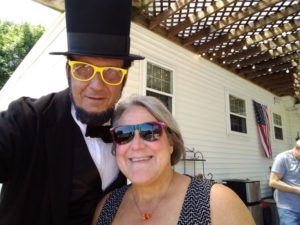
I don’t think I could ask just one question. It would have to be a real conversation. One thought would lead to another, and I’d want to follow where it goes. In fact, I’ve had conversations with Lincoln portrayers–people who’ve deeply studied him and even resemble him–and it always turns into this rich, evolving dialogue.
But if I had to start somewhere, I think I’d ask: Why did you do what you did? The “why” reveals so much more than just facts or decisions. It tells you what a person stands for. From there, you learn the “what” and the “how.” I think Lincoln’s “why” would say a lot about the leader and the human he was.
14. Could you share a particular manta, quote or piece of advice that guides you?
One quote that’s always stayed with me is from Lincoln’s farewell address in Springfield, just before he boarded the train to Washington: “To this place and the kindness of these people, I owe everything.”
It’s a simple line, but so powerful. Here he was, about to become president, and he chose to acknowledge the people and place that shaped him. That kind of humility really resonates with me. It’s a reminder to stay grounded, grateful, and connected to the community.
Conclusion:
Sarah Watson’s story is a reminder that leadership doesn’t always come from a podium. It often comes from listening, supporting others, and staying true to your values. Through her work with Looking for Lincoln, she continues to preserve history and community in deeply human ways.
