
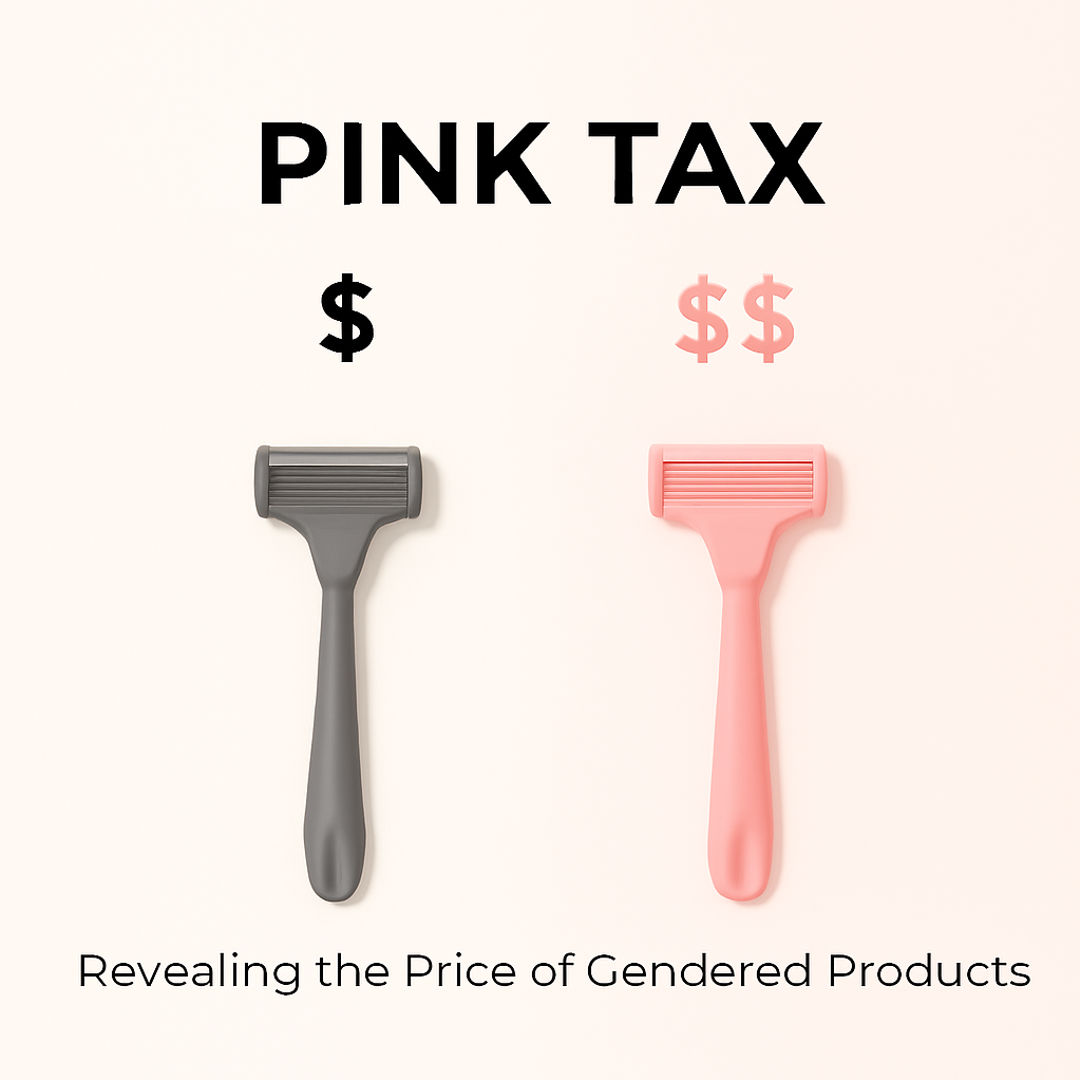
Overview:
- The Pink Tax places an economic burden on women. It impacts their cost of living over a lifetime.
- Gender-based pricing is essentially pricing inequality, as affordable and normalizes traditional ideas around beauty and consumption.
- Gen Z has brought the Pink Tax to the forefront, where they seek equitable representation within pricing structures.
- The end goal is to challenge inequitable practices and help realize an equitable future for all gendered people.
Consider a scenario where you enter a retail establishment in search of shampoo. You come across two bottles right next to each other. One says, “For Women” in soft pastels with a hint of floral scent, and graceful curves for its packaging. The other is labeled “For Men” in aggressive fonts and a sporty scent. You flip them over and compare the nearly identical ingredients, and discover that the women’s product costs more.
Pink Tax, in a nutshell, is an insidious pricing practice preventing women from realizing savings on a myriad of everyday purchases. It is not an actual government tax, but a systematic way for the retail and manufacturing industries. It takes advantage of gendered products (from razors and personal care, to clothing, even toys) and charges other prices.

What Is the Pink Tax?
“Pink Tax” refers to the additional costs that women pay for similar products or services. We are not talking about purchasing a nicer luxury item. We are talking about basic items such as deodorant, shirts, dry cleaning, etc. The only difference is the target customer being marketed to. Women’s items are usually presented in soft colors, feminine branding, and marketed as premium, which led to increased prices.
There have been several studies conducted over the years that highlight the extent of the price difference. According to the New York City Department of Consumer Affairs (2015), women’s products cost 7% more than comparable men’s products. Now, in 2025, the issue still exists, and the outrage is at an all-time high because of increased awareness and condemnation.
Why Does the Pink Tax Exist?
It is always easy to put the blame on the marketers, and this is part of the problem. Several brands have purposely marketed two different products, “for him” and “for her”. As a result, they charge different prices in relation to perceived value. The products that are marketed to women typically have a pink package, floral scents, and look more beautiful. The traditional marketer’s rationale says that it is “worth” more money to women because she is going to “feel” beautiful.
But the issue runs deeper. The target beauty standards are constantly changing. And along with that rises a demand for specialty products in the interest of keeping women “pretty”. They often feel pressured to keep up with what society considers the “beauty norms”. This is due to lack of awareness of the actual cost. The marketers know and align the products (and prices) to what society has programmed women to pay to keep up!

True Cost: Monetary and Social
The Pink Tax is so much more damaging because it is not just a one-time increase in price; it’s cumulative. Think about the additional cost of every toiletry, each piece of clothing, or hair appointment over decades. Research estimates that the Pink Tax could cost women “thousands” over a lifetime. When coupled with the gender pay gap, the cumulative cost is even more alarming. This isn’t just about shampoo or razors. This is about girls’ toys being more expensive than boys’, pink bicycles costing more. The idea that everything that is “female” is “more,” even, at times, concerning health care and insurance.
Gen Z Takes On the Pink Tax
Gen Z is the most digitally connected, socially conscious, and outspoken generation to date. In 2023, young people have used social media to bring attention to the Pink Tax. Instagram, TikTok, and Twitter are full of call-outs, comparisons, and hashtags. Secondary influencers show images of themselves in store aisles, and the ordinary user calls out brands while demanding policy changes. They share helpful tips to avoid being charged more money.
This is not merely venting. They are holding brands accountable and are asking for transparency. When they kick up social media storms, these brands have to respond. There have been brands that have removed gendered pricing in their product lines as a direct response. In some places, more recently, legislators have introduced bills to put an end to the practice through legislation.
What is Being Done?
Consumer advocacy groups are advocating for investigations. Even progressive brands are beginning to price their personal care products in a gender-neutral way. But, there is much more work to be done because gendered marketing is entrenched. Brands want to maximize net profit; society rewards unattainable beauty standards, as consumers don’t often think twice. To change inequities, it will require modifying each of the three categories: brand intention, cultural expectation, and consumer hesitation.

What Can We Do?
So if you are reading this and are feeling excited (or pissed off), here are some things to consider doing:
- Continue Sharing: Share articles, blog posts, and social media posts about the Pink Tax and share your experiences. Education is the first step towards awareness and action.
- Shop Price Comparisons: Next time you go shopping, look at the prices of “women’s” and “men’s.” If they are the same products, but they have different prices, buy the cheaper one or make a statement.
- Create Social Awareness: Post on social media, tag brands, and ask questions. Hold them accountable and demand to know why there is a price difference between two identical items just based on gender.
- Support Changes in Policy: If and when your local lawmakers take up the Pink Tax and other forms of gender pricing, support the action, and proactively educate your community.
- Advocate with Brands: Let companies know their pricing is important to you. They won’t change unless they hear from enough people.
- Just Talk About It: At home, at school, with friends, wherever! Bring up the Pink Tax – conversation leads to action.
Conclusion
The Pink Tax is much more than an inflated figure on a receipt; it is a mirror showing us the cultural norms that too often sidetrack real fairness. The good news is that knowledge and advocacy have the power to reduce or even wipe out this unsound policy. By sharing what we learn about pricing that twists the genders and pressing for systematic fixes, we turn those inflated costs into a rallying point instead of an accepted burden. Together, we can challenge pricing based on assumptions of femininity and carve out a tomorrow where each price tag responds only to value, never to gender.
