
Overview:
-
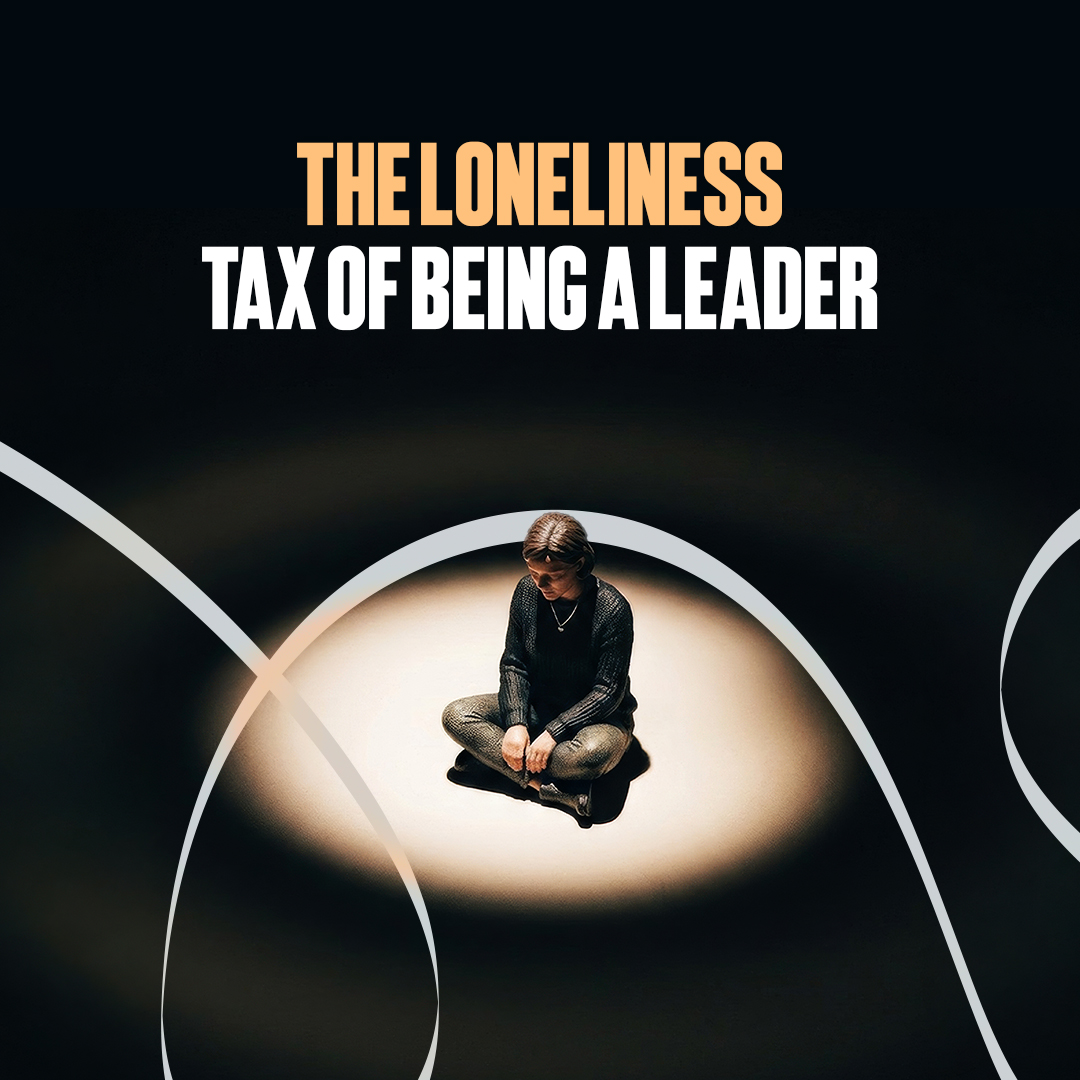
Leadership’s visibility and influence often hide an emotional cost many people are never warned about: the loneliness tax of leadership.
- Isolation appears through filtered conversations, dissolved friendships, suppressed exhaustion, and pressure to project false certainty.
- Research confirms it is not personal; half of all CEOs silently report feeling lonely.
- Building genuine support through mentorship and honest connection is every leader’s most sustainable professional decision.
One of the most lauded professional endeavors is leadership. We learn about it, educate it, and develop entire sectors of industry that help people achieve it. We write biographies of those men and women who have mastered it; we talk about their choices. We point to their successes and say, “See? If ambition is directed properly, it works! What we don’t often talk about is the price the person who others rely on pays for that: quietly.
This expense is called a “cost”. It’s isolation, and it’s more common in the leadership than most realize. This article isn’t about exactly what not to do or why not try more ambitious positions. It’s a frank examination of what that step entails, why many leaders endure in silence and what can be done.

Image Credit: Magnific
The Conversation That Never Happens
One of the conversations that rarely occurs during a promotion. No one speaks to you and says, “By the way, the higher you go up, you will not be able to talk to as many people with the same amount of truth. That authority doesn’t just fade away and forget to break some friendships is never openly discussed. No one ever warns you that you’re going to one day be in a fully packed conference room and realize you’re totally alone.
That is the loneliness tax of leadership and one of the least discussed truths to leadership.
Being a leader is far from the “boy’s club” that is the norm, although it is a strangely forbidden position. The leaders are expected to be strong, certain and calm. Feeling isolated or exhausted can be a sign of weakness and in some workplaces, weakness is not tolerated. Thus it is hidden away, and people believe that they have failed at something personal rather than at something which is almost everyone’s experience. Not a fault of the individual. It is structural.
How Authority Changes Everything Around You
As soon as a person assumes leadership, social structures change. Former equals start to count their words. Those that spoke freely before now select with care what they say. Some get too agreeable and others get too distant. Giving and receiving honest criticism, already uncommon in the workplace, is even less common. The leader must make decisions, and individuals automatically defend themselves against the decisions they are making by becoming harder to read. What follows is that many leaders feel surrounded by others throughout the day and have an emotional void.
Tim Cook said that “it’s kind of a lonely job as Apple’s CEO. The headline wasn’t so memorable because it was unusual – it was memorable because it was honest. Most leaders have the same feeling but they don’t say it.
What the Research Actually Shows
The numbers bear this out. According to a Harvard Business Review and RHR International study, half of all chief executives report experiencing loneliness in their roles, and 61% say it negatively impacts their performance. Even more significantly, 70% of first-time CEOs say that emotional isolation is a big issue. Daily stress, worry, and anger are a lot higher among managers than non-managers, according to Gallup research. These are not exceptions. They are patterns.
And it doesn’t end at the office door! Former PepsiCo CEO Indra Nooyi has candidly expressed how leadership has taken its toll on her in personal areas such as motherhood. According to Bob Iger, his years at the helm of the company had mixed effects on his marriage, as he said in his memoir. These are not cautionary stories about wrongful ambition. They are true stories of how the private lives of individuals are affected. When they have to deal with high-pressure responsibility and there’s no one to help them manage it.

Image Credit: Magnific
It Is Not Just a Problem at the Top
The loneliness is often not just at the top. A first time manager is now aware that he or she cannot blow off steam with the old co-workers as he or she could once. A director, who is under pressure from above and below from the executive, who has a lot of pressure but very few avenues to blow off steam. A founder shoulders the fear of failure alone because investors expect unwavering confidence. Many times, a lot of people in leadership positions experience emotional exhaustion as a result of role overload, loneliness and high expectations demanded in their roles.
This is especially problematic because endurance culture is often glamourised as a virtue in leadership. The unstated implication is that good bosses manage when they are under pressure without complaining. Seeking assistance is regarded as a sign of weakness. It is threatening to authority to admit that you don’t know. So they suppress and suppression has consequences. Burnout is a workplace phenomenon recognized by the World Health Organization as a result of chronic unmanaged stress. Persistent emotional disconnection in leaders is linked by research to anxiety, diminished decision making ability, disconnection with others, and long-term poor mental health.
The Gendered Weight of Leadership Loneliness
There is also a gender dimension which should be explicitly recognized. Women in leadership navigate an additional layer of isolation. The Global Woman Leader survey revealed 60% of female executives feel lonelier as they move up in their careers. According to research by Talk space, 31% of men, but 43% of women, in executive positions suffer from burnout. Women are more frequently penalized for showing vulnerability in professional settings, which means the pressure to suppress is compounded. Girl Power Talk explores in its piece on why people resist women in leadership. Women leaders often face a double bind where both emotional expression and emotional restraint are held against them. The isolation as a consequence is not an accident. It is an anticipated result of environments which were never designed for them.
Furthermore, despite all of this, the prevailing story of leadership persists in viewing self-sufficiency as a good thing. Venture partner Ben Horowitz, co-founder of Andreessen Horowitz, has written that the toughest part of being a CEO isn’t running the business, it’s about managing his own psychology. Most leaders would recognize that. Keeping your cool, making tough choices with little or no information, and remaining calm in the face of all the fears of a whole company are draining. There is no training for it, no one tells you about it.

Image Credit: Magnific
Why Support Is Not a Luxury, It Is a Strategy
The answer is not to romanticize solitude or to expect leaders to simply toughen up. The answer is to take seriously the conditions that make leadership sustainable.
Support structures are not indulgences. They are operational necessities. Trusted mentorships, peer communities, executive coaching, and therapy are not signs that a leader is struggling; they are signs that a leader is taking their role seriously enough to remain effective in it. Girl Power Talk discusses balancing ambition with wellbeing. Self-care must be treated as a structural commitment rather than a reactive measure taken only when things have already gone wrong.
This also requires a cultural shift inside organizations. When managers experience loneliness, their effectiveness declines and their sense of isolation becomes contagious to their teams. Research published in the Journal of Management confirms that emotional disconnection at the leadership level is not just a personal issue. It is a business problem. Organizations that invest in psychological safety for their leaders see measurable returns in decision quality, culture, and retention.
The strongest leaders are not the ones who never struggle. They are the ones who have built systems that allow them to struggle honestly, process it, and come back steadier. As written in one of Girl Power Talk’s articles, work-life balance and purpose reflects, sustainable leadership is not about self-erasure. It is about self-knowledge and the courage to act on it.
Conclusion
The loneliness tax of leadership is not a personal flaw. It is what happens when cultures reward emotional suppression and mistake silence for strength. Leaders who invest in real connection are not weaker in the process; they are strengthened, more grounded, more effective. If you identify yourself in any part of this article, that recognition is substantial. The weight of leadership was never meant to be borne alone, and building a team to support is not weakness. It is the most serious thing a leader can do.
