
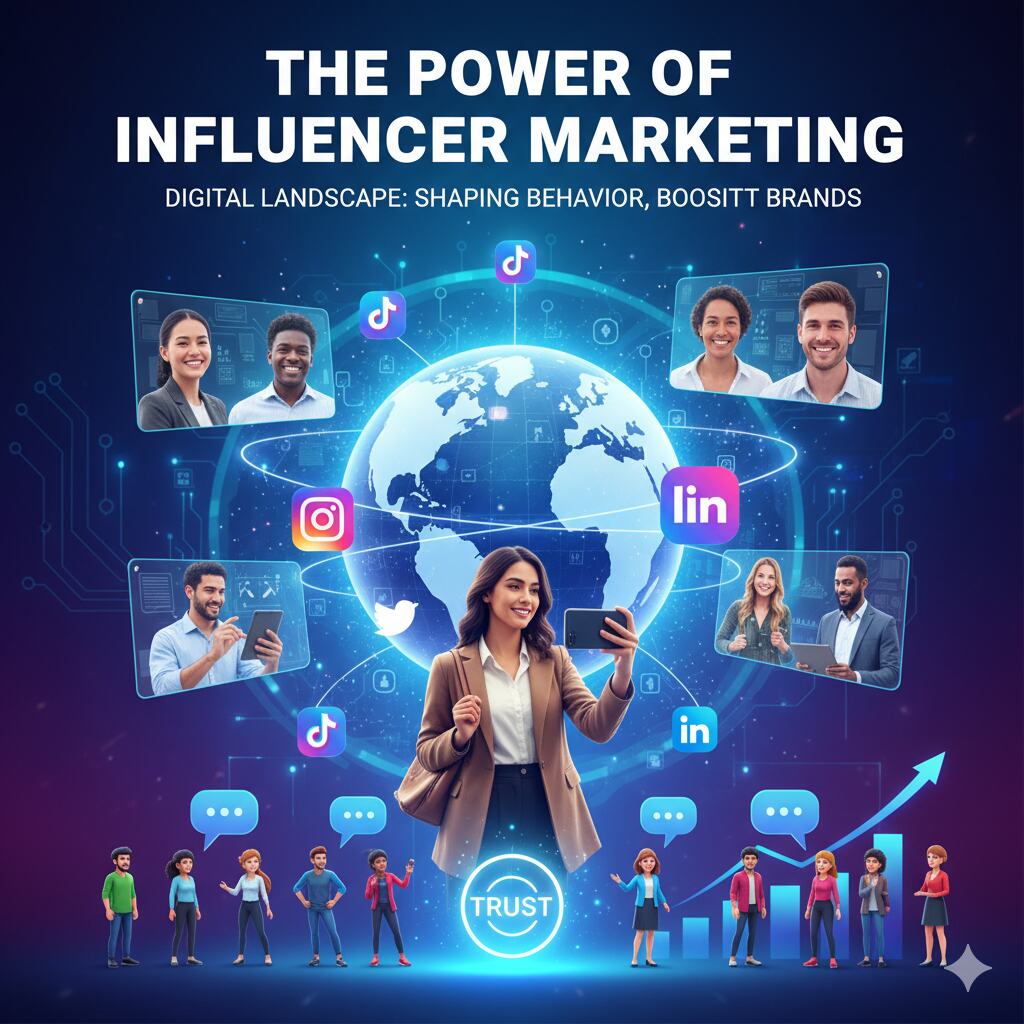
Overview:
- Traditional advertising is declining, while influencer marketing builds trust and relevance.
- Influencer marketing involves social media personalities endorsing products to inspire consumer action.
- Different types of influencers (mega, macro, micro, nano) play unique roles in campaigns.
- Brands succeed because influencers offer authenticity, relatability, and higher engagement.
- Social media platforms like Instagram, TikTok, YouTube, and LinkedIn shape marketing strategies.
- The future lies in AI-driven authenticity checks and a shift toward micro and nano-influencers.
The Influence of Influencer Marketing in the Modern Online Marketplace
We are in an era when brands must adapt to a new way of communicating with their audience; traditional advertising has lost its effectiveness. In today’s digital economy, influencer marketing shifts the conversation away from advertising in lieu of generating trust and interest.
What is Influencer Marketing?
Simply put, influencer marketing is when brands pay social media personalities to endorse their products and services. Depending on the influencer type, they may have a large following that inspires purchases through trust and reputation. It may be another fellow social media user who has a smaller following but equally dedicated social media friends. The endorsement by individual consumers is guaranteed to be effective in driving purchases.
Women have always been looked down upon when it comes to leadership roles. But this is one sphere where women are breaking barriers and defying stereotypes.

Types of Influencers
There are various types of influencers. Some of which are discussed below:
Mega-influencers:
Professional celebrities, i.e., those that paid to spend their lives under the constant scrutiny of the public. These usually have millions of followers.
Macro-influencers:
There are influencers who are popular and usually quite large.
Micro-influencers:
Their follower count is smaller, yet they tend to possess tightly knit audiences that engage and believe in their material.
Nano-influencers:
These ‘regular’ individuals have immense influence among users in a specific region of competence.
Why Influencer Marketing Succeeds
Customers usually trust the word of mouth of people over brands. This is where influencers come in. They are the ‘relatable’ voices. When they become ‘relatable,’ they establish brand loyalty through being authentic.
Benefits to the Brand
- Greater prominence through a busy and ‘noisy,’ at times saturated marketplace.
- Relevant affiliations with certain target audiences.
- Greater involvement through more innovative campaigns.
- Improved conversion due to relatability.
Importance of Social Media Websites
Social media platforms are responsible for influencing how brands can leverage influencer marketing strategies. Instagram is for visual content. TikTok is for going viral and trending. YouTube is for long-form compelling narrative. And lastly, LinkedIn is for B2B influencer relationships. Many brands hire social media managers to take care of their brands.
Influencer Marketing Challenges
While influencer marketing is great, it has disadvantages that brands need to consider. This may include accounts with fake followers that dilute credibility. Additionally, potentially enormous campaign expenses and finding the correct influencers are some other concerns.

How to Deal with Influencer Marketing Challenges
Brands need to look at metrics to see faux engagement and potential partners that also share similar brand values. Using this, they should define clear marketing objectives and measurable outcomes for campaigns.
The Future of Influencer Marketing
Influencer marketing has bright prospects in the future and will advance even more. Brands will be able to detect influencers who post genuinely with the advent of fresh AI technologies. Micro and nano-influencers and video material will also see brands diverting attention from influencer marketing campaigns.
Conclusion
Whether to try influencer marketing is no longer the question, but rather when to begin, since timing greatly impacts success.
