
Overview:
- Beauty often becomes the primary criterion when families search for a bride in most societies.
- Women’s achievements are frequently overshadowed by beauty standards.
- Social conditioning shapes how girls view marriage and their own worth.
- True partnerships should prioritize compatibility, respect, and shared goals over superficial appearances.
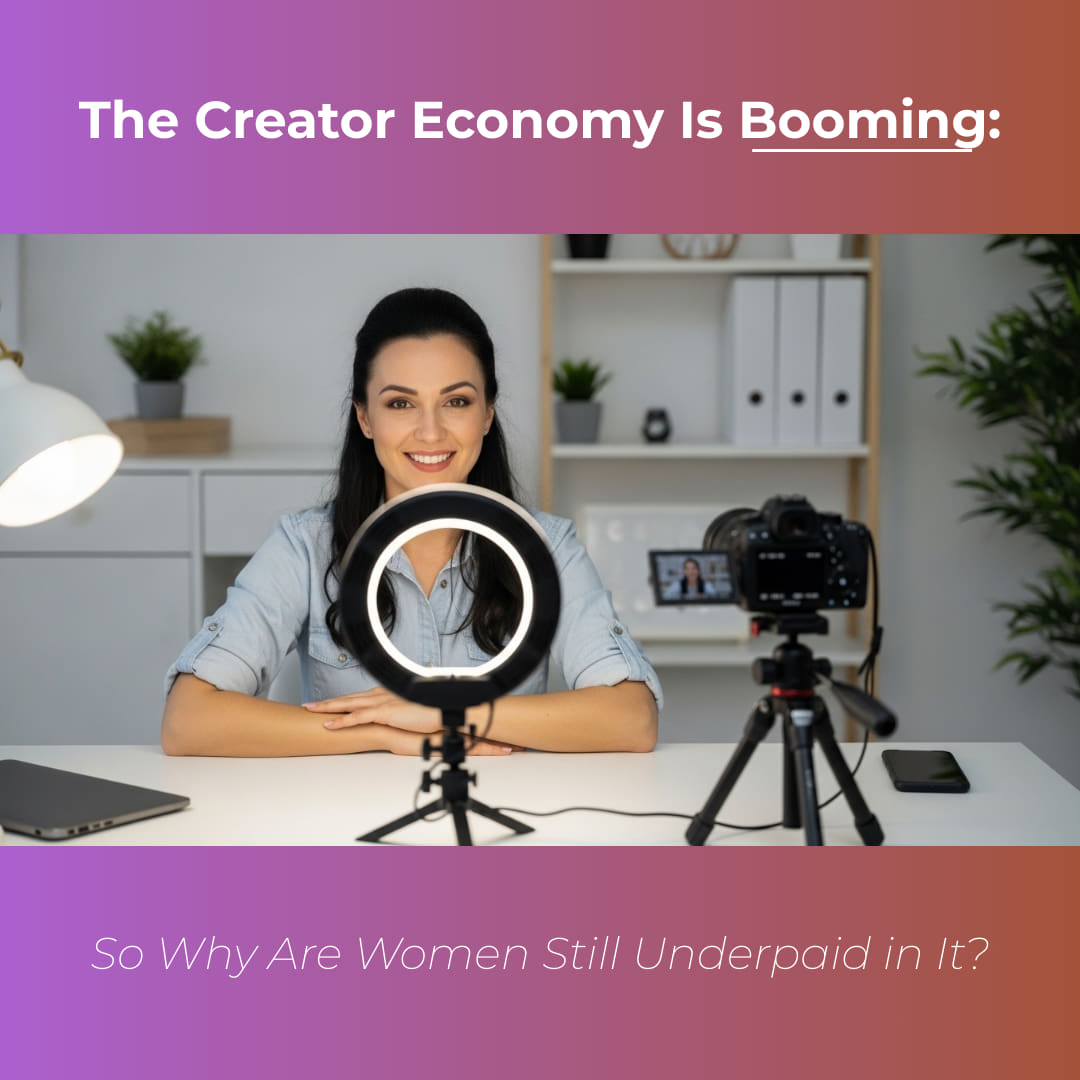
The creator economy has made a lot of people very successful. It has built communities, launched careers, and proved that you do not need a studio or a record deal to reach millions. But for women, there is a catch that does not make the highlight reel.
The Creator Economy at a Glance
The creator economy did not just grow. It exploded. A few years ago, posting videos online was something people did on the side, between their real jobs. Now, it is the job. The creator economy is worth $250 billion globally and still growing. Millions of people are building entire lives around content.
They are on TikTok at midnight. They are recording podcasts between school runs. They are everywhere, and brands know it. The money has followed.
But here is the part that does not make it into the highlight reels. Women, who show up in massive numbers across every platform, are consistently walking away with less. Not because they create less. Not because their audiences are smaller. Not because the content is lower quality or the engagement is not there. This gap exists because the system was never built with them in mind, and nobody has been in enough of a hurry to fix it.
Image Credit: Freepik
Women Are Here, But Paid Less
Women are not absent from the creator economy. Women have never had a problem showing up. Nearly half of all content creators globally are women, across every platform and every niche you can think of. And they are not just present. They are performing. Women pull higher engagement numbers than men. Real people actually watching and buying.
They have loyal audiences, high interaction rates, and real purchasing influence. On paper, everything a brand partnership should be built on. Their audiences do not only follow, they actually show up. They comment, they share, they buy, they trust. That kind of loyalty is exactly what brands claim to be chasing. Brands claim to value engagement, at least in theory.
The numbers make it hard to look away. According to Influencer Marketing Hub, women creators take home around 30% less than men from brand partnerships. Same work, same partnerships but a smaller cheque. Not slightly less. Not a rounding error. Thirty percent, despite the reach, the influence, and everything they bring.
And it is not just the big names feeling it. Micro and mid-tier creators, a space women dominate, actually face steeper income differences than those at the top. The further down the tier, the wider the gap tends to get. Your niche decides your worth. At least, that is how the people writing the cheques see it. The creator economy just gave it a new address and it mirrors the challenges women face in the workplace.
The niche you are placed in and the role you are handed, quietly determines what your work is considered worth. In the creator economy, that same logic applies. Women work more to earn the same. That is the reality.
The Brand Deal Problem
Brand deals are the biggest income driver for most creators. And that is exactly where the gap shows up most. Brands decide what to pay based on niche, follower count, and who is watching. The problem is that the niches women dominate –like parenting, wellness, beauty, and fashion, are treated as less valuable. Meanwhile, a gaming channel or a finance page with the same reach pulls in significantly more. The issue is the category and not the content.
Then there is the negotiation problem. Women who push for better rates are not celebrated for knowing their worth. They get quietly labeled as difficult. Too demanding. Hard to work with. Men who do the exact same thing are called savvy. That double standard has a very real cost.
What makes it worse is that most creators are working blind. There is no standard rate card. No open conversation about what anyone else is earning. That silence works in brands’ favors, not creators’. Women feel it the most.
But things are starting to change. Creator collectives and pay transparency advocates are opening up the conversation, bit by bit. The information is getting out. And once creators know what fair looks like, it becomes a lot harder to accept anything less. It goes beyond content. Women face a broader economic penalty where anything coded feminine gets valued less, products, work, and pay included. Creator unions and pay transparency movements are starting to push back on that.

Image Credit: Unsplash
How Algorithms Work Against Women
Algorithms decide who gets seen and who earns. On most platforms, algorithmic visibility directly correlates with income potential. And it does not always announce itself. That is what makes it so effective. Content made by women gets flagged, suppressed, and demonetized more often. That is not a theory. Studies have backed it up. YouTube and Instagram have pulled down educational content simply because it featured a woman’s body. A breastfeeding tutorial. A postpartum recovery video. A body-positive fitness post. All penalized.
Women who speak openly about gender, race, or social justice face the same wall. Less reach means less money. It really is that simple. As Girl Power Talk points out, women are redefining empowerment online every day. They are just doing it with one hand tied behind their back.
And the part that stings most? Men talking about the same things rarely face any of this. Nobody sends them a violation notice. Nobody stunts their growth. The rules just seem to apply differently depending on who is speaking.
That is not a glitch. It is a pattern. And until platforms are willing to audit their own algorithms and share what they find, creators are just left guessing about why their content stopped performing. Women deserve better than that.
Niche Stereotyping and Its Costs
Advertisers do not treat all content the same. Some niches attract premium budgets and high-paying brand deals. Others do not. This valuation is rarely based on actual performance. It comes down to what the industry has decided is worth paying for. Finance, tech, and entrepreneurship pull in the big advertisers. Those spaces also happen to skew heavily male. Beauty, parenting, and lifestyle, spaces where women thrive, attract fewer premium advertisers and significantly lower rates.
This creates a self-reinforcing cycle. Women are nudged toward “feminine” niches, then compensated at lower rates once there. Switching niches is not easy. For many, it means risking an audience they spent years building. But some women are breaking the pattern anyway. Female finance creators, women in tech, and female sports commentators are carving out space in high-value niches. Their success proves that the limitation is not ability. It is access and opportunity.

Image Credit: Freepik
What Platforms and Brands Must Do
Working harder is not the answer. Negotiating better is not the answer. The problem is not coming from creators, so the fix cannot come from them either. Platforms and brands hold the power here. Which means they hold the responsibility too.
Platforms need to start auditing their own algorithms. Not behind closed doors. Out in the open, where it can actually be held to account. If women are getting less reach for the same quality of content, that needs to be named, documented, and fixed. Stop paying creators for the niche they are in. Start paying them for what their audience actually does. This conversation has been happening in traditional workplaces for years. Pay transparency laws are being passed. Salary bands are going public. The creator space needs to catch up.
As Breaking Barriers: Fair policies are not optional. Platforms and brands need to back women creators with real money, starting with those who get overlooked. Change takes time. But it starts with people in power deciding to act.
What Women Creators Can Do Now
Systemic change is important. But it is not the only move. There are things women creators can do today that actually help. Start with your numbers. Engagement rate, audience demographics, reach, saves, shares. All of it. Most creators underestimate how much data they are already sitting on, and that data is leverage. When a brand lowballs you, show them your numbers. Who is watching, how often, and how much they trust you. That is not just useful. That is power.
Then there is community, and it is more valuable than most people give it credit for. Creator collectives and women-led networks share rate information, pitch strategies, and critical moral support. These communities help level the information playing field significantly.
Putting all your eggs in the brand deal basket is a risk that hits women creators harder than most. Diversifying income is not just smart financial advice. It is a form of protection. Subscriptions put you in direct contact with your audience. No algorithm deciding who sees what digital products to keep. One brand saying no should not shake everything you have built. That is the goal. Earning long after you have logged off.
And speaking of no, learn to say it. A lowball offer that you accept quietly tells the market exactly what you are worth to them. Saying no is a statement. When your numbers back you up, it sends a completely different message. It feels strange at first.
Conclusion:
The opportunity is there. Women have shown that over and over, building audiences from scratch, turning small niches into real movements, and shaping culture faster than most brands can keep up with.
