
CATEGORIES
#Mental Health & Well-Being #Psychology #Social MediaOverview:
- This article explores why doomscrolling feels comforting yet causes emotional depletion.
- Social media platforms use their algorithm systems to distribute negative content which keeps users hooked.
- Continuous scrolling affects mental health by leading to emotional exhaustion.
- Digital habits which require users to maintain mindfulness while they balance their digital activities.
You check your phone because you want to see one notification. Minutes later, you are deep into a feed of chaotic memes, viral outrage, bad news, and endless opinions. Your brain feels fried, but your thumb keeps scrolling. This pattern, known as doomscrolling, now defines how we consume information online.
What Is Doomscrolling and Why We Can’t Stop?
Doomscrolling is the repetitive consumption of negative or distressing information on the internet. It tends to occur unconsciously. The fast news glance gradually evolves into scrolling. The feed is full of bad headlines, alarming statistics, and emotional opinions.
Psychologically, this behavior connects to negativity bias. The human brain is survival oriented and does not give priority to any other information other than the ones that are related to threats. Consequently, negative information receives more attention than neutral news. The presence of fear brings curiosity and makes users remain longer than positive news.
Along with that, scrolling gives the impression of being informed. Society believes that the more information a person has, the better equipped they are. But overexposure does not easily result in action. Rather, it brings in emotional exhaustion and anxiousness.
Many people use doomscrolling as a coping mechanism. People use scrolling as their way to escape from stressful situations, uncertain moments, and physical discomfort. Ironically, the content meant to offer clarity ends up intensifying emotional strain.
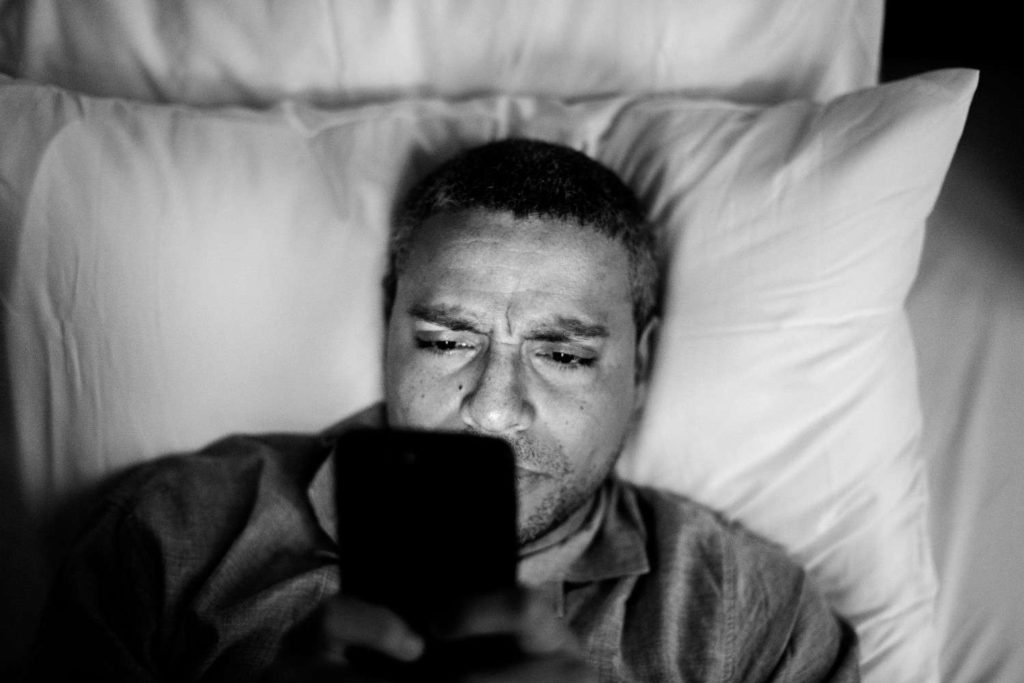
Image Credit: Freepik
How Social Media Feeds Are Designed to Keep Us Hooked
Social media feeds are biased systems designed to capture and retain user attention. The system collects user activity data to build algorithms which determine what content will keep users interested, creating a cycle of algorithmic feedback. Users experience the illusion of making independent decisions because design elements operate outside their awareness.
Social networks are based on engagement algorithms. The systems prioritize content that trigger a high emotional response. Outrage, fear and controversy tend to create higher engagement rates.
In addition, infinite scroll eliminates natural cues of stoppage. Feeds do not stop as opposed to the books or newspapers. Time tends to lapse unnoticed by the users. The experience is also intensified by the emotional amplification. Extremely opinionated posts get more exposure.
This is also personalized. Feeds are user behavior adaptive, which strengthens pre-existing anxieties. This forms the echo chambers that periodically come out with aggravating content. Long-term exposure to negative news aggravates stress reactions.
As a result, social media platforms prioritize attention over mental well-being. Understanding this helps users stop blaming themselves for feeling overwhelmed.

Image Credit: Pexels
The Mental Health Cost of Constant Scrolling
Doomscrolling produces hidden yet strong effects that impact brain function. The mind remains alert because it continuously receives content that carries strong emotional weight. The brain remains active at high levels because it fails to achieve its normal state of rest. The body remains under these effects because it takes time to rest and restore emotional control, focus, and sleep. The way people scroll through content develops into a new brain pattern which transforms their ability to handle stress and uncertainty, affecting overall mental health.
Doomscrolling has the nervous system on high alert. The presence of crises increases the levels of anxiety. This is followed by emotional exhaustion.
Sleep quality also suffers. Late-night scrolling slows down sleep and interferes with the circadian rhythm. Exposure to the blue light increases the effect. Attention gets disjointed during the day. When the brain becomes accustomed to fast changes of information, concentration becomes weak.
With time, there are emotions of helplessness. Individuals dwell on things they are unable to resolve. Even when not directly involved, burnout becomes the order of the day. Over time, excessive social media use has been linked to increased depressive symptoms and poor emotional well-being.
Mental overload does not mean weakness. It reflects prolonged cognitive strain.
When Staying Informed Turns Into Emotional Overload
Keeping up with the times is worthwhile. There is, however, a difference between conscious consumption and obsessive scrolling. Mindful consumption is conscious and restrained. Doomscrolling removes both.
Having more information does not mean having more control. Constant changes generate a sense of urgency that is not resolved. This results in emotional oversaturation and not clarity.
It is imperative to identify individual patterns. Some scroll during stress. Some people scroll in order to escape difficult emotions. Enlightenment is a way to break the cycle. Simple questions will do the trick: Why am I scrolling now? Is this helping me?
The goal is not ignorance. Balance matters more than constant awareness.

Image Credit: Pexels
Breaking the Doomscrolling Cycle
Boundaries are the first step in breaking the Doomscrolling Cycle. Anxiety is less because of setting specific times on when to consume news. The quality of sleep is better when one avoids scrolling before sleep.
Feed curation also helps. Muting triggering accounts creates emotional space. Using educational but fair sources enhances perspective without overwhelming the mind.
Digital mindfulness enhances control. Delays in opening apps minimize impulsive behavior. Areas replaced with scrolling should be substituted with grounding exercises.
Change can be supported with the help of digital well-being tools. Content filters and time restrictions on screen-time can help. Digital exposure should be managed in order to promote mental resilience.
Change happens gradually. It is more a question of progress than perfection.
Conclusion
Doomscrolling demonstrates the way technology connects with human psychological patterns. Emotional health is not supported through social media feeds but attention. Understanding this dynamic helps people regain personal agency. The practice of establishing limits together with responsible content consumption protects mental health. People achieve mental clarity through awareness rather than continuous updates.
