

CATEGORIES
#Gender & Society #Psychology #Social IssuesOverview:
- Every day sexism survives because society often mistakes bias for normal behaviour.
- It appears in language, jokes, expectations and subtle daily interactions.
- Homes and workplaces often reinforce unequal gender roles and assumptions.
- Its repeated impact quietly harms confidence, freedom, and opportunities.
We live in a time that prides itself on the least progress and celebrates “strong women,” posting about equality. Yet still likes to believe that misogyny belongs to a less enlightened past. Yet something very sad happens:every day sexism still lingers in the spaces we move through most casually. It appears in the jokes we dismiss, assumptions we inherit, interruptions we overlook, and the expectations we quietly carry. Because everyday sexism has become so normalised that it rarely announces itself as injustice. It weaves itself into everyday life under the guise of habit, humor, and even tradition. It is both difficult to confront and essential to call out.
The truth is, not all discrimination arrives with obvious hostility. Some of it enters the room softly sounding like concern.Subtle sexism can be hidden in compliments, family conversations, workplace talks, and opinions on social norms. We usually think of sexism as something obvious and big. Actually, much of its power comes from being really subtle. It keeps going because people have stopped viewing it as a problem.
When Sexism Becomes Ordinary, It Becomes Invisible
The most dangerous types of bias are often the ones we no longer notice. Every day sexism still exists because it has become like a part of life. It seems normal when people expect a woman to be more friendly and careful than men at every step. Many still see a woman’s confidence as arrogance and trust a man’s authority in a meeting. This contradiction is seldom recognized as sexism at the time but it influences how people are treated every day.
Normalization just makes prejudice look harmless, but it never eliminates the pain. Take the case of the same house in a social context. A daughter is asked to help out in the kitchen and her brother gets to relax, often normalized through traditions. People perceive a woman to behave in a certain way. A woman being told to smile often is a social commentary we have normalized and keep on expecting women to meet even today.
These small things add up over time. A comment or remark is disguised as caring and lovable advice that have their own interpretation. Women often have the agency to question even their feelings about it, let alone their remark. So they learn to internalize a lot of it.

Image Credit: Freepik
It Lives in Language, Humor, and Everyday Interactions
Language carries values, hierarchies, assumptions and different meanings at the same time. Some casual remarks such as “women are too emotional,” “men don’t cry,” or “she got the job because of diversity,” do more than just fill the silence. They quietly shape social expectations and justify unequal treatment. The damage does not always come from one brutal sentence; it often comes from repetition that causes immense mental stress.
A sexist remark is not delivered with cruelty every time. Sometimes it arrives as banter, sarcasm or a supposedly harmless observation. This is the reason why subtle sexism often escapes accountability. A woman is called “bossy” for being decisive and a man is mocked for being emotional. A girl is praised for being “wife material,” while a boy is encouraged to be ambitious. Sexism and patriarchy do not just hurt women but also affect men by holding back their feelings. These things might seem negligible on surface but often lead to self-image and identity issues.
Even digital culture plays a major role. There are many memes, viral reels that frequently pass derogatory comments and recycle stereotypes under the cover of irony. The internet has romanticized misogyny differently. It has become shareable, and more socially acceptable in recent times. When prejudice is packaged as humor, people stop interrogating its impact. They just consume, repost, and move on.
The Workplace Has Changed, but Not Enough
All institutions now talk about equality but do their structures reflect the same?
Many workplaces still have an environment that does nothing about gender bias. It is an unsaid fact that people still believe men to be better at their jobs. These patterns are not new; they reflect long-standing gender stereotypes that continue to shape everyday interaction. Existing structures continue talking about equality but barely moving towards it. Women have to prove themselves over and over again. It becomes a question about their tone, and body language rather than their merit. Women are judged on how nice they are, not just, on how well they can lead.
This is where everyday sexism becomes especially exhausting. It does not always appear as overt exclusion. Instead, it shows up in who gets heard, mentored, labelled “difficult,” and seen as naturally capable. A woman asserting an idea may be ignored until a man repeats it. A female leader may be admired only if she softens herself enough to remain palatable.
The emotional labor attached to this is rarely acknowledged. Women are expected to perform well while managing perception and maintaining grace under scrutiny. These patterns seem to be subtle, but they surely affect confidence and long-term career growth in very real ways.
Home, Relationships and Care Can Also Carry Sexism
People often assume sexism exists only out there in unsafe streets, hostile offices, or political systems. But in reality it lives much closer to home. Families, friendships, and intimate relationships can all reproduce unequal expectations while still calling themselves loving. This contradiction may feel uncomfortable, but confronting it is really essential.
Most of it is control masked as protection in lieu of what is socially acceptable. Women often fall under restrictions for safety reasons,while the same behaviour of men is rarely scrutinised with equal urgency. In a family, a capable daughter falls short of opportunities because of this even when she’s equally educated as her brother.Even today, there are many households where domestic labour remains deeply gendered, even when both partners work equally hard outside the home.
This is the reason why gender stereotypes sustain themselves through repetition, expectation, and emotional conditioning. The moment freedom starts feeling gendered, and care becomes conditional, inequality begins to feel like common sense. This is how sexism survives across generations and lives quietly, intimately, and often unchallenged.
If It Feels Small, Why Does It Hurt So Much?
One of the most disappointing things about everyday sexism is that it often leaves a person feeling hurt by something that has hundreds of easy methods to escape from. This is because subtle discrimination adds up over time. A single interruption may seem like no deal. A single sexist joke may be laughed off.
When these experiences keep happening over months and years, they affect how safe and valued a person feels. It is about seeing patterns and not about being too sensitive. Everyday sexism includes things like micro-aggressions, biased expectations, and dismissive behavior. These things slowly take away one’s confidence. Slowly this lack of confidence reflects in self-doubt, shrinking, adjusting. Putting up with disrespect.
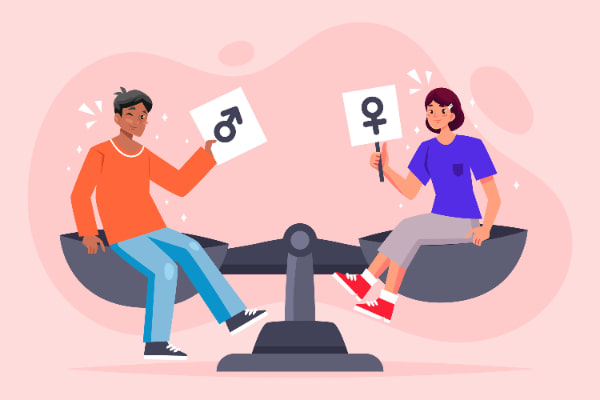
Image Credit: Freepik
The emotional toll of sexism feels very real. If everyday sexism keeps happening, then it is because society has gotten good at hiding inequality as normal. The first step toward dismantling it is not simply calling out extreme behavior. We need to learn and to notice what has been made ordinary. Once we begin to see it clearly, we can no longer pretend it isn’t there.
Conclusion:
Every day sexism continues to exist because society has learned to disguise it as normal. What feels small in isolation often carries deeper cultural weight over time. Recognizing these patterns is not about overreacting, but it is about refusing to accept quiet inequality as ordinary. Change begins the moment we start noticing what we were once taught to ignore.
