
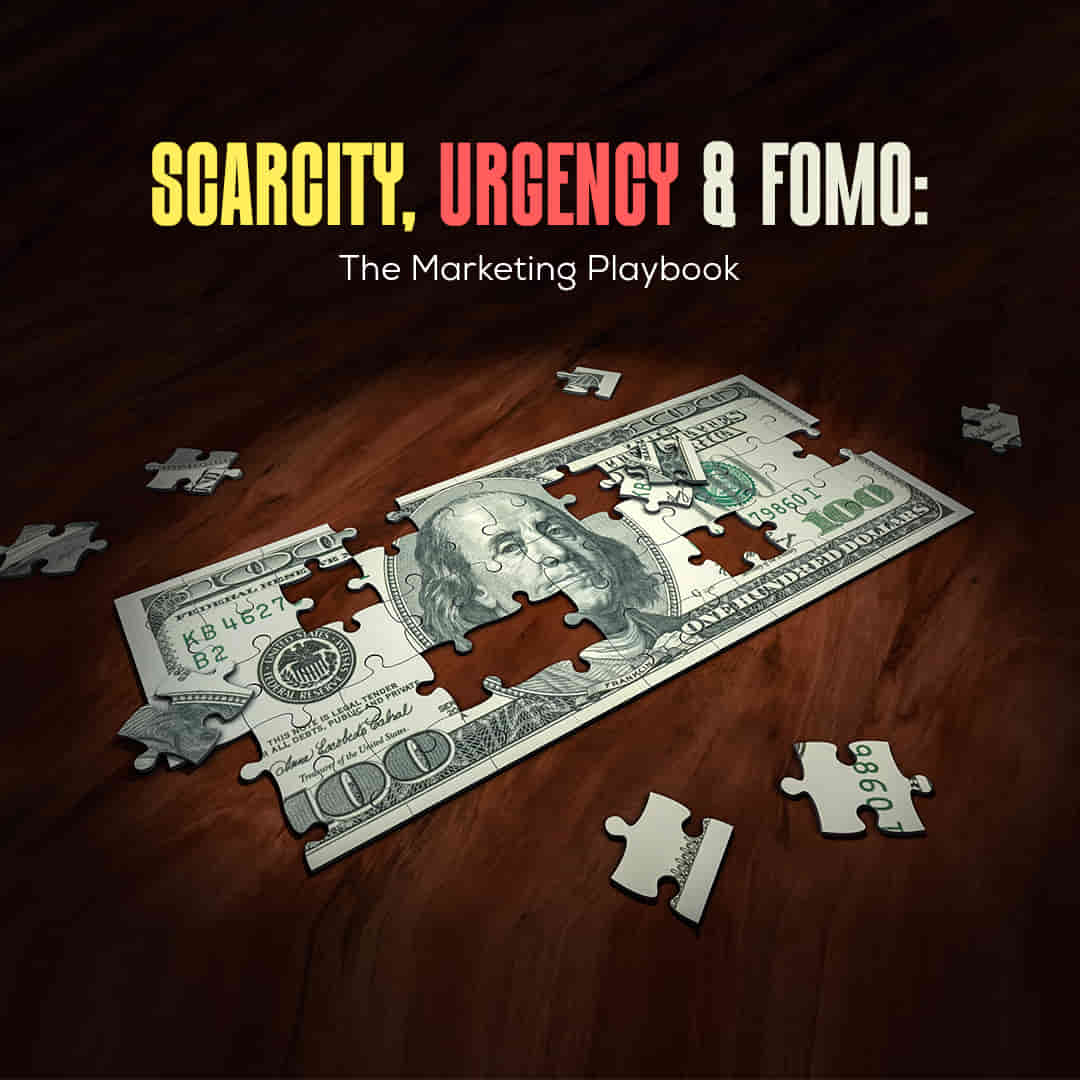
Overview:
- Scarcity marketing creates urgency by limiting product availability.
- FOMO pushes consumers to act faster to avoid missing out.
- Limited drops increase perceived value and exclusivity.
- Influencers amplify urgency and accelerate consumer demand.
Scarcity, Urgency & FOMO as a Marketing Tool
Scarcity, urgency, and FOMO form a psychological blueprint that brands use to influence consumption behavior by leveraging panic-driven emotions.
Rather than marketing product benefits or pricing advantages, brands intentionally create scarcity in terms of availability and time that then recontextualizes perceptions of the product’s value.
Scarcity works by limiting supply, making a product appear more desirable simply because its future restock is not guaranteed.
Urgency, conversely, adds a time pressure to the equation that quickens decision-making by reducing the time available for decision-making.
FOMO, the fear of missing out, adds an emotional layer to it. It makes the consumers feel that delaying a decision could result in missing out on an experience shared by others.
These elements drive consumers away from rationality and toward instantaneous action and compulsive shopping. In a digital environment, options are endless and attention spans are shrinking. This combination becomes even more powerful by forcing consumers towards a “now or never” situation.
Limited Production and Drop Culture
Brands don’t keep a constant supply of products. They release them in limited amounts on purpose so that demand consistently outweighs supply.
BluOrng is a Gen Z-driven fashion label that operates through what is commonly known as “drop culture.” They release new collections in small batches, and often avoid restocking once these are sold.
Such tactics guilt consumers into feeling that their inaction leads to missing out on the product experience.
Over time, consumers begin to associate exclusivity with scarcity and inaccessibility. They even treat the products as a collectible value.
When consumers own a limited-drop item that signals selective access, it further strengthens its appeal and value, boosting social validation.
This model keeps the brand constantly relevant as each new drop becomes an event rather than a routine release.
Discounts as a Scarcity Strategy
Scarcity goes beyond just product availability; it also plays a significant role in pricing strategies and stock clearances.
Many brands intentionally restrict the frequency and duration of discounts. This makes the discount period feel like a rare event rather than all time access to offers which makes customers delay purchases or avoid them altogether.
Apparel companies like Zara often run major discounts only once or twice a year which typically last just a few days. This limited timeframe fuels urgency as consumers feel compelled to make purchases before the opportunity disappears.
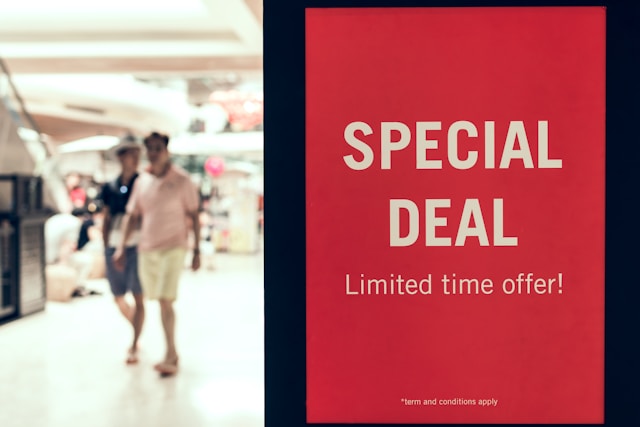
Image Credit: Unsplash
Similarly, strategies like “first 100 customers get 20% off” create scarcity based on a countdown which prompts people to make decisions even faster. This method works because it changes discounts from a normal expectation into a special privilege. Instead of waiting for better deals, consumers feel pushed to act quickly, fearing the same chance may not come around soon.
Fear of Missing Out (FOMO) as a Tool for Exclusivity
FOMO is a reaction to a plausible opportunity loss rather than a logical transactional event. It taps into the human desire of belonging. But often reflects on anxiety of missing out on what others are experiencing.
When CRED (a credit card brand) was launched in India, it leveraged exclusivity through a private Instagram presence. Access to this page was not immediate, and this restriction created curiosity and desire, as people wanted to be part of something that was not freely available.
By limiting access, the brand turned visibility into a reward rather than a default. Consumers were no longer passive viewers.
They became participants seeking entry into an exclusive space. This sense of belonging, combined with restricted access, amplified engagement significantly.
Influencer Marketing and Demand Amplification
Scarcity strategies paired with influencer marketing become even more powerful as it adds ethos to rising demand. When influencers showcase limited products, they don’t just promote them, they validate the access to the product in real time. Every time a limited drop is trending across platforms like Instagram through influencers, it creates a ripple effect. Followers observe engagements along with the product.

Image Credit: Freepik
A stream of engagements through comments and reshares intensifies FOMO. The product begins to feel scarce, desirable, and socially relevant all at once.
Additionally, influencer-driven hype often compresses the decision window. Consumers feel that waiting even a few hours could result in missing out. This creates a vicious cycle where visibility increases demand, and demand reinforces scarcity.
Resale Culture and Artificial Scarcity
Scarcity does not always end at the point of purchase. It extends to secondary markets due to the hype created during their launch. Limited-edition collaborations in apparel and sneakers often create an entirely new layer of value through resale.
Nike leverages this approach through exclusive collaborations with luxury brands such as Dior and Louis Vuitton. These releases are intentionally scarce, making them highly desirable to source.
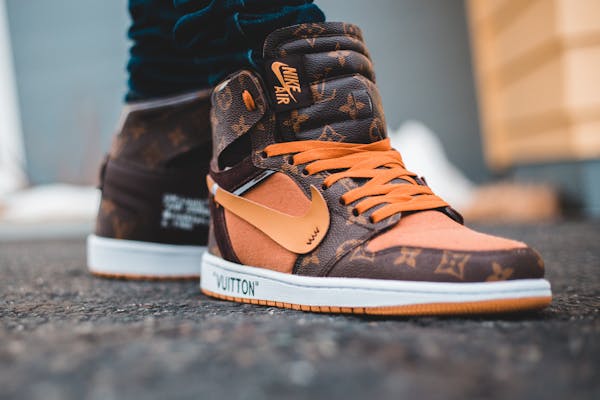
Image Credit: Pexels
Once sold out, these products often appear in resale markets at significantly higher prices. Buyers are not just purchasing the product, they are investing in exclusivity and status. This phenomenon reinforces the original scarcity strategy, as future releases become even more anticipated.
In this way, scarcity evolves into a long-term value driver. The products that had limited access are now being resold as “Vintage.”
Why These Strategies Influence Behavior
Scarcity and psychology are interlinked.When faced with limited availability or time constraints, the brain prioritizes action over analysis. Marketing strategies use this aspect of human psychology. These strategies reduce the cognitive effort required to choose. Instead of comparing alternatives, consumers respond to the perceived risk of missing out over what would be consistently available. This shift often leads to impulsive decisions that bypass logical evaluation.
Scarcity also increases perceived value. Items that are difficult to obtain are often seen as more desirable, regardless of their actual utility, more so for social validation.
Conclusion:
Scarcity, urgency, and FOMO transform marketing into an experience driven by emotion and timing.
By limiting access and amplifying desire, brands influence decisions beyond rationality.
In an attention-driven economy, creating urgency often matters more than creating options. Ultimately, what feels rare becomes valuable.
