
CATEGORIES
Leadership & Impact | People We Admire | Social ImpactOverview:
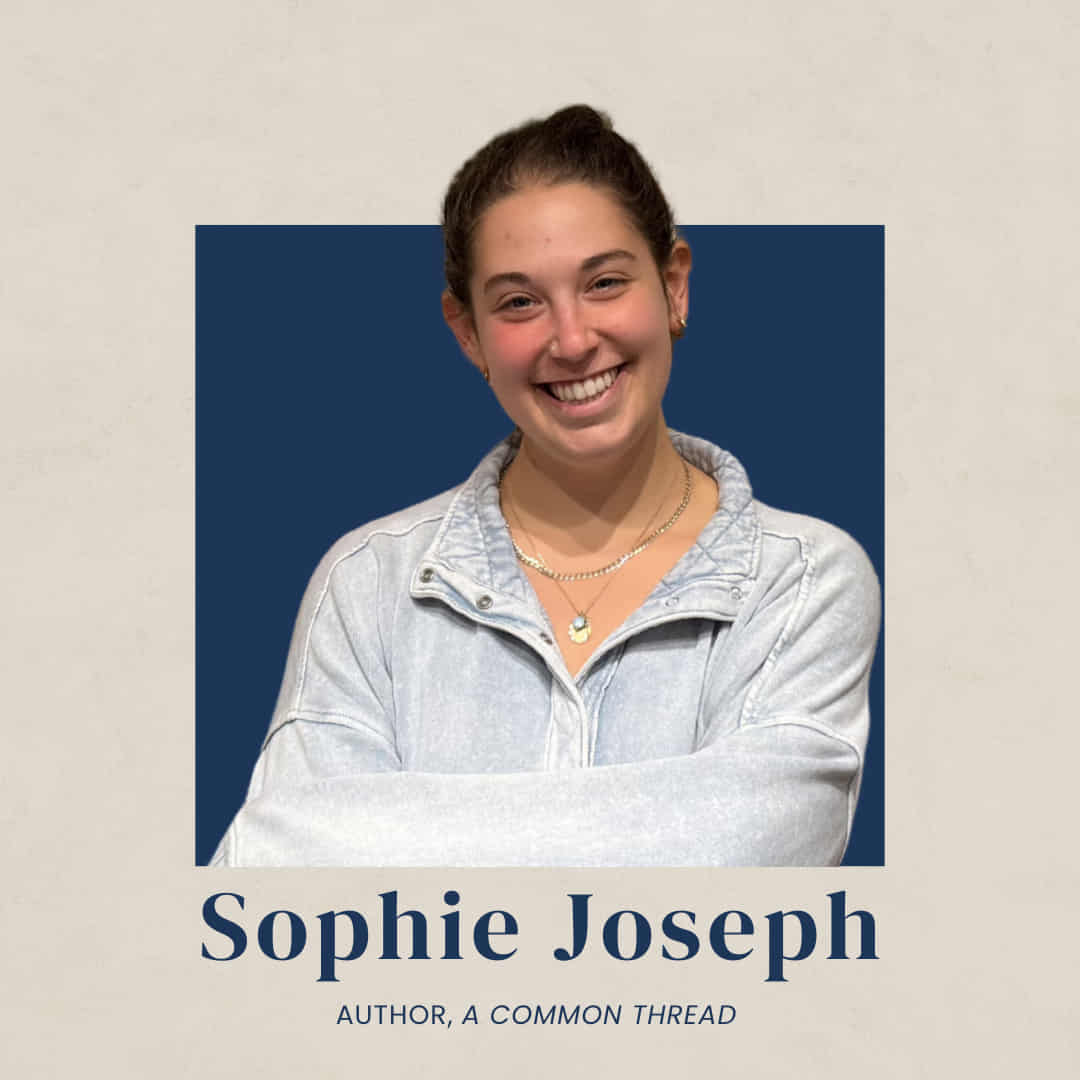
- Sophie Joseph is a dynamic leader who navigates beyond traditional red tape, blending activism, education, and research.
- As the President of the Joseph Family Foundation and a dedicated special educator, Sophie has spent over a decade working at the intersection of disability activism, community leadership, and scholarly research.
- In this candid conversation, she reflects on her early start in activism at age 11, and emphasizes a philosophy on responsible privilege in her work.
- Sophie’s mission is to connect high-level institutional resources with grassroots community needs.
1. You’ve been involved in activism, volunteering, and advocacy work from a young age, particularly in supporting underrepresented communities. Could you share a bit about your early experiences and what first drew you toward this path?
I began work in what people often call the activism space, though I’ll make a small caveat. At times, I prefer to think of it simply as being a “human,” working with others and investing in people. That said, I’m completely comfortable with the term “activism” as well.
I started quite young, around 11 or 12. My early work was in disability research and advocacy for individuals with a wide range of physical and mental-emotional needs. Interestingly, it was technically illegal for me to be working at that facility at such a young age. They were very under-resourced and didn’t have enough, and at the time, I didn’t pay attention to the red tape. In many ways, I still don’t.
What mattered most to me was the people. I genuinely loved working with the individuals they supported. At 11 or 12, I was helping run a classroom that included individuals aged 3 to 64 years old with very severe behavioral needs. It was intense, and I certainly had my fair share of shaking around, but it profoundly shaped me.
That experience is where I developed a deep commitment to supporting people who are often excluded from conversations and action. Today, I continue that work as a special educator in the public school system.
2. As President of the Joseph Family Foundation and someone engaged in initiatives ranging from special education advocacy to animal rehabilitation, how have these experiences shaped your approach to building and leading purpose-driven communities?
When I was 18, my family held a democratic vote to decide who should oversee the foundation, and they bestowed that privilege on me. I’ve been really fortunate not to deal with heavy red tape or excessive oversight that often slows down the hands-on work needed to create real change. If our “red tape” had a color, it would be a light orange rather than a dark hue.
For example, our beneficiary application is about seven pages long, but most of it is simply getting to know the person, their work, and what their story is, rather than focusing on technicalities or other bureaucratic hurdles. This approach helps remove barriers between fiscal resources and tangible opportunities, so it makes it easier to create meaningful impact.
I have also had the chance to speak with people at institutions like the Bill Gates Foundation to learn from their high-level perspectives. It allows me to take those high-level, big-player ideas and frankly whisper a bit of what happens at the top levels and bring it back to the people who need it most. Leading the foundation has taught me the importance of intentionally designing systems that prioritize human connection and accessibility.
3. You’ve done deep academic work in special education, political ethics, and historical theory. How do you bring that research perspective into your community initiatives, and why is connecting scholarship with practice so important?
I began my journey into scholarly work quite early, probably around age seven, after being diagnosed with dyslexia. Reading was a real challenge for me, and that experience pushed me to dive deeply into the world of research and academia. I wanted to understand education from every angle and swing that pendulum from one extreme to the other to explore both theories and practice.
I found that there are so many beautiful, tangible, and theoretical insights that our communities can use to bridge the gaps across socioeconomic and sociopolitical lines. I bring that perspective into the school where I teach, which is predominantly low-income and faces many disparities.
Connecting scholarship with practice is important because it ensures that knowledge doesn’t just stay in textbooks or academic papers. It becomes a tool for real, meaningful change. Someone has to bridge that gap, and I see it as my responsibility to help make that connection, to make cohesive change across communities that are often overlooked or marginalized.
4. Working across challenging spaces like advocacy and education can be emotionally demanding. How do you stay motivated and resilient while continuing to create meaningful change?
Honestly, my motivation is more intrinsic than extrinsic. I’ve always been driven by a genuine desire to do the work, and not by recognition or accolades. Funny enough, I initially wanted to write my book under a pen name, “Ashley,” because I didn’t want it associated with me personally. My publisher, of course, said that wouldn’t work, but that instinct reflects the way I approach my work: the focus is on impact.
That intrinsic drive gives me both resilience and the grace to pause and reflect when needed. At the same time, it is a double-edged sword and can be very draining and taxing. But that internal desire helps me push through the inevitable obstacles in advocacy, education, and community work. I want to see change happen, and even if I’m on the periphery, I take satisfaction in witnessing progress and helping make it possible.
5. With your upcoming memoir, what core message or philosophy would you want readers to take away, and how has your personal mantra shaped the way you approach both your work and future goals?
The high-level thesis of my book is how to navigate privilege responsibly. Privilege exists on a spectrum. It is where you are born, the family you’re born into, your context, and even aspects of your personality. Socioeconomic disparities, in particular, are something that, if not utilized responsibly, grinds my gears.
My personal mantra is that passion is like the gas pedal beneath our feet. It is what keeps us moving forward, beyond arbitrary goals or timelines. Passion is intrinsic. It’s the force that drives meaningful action, even when the work is exhausting or complicated.
When it comes to my future voice, I try to approach it with humility and honesty. I make it clear in the book that I know very little, but that my perspective is shaped by the experiences I’ve lived. The book is meant to be conversational, even interactive. I actually invite readers to challenge me, write in the margins, and argue respectfully. The point is to spark dialogue, even when it’s controversial or taboo, because surface-level thinking keeps us stuck in cycles of disparity.

6. Your work spans activism, rescue and rehabilitation, and supporting underrepresented communities. Given today’s increasingly complex climate, how do you think young changemakers can create meaningful, long-term impact without being overwhelmed?
Change is a game of longevity. It is never overnight. Anyone who expects impactful change to happen immediately risks losing sight of the reason for the fight within a day. Accepting that change takes time removes the pressure of instant results or capitalist-driven deadlines. We often impose arbitrary timelines on ourselves because of the desire for immediate gratification, but personal impact doesn’t actually have a deadline.
Longevity is the name of the game. For young changemakers, the key is to pace themselves and build sustainable practices. Community and mutual aid are solid ways to find alternative support systems when the traditional ones are lacking, and this helps to sustain both the work and the well-being of those doing it. Passion is what drives you forward in the long term, even when results aren’t immediately visible, and it’s this intrinsic motivation that allows meaningful, lasting impact to take root.
7. What actually works for encouraging young women to step into the non-profit space?
I love bringing women and underrepresented folks into fields where they are oftentimes not made a spot at the table. Strategically, my goal is to elevate their voices so they are not just seen as kind-hearted caregivers. We are caring human beings, of course, but I don’t want to reinforce stereotypical identities. Women can be budget leads, strategists, or finance experts, anything they aspire to be.
When I bring women into these settings, I make a conscious effort to listen more than I speak. I keep my ears open and set aside preconceived notions about what roles they “should” play. Being attentive to what they say allows me to place them where they want to be and where they can thrive, not just as the face of a cause, but in the roles that leverage their real strengths. A woman might be incredible at budgeting or finance, and that’s just as important as any front-facing role. Creating space for them to lead in meaningful ways is what builds sustainable impact.
8. When a mission is both personal and professional, how do you navigate family disagreements or visions?
My family really let go of a lot of their restraints and entrusted the foundation to me to run as I saw fit. It is a beautiful privilege, but it can also feel like an echo chamber where I am just going back and forth with myself. Because I know I don’t know everything, I created an advisory board of six or seven members from across the country.
Getting pushback or disapproval from the advisory members is actually fascinating and valuable. It often highlights things I hadn’t considered myself. I didn’t want the foundation to be a one-directional echo chamber because the point of philanthropy is to be diverse, welcoming, and aligned. Having those outside perspectives keeps me grounded, challenges my assumptions, and reminds me that meaningful work is always strengthened when it’s collaborative.
I’ve also learned that while it’s natural to want to see the fruit of our labor, contributing doesn’t guarantee a visible outcome, and that’s okay. In both my teaching and non-profit work, sometimes the most meaningful support is allowing others autonomy over their decisions, funds, and actions. My role isn’t to inhabit or control every perspective, but to support and respect them. Sometimes, we can grow a garden by providing all the resources we have and simply walk away. We don’t have to take from the harvest.
This mindset helps me stay grounded. I remain fully willing to learn, understand, and support, while recognizing that the ultimate flourishing belongs to those I aim to serve. It’s a privilege to help, but not to claim ownership over their growth.
9. On a lighter note, what are some small habits or hobbies that keep you grounded outside of work?
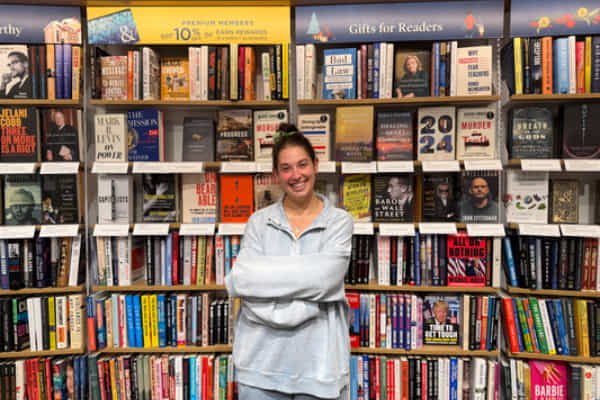
I love reading! I’m really into historical fiction and murder mysteries. I adore them, even though I’ll admit they sometimes make me a little jumpy at night. I’ll literally get into bed and think, “Oh, someone is going to kill me.” But I love them so much. It is like an addiction!
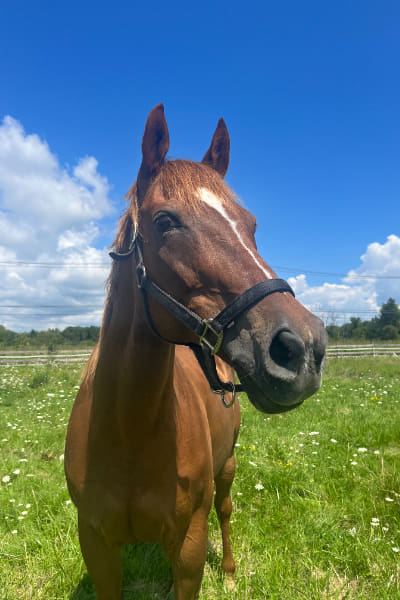
I also have a horse named Lola, who’s a rescue and the love of my life. One of my favorite things is getting to actually rehabilitate her. Working with animals requires a level of patience and presence that is entirely different from academia or the professional world. It forces you to be in the moment in a way that keeps you grounded.
Beyond that, I love research on philosophy, political theory, theology, you name it. I watch Netflix (currently hooked on The Night Agent), and I sometimes draw, though I’ll admit I’m not amazing at it. All of these hobbies give me balance, keep me curious, and remind me that a beautiful life exists outside of work.
10. How has your understanding of leadership evolved through hands-on activism?
Leadership for me has evolved from being about a title to being about accessibility and sensitivity. I bring a kind of childhood whimsy and curiosity that allows me to connect with people beyond just their words. Children, in a way, are natural leaders: empathetic, moral, and unfiltered.
Through hands-on activism, I’ve learned that leadership isn’t always loud or top-down. It’s about bridging gaps, removing barriers, and being responsive to the needs of others. Also, recognizing when someone needs space, support, or patience, sensitivity is the most effective and human way to lead. Leadership isn’t rigid; it’s collaborative, adaptable, and sometimes even fun.
11. Working across diverse causes, what has been the most unexpected lesson you’ve learned about impact or change?
Working across diverse causes, one of the most unexpected lessons I’ve learned is that impact isn’t always immediate or visible. True change often happens quietly, through small, consistent acts rather than dramatic, “heroic” moments. Sometimes, my support extends only to fiscal or logistical resources, and I’ve learned to step back. I allow others autonomy over their decisions and trust that meaningful change doesn’t require me to witness the results.
Impact, I’ve realized, is also about doing the internal work to create something genuinely helpful, rather than doing things for recognition. Even small gestures, such as offering respect, listening, or giving without expecting anything in return, can ripple into real, lasting change. Over time, I’ve come to see that the quiet, persistent work of supporting others often has the deepest and most enduring impact.
12. What book are you currently reading?
I actually just picked up a book for my class because our public library had closed temporarily due to a small fire, and it only just reopened, so I hadn’t been able to go back. I grabbed a copy from my classroom, though, honestly, my principal probably doesn’t care. I’m going to start with The Count of Monte Cristo – one of the classics. This year, I’ve been trying to explore both Western classics and Black American classics to better understand the similarities and contrasts in literature. I’m also considering reading Frankenstein, which I’ve never read before, but I’m really intrigued by it. I picked up a copy of that for my classroom as well.
Conclusion: The Long Game of Impact
Sophie Joseph’s journey reminds us that meaningful change isn’t found in flashy headlines or instant results; it’s built through the quiet, persistent work of showing up. By blending the rigor of academic research with the raw, hands-on reality of special education and grassroots activism, Sophie provides a blueprint for what it means to lead with responsible privilege.
Whether she is navigating the complexities of a foundation board or rehabilitating a rescue horse, her approach remains the same: strip away the red tape, listen more than you speak, and keep your foot on the “gas pedal” of passion. As Sophie continues to bridge the gap between institutional resources and community needs, she invites us all to look at our own spheres of influence and ask how we can turn our privilege into purpose. In a world that often demands immediate gratification, her story is a powerful testament to the beauty of the long game, where the ultimate harvest belongs to the community, and the true reward is simply being part of the growth.
