
CATEGORIES
#Education and Life Skills #Social Impact #TechnologyOverview:
- Libraries need to evolve with modern times. Today, they stand at a crossroads between tradition and transformation, challenged by digital disruption yet rich with new possibilities.
- The article attempts to highlight the need for libraries to remain community spaces, which are slowly disappearing.
- As they evolve into dynamic knowledge and community spaces, the role of libraries is being redefined rather than erased.
- The following is an attempt to revive people’s interest in reading and community engagement.
For centuries, libraries have served as repositories for knowledge. With the advent of new media and technology, libraries are to be found at this weird juncture. Once, the physical book was the cornerstone of libraries, but now shares its prominence with resources and information that have gone digital. The strain on physical libraries has become more than ever, with an undeniable stress on physical storage of knowledge.
Traditional Role of Libraries
Traditionally, libraries were physical archives of access to information and knowledge. They also served as community learning spaces and have had an immense impact on education. As equalizers of knowledge, the increasingly individualistic societal culture of modern times is making it difficult to thrive.

Image Credit: Freepik
Library spaces in the past have also served as hubs where collaboration, research, and innovation alongside academic discourse have taken place. Many also considered it a safe space. Libraries were known as places where ideas of revolution, music, art, books, and technology took place. Further social interactions that took place manifested in the society we live in today.
Advent of Digital Media and Disruption of Libraries
The disruption of traditional library systems has transformed how information is accessed, alongside being stored and shared. E-books have also seen a significant rise, with online journals and open-access platforms. The preference of users has been instant and remote access over physical visits. Libraries are meant to rethink their role just beyond book lending.
To keep up with the times, many libraries have integrated digital catalogs with virtual services and multimedia resources. However, this disruption also raises concerns. Libraries today are trying to keep up with innovation. Information overload has made safekeeping libraries as community spaces tougher by the day. Libraries have always aimed at securing the foundational mission of equitable access to knowledge. This aspect is being compromised by more accessible alternatives like digital libraries and e-books.
Underfunding and Budget Cuts
One persistent challenge for libraries has been underfunding and budget cuts. Physical libraries have limited their ability to update collections. Maintaining the infrastructure of aging libraries and investing in digital resources requires funding. People are hesitant to participate in funding libraries by the day. The reduced financial support leads to a downfall in other departments. These include shorter operating hours, staff shortages, and fewer community programs being run. As funding is declining, libraries must find innovative ways to sustain themselves. It is time to rethink the services offered by traditional libraries. We have to do so while continuing to meet the evolving needs of their users.
Are Libraries Evolving or Becoming Obsolete?
The knack for reading is witnessing a decline, with information being accessible at one’s fingertips on digital media. Consuming information rather than reading at a consistent pace and over time has taken a backseat. People have started questioning the relevance of physical books. Since humans are designed to be social animals, the question arises: how can we make sure that they evolve rather than become obsolete?
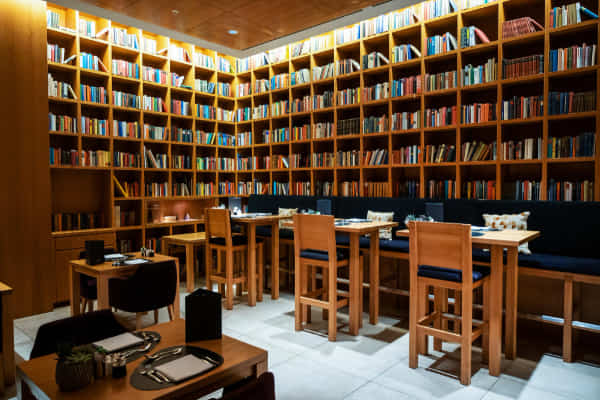
Image Credit: Freepik
Transforming how we approach libraries is a good way out. Instead of letting libraries go cold, coming up with community hubs is a good idea. Creating a collaborative space that offers technology and curated resources on the side is also a bonus. So, while traditional roles may decline, keeping their relevance is one way to overcome the challenge of irrelevance. A few more innovative ideas can be:
Digital Integration
Creating online catalogs and e-lending systems in library spaces. Further, providing access to academic databases and journals is a positive step in that direction. People can use library facilities even if they are unable to visit in person.
Community and Cultural Spaces
Having local and small businesses host events is a value addition to a library. Events such as book clubs, art and craft workshops, and or even debate competitions and discussions could be a great starting point. Having people feel welcome is the first step. The second is giving them safe public spaces for learning and collaboration, which could be an added benefit.
Technology Hubs
Libraries with access to computers, Wi-Fi, and digital literacy programs are definitely a go from the start. Collaborating on makerspaces, coding workshops, and media labs could also work well.
The argument surrounding the evolution of libraries thus points to ongoing declines in foot traffic and digital competition. It is also an indication of shrinking budgets for building one. However, we must emphasize the transformation rather than its total disappearance. Highlighting the shift toward digital access, community engagement, and learning spaces is what evolves a library. From a quiet book repository to a dynamic knowledge hub, adapting is the best thing to do. Adding technological change while continuing to serve diverse and modern user needs is the aim.
The Future of Libraries
Libraries will be able to sustain in the long run if they learn to develop at a rapid pace. The future must look at incorporating tradition with innovation. Emerging AI technologies are also slowly transforming how information is organized. AI is also changing how information is discovered and how it is personalized. Digital libraries and virtual archives are expanding, not just physically. Access to libraries is going virtual and beyond physical borders. Further, collaborating with educational institutions is becoming increasingly important. It is important to position libraries as active partners, be it in research, learning, or even skill development.
Building safe spaces, such as libraries, in an age of misinformation is important. It is time we give up on looking at libraries as solely storage spaces. Over time, libraries are evolving into experience-based environments. Curating libraries in a way that offers interactive learning zones, community programs, and creative spaces should be encouraged. The concept of hybrid libraries, which incorporate physical spaces with digital services, should be introduced beginning at the local level.
Conclusion
Many are speculating that the culture of reading is slowly fading away, and it’s time for people to take action to reverse this trend. The responsibility of curating libraries as trusted knowledge gatekeepers is more vital than ever. The shift of building libraries to be dynamic reflects a broader redefinition of inclusive spaces that adapt to changing societal and technological needs.
