
Overview:
- Eldest daughters often mistake survival, responsibility, and emotional labor for love and self-worth.
- Hyper-independence can become loneliness disguised as strength and emotional maturity.
- Guilt around rest, boundaries, and personal dreams follows many eldest daughters into adulthood.
- Healing begins by recognizing survival patterns and allowing yourself softness, support, and emotional honesty.
- Becoming a daughter again means choosing yourself without believing you are abandoning everyone else.
One morning you wake up with “I got this.”
The other morning you wake up with “I just can’t.”
Then the next one looks like, “I’ve got to save this.”
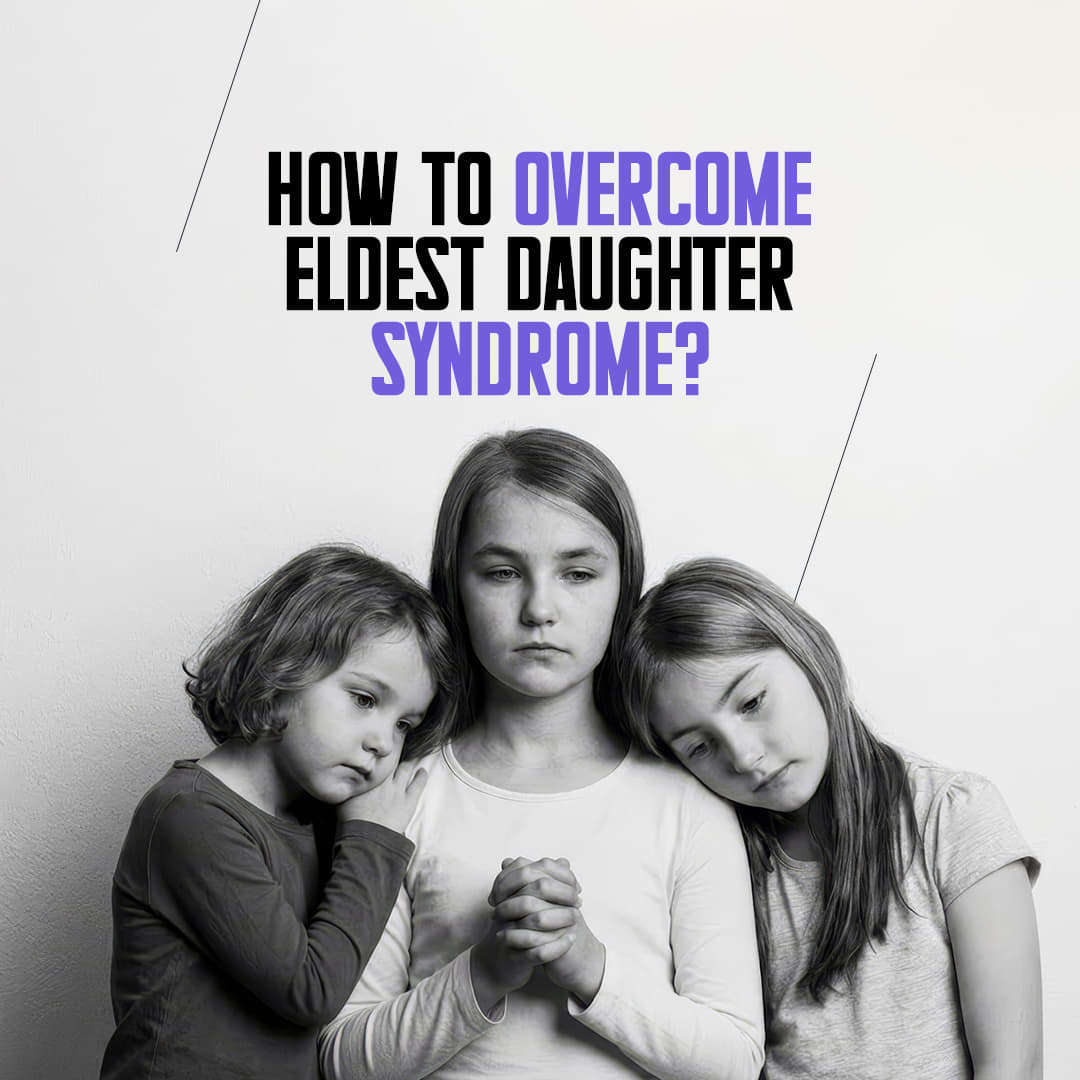
The eldest daughter is often introduced to responsibility before she is introduced to softness. She learns early how to read the room like the weather. She notices tensions before they become arguments, silences before they become distant relations. She grows to be the family’s invisible bridge, stitching together everyone else’s emotions while quietly leaving her own unattended.

Image Credit: Pexels
The Silent Burden of Being Too Mature
The world praises women who sacrifice themselves gracefully. Especially eldest daughters in families where duty is treated like devotion and constantly abandoning yourself for others is taught as love. But this is survival dressed as loyalty. Emotional maturity in such cases becomes a copying mechanism.
I’ve been tagged as being ‘too mature for my age’ or ‘handling it all so well,’ or being ‘so strong’ one too many times.
But strength, when forced too early, can become a kind of loneliness.
An elder daughter does not always cry loudly. She becomes efficient instead. She folds her exhaustion neatly between chores, deadlines, and emotional caretaking. She becomes the emergency contact for everyone, including people who never ask whether she herself is okay.
Love, Duty and Guilt of Failure
I remember watching ‘Little Women’ for the first time and relating to Meg March’s resounding monologue. One of the lines that still remains with me is
“Just because my dreams are different from yours doesn’t mean they’re unimportant.”
There is something profoundly eldest-daughter coded about that sentence. The exhaustion of constantly justifying your choices. The desire to be seen beyond responsibility. The longing to choose softness in a world that only praises women for sacrifice.
Meg does not dream loudly. She does not chase grandeur or rebellion in obvious ways. Instead, she desires a small and meaningful life, one rooted in love rather than ambition alone. Yet even that choice feels like something she must defend.

Image Credit: Pexels
Many eldest daughters understand this instinctively. Because they are often raised to become symbols before they become people. The successful daughter. The stable daughter. The selfless daughter. Their dreams are expected to align neatly with family pride, practicality, and duty.
And when they do desire something different, guilt arrives immediately.
Guilt for leaving.
Guilt for resting.
Guilt for wanting more.
Guilt for wanting less.
So they continue overextending themselves, believing exhaustion is evidence of love.
How Eldest Daughter Syndrome Shows Up in Adulthood
The little girl who learned to survive through responsibility often grows into a woman who does not know how to stop carrying everything. Even joy feels scheduled, and rest feels earned. On the outside, she appears composed. High-functioning. Independent. But that persona is often just grief wearing a capable face.
I cannot overlook how the eldest daughter syndrome shows up in relationships and workplaces in my own surroundings.
The grown up elder-daughter often becomes the emotional caretaker in relationships, workplaces, and friendships. They anticipate needs before they are spoken because they learned early that love meant staying useful. She becomes fluent in holding space for others, yet unfamiliar with occupying space herself. And over time, this survival mode begins to leak into everything.
Romantic relationships feel transactional because she is always giving more than receiving. Friendships become emotionally exhausting because she struggles to set boundaries. Workplaces reward her over-functioning until burnout becomes routine. It is until the body sends in a signal of being burnt-out.

Image Credit: Pexels
Unlearning Survival, Learning Selfhood
Healing begins with noticing where survival has disguised itself as personality.
Here are some questions you need to ask yourself:
Do I feel guilty when I rest?
Do I struggle to ask for emotional support?
Do I feel responsible for fixing everyone’s emotions?
Do I equate productivity with worthiness?
Do I apologize for having needs?
Awareness sounds simple, but for many eldest daughters, it is the first time they realize they were never supposed to carry life alone.
Becoming a Daughter Again
Healing can be strange for eldest daughters because softness feels unfamiliar at first. It does not arrive dramatically. It arrives quietly.
In self-loving boundaries.
In saying “no” without excessive explanation.
In having dishes in the sink and resting anyway.
In asking for help before exhaustion becomes collapse.
The hardest thing an eldest daughter may ever do is believe that her needs matter even when nobody else is in crisis. But emotions postponed for years do not disappear. They settle inside the body. In the clenched jaw. In the constant fatigue. In the inability to relax fully, even during peaceful moments. But healing can take time, and that’s okay too. You don’t have to perfect everything you try in the first go.
On occasions, I see a bright light entering the room and a small girl dancing. And I have written something for her.
Sometimes,
when the room is quiet enough to remember me,
a small girl walks in carrying sunlight on her shoulders.
She does not ask where I have been.
She does not ask why I became so serious.
Her laughter spills across the floorboards
like morning light through forgotten curtains.
And for a moment,
I stop being the woman who carries everything.
I reach for her tiny hand,
soft with innocence, warm with memory,
and she pulls me gently into a dance
I had abandoned years ago.
Around and around we go,
her bare feet teaching mine
that joy was never supposed to feel guilty.
She twirls like she trusts the world completely.
I twirl like I am learning how again.
And somewhere between her laughter
and my trembling hands,
the little girl I once was
forgives me
for growing up too fast.
