
CATEGORIES
Leadership & Impact | LGBTQIA+ | People We AdmireOverview:
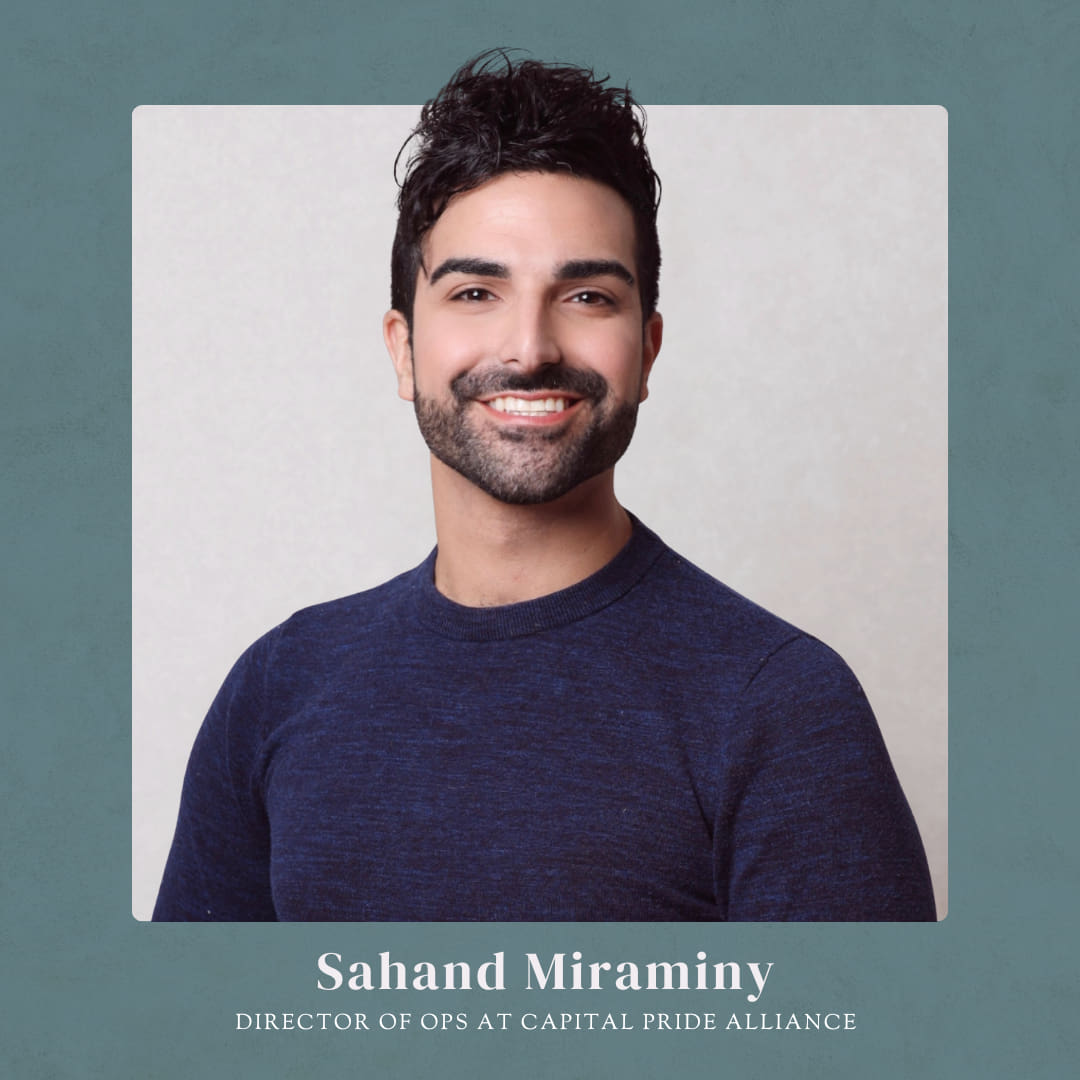
- Sahand Miraminay’s life is built on two philosophies: to serve people while preserving stories that outlast the present moment.
- With a background in anthropology and historic preservation, Sahand’s career spans leading large-scale Pride events and restoring a 200-year-old historic home into a community-centered inn.
- His work sits at the intersection of community, culture, and continuity.
- In this conversation, he reflects on leadership, identity, resilience, and accepting life as it comes with gratitude.
1. Can you tell us about the personal values and professional journey that led to your role today, and why you chose to work in the non-profit sector?
I think my journey has always been rooted in curiosity. In college, I was introduced to anthropology through a professor who completely changed how I looked at the world. I became fascinated by culture, archaeology, history, and the ways people leave traces of themselves behind. That curiosity led me to major in anthropology and archaeology, and eventually to work with museums including the Smithsonian Institution.
My first real professional role was at the National Trust for Historic Preservation, where I managed events for many years. At the time, I did not necessarily imagine myself building a career in large-scale public programming, but I discovered that I loved creating experiences for people. That eventually led me to the Capital Pride Alliance in Washington, DC, where I now oversee operations for events that bring together hundreds of thousands, and sometimes millions, of people.
What is interesting is that even though my work looks varied from the outside, there has always been one common thread: community. Whether I am preserving a historic home, organizing Pride events, or hosting guests at my bed and breakfast, the work is ultimately about making people feel connected to something larger than themselves.
I often say I see myself more as a steward than an owner of the work I do. That mindset shapes everything for me. I want the work to outlast me in some way, whether through preserving stories, creating belonging, or simply offering people a meaningful experience they carry with them.
2. What is something outside your work that you enjoy? Are there any book/movie recommendations you can share with us?
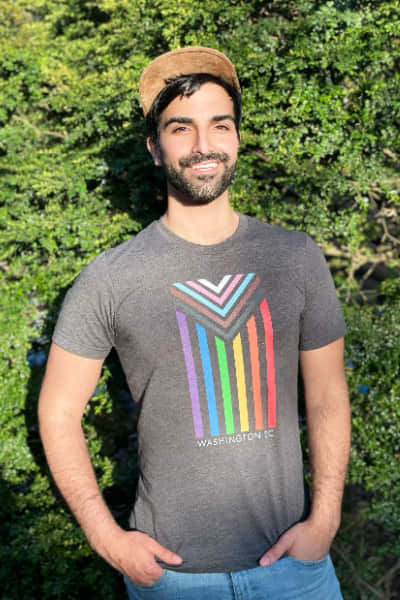
Music has always been one of the biggest joys in my life. I have been singing for many years, and whenever I have the time, I still do backup vocals for concert tours. That has led to some surreal moments where I have been able to sing behind artists I admire, including Sarah Brightman, Josh Groban, and Michael Bublé.
When I was younger, I dreamt music would become a full-time career. But as I have gotten older, I have become more comfortable with the idea that not every passion has to become your profession to be meaningful. Sometimes joy does not need to become productive in order to matter.
I think there is something beautiful about reaching a point where fulfillment no longer has to come from scale or recognition. Just being able to sing, to enjoy the act itself, feels enough now in a way that I never expected when I was younger.
Outside of music, I love historic preservation, reading about history, and honestly, taking care of stray cats. Those quieter parts of my life help balance the intensity of managing major public events.
3. Capital Pride serves hundreds of thousands of people. What does it take operationally to pull off an event of that scale, and what’s most underestimated?
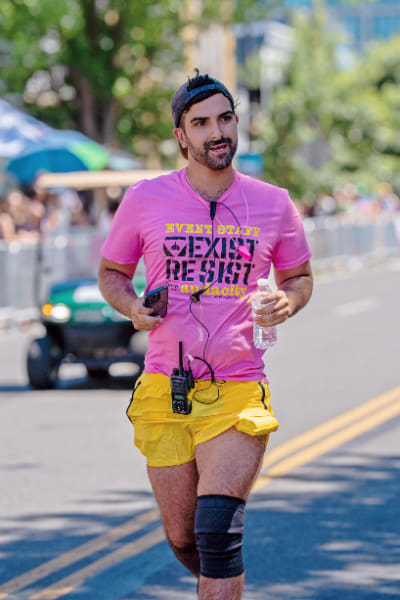
People often see the celebration, but they do not always see the infrastructure behind it. An event like Capital Pride is a massive operational undertaking. There are logistics, security coordination, city permits, sponsors, performers, volunteers, emergency planning, accessibility considerations, transportation, communications, and community outreach being planned simultaneously for months.
What is most underestimated is the emotional responsibility that comes with it. You are not simply organizing an event. You are creating a space where people want to feel safe, represented, and affirmed. That carries enormous weight.
There is also this misconception that Pride is only a celebration. But for many people, Pride is deeply personal. It may be the first place where they feel accepted publicly. It may be where they bring their full identity into the open for the first time. Once you understand that, every operational detail carries a different level of importance. A successful Pride event is not just about attendance numbers. It is about whether people walk away feeling connected, protected, and seen.
4. What are some challenging moments that have shaped how you approach your projects or life?
One of the biggest things that shaped me has been being the child of immigrants. My parents came to the United States from Iran more than fifty years ago without really knowing the language, and watching them build a life here had a huge impact on me.
At the same time, being visibly different in leadership spaces has not always been easy. There are moments when people quietly question whether you belong in the position you are in. You become aware very quickly of how identity shapes perception.
For a long time, I felt pressure to constantly prove myself. There is a cultural expectation in many immigrant families around success, hard work, and making your family proud. I have always carried that with me. I also learned that there is a difference between adapting to a culture and losing yourself within it. That has probably been one of the most important lessons of my life.
Those experiences taught me resilience and empathy. They made me more aware of what it means for people to feel excluded, unseen, or misunderstood, which is a large part of why community-centered work matters so deeply to me.
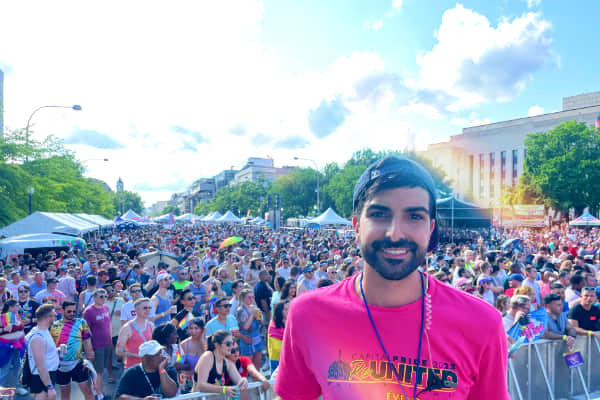
5. What makes a Pride event feel truly meaningful beyond just attendance numbers?
For me, meaning comes from emotional impact, not scale alone. A Pride event feels meaningful when people feel ownership over it, when they see themselves reflected in it, and when the experience feels genuine rather than performative. You can have huge attendance numbers and still miss emotional depth. What matters is whether people genuinely connect with one another and feel welcomed into the experience.
I think meaningful Pride also honors both celebration and history. Pride exists because people fought for visibility and rights long before these events became mainstream. Keeping that context alive matters deeply to me. The most fulfilling moments are often the quieter ones. Watching someone feel safe enough to be themselves openly. Seeing generations interact together. Hearing someone say, “I finally felt like I belonged here.” Those are the moments that stay with you.
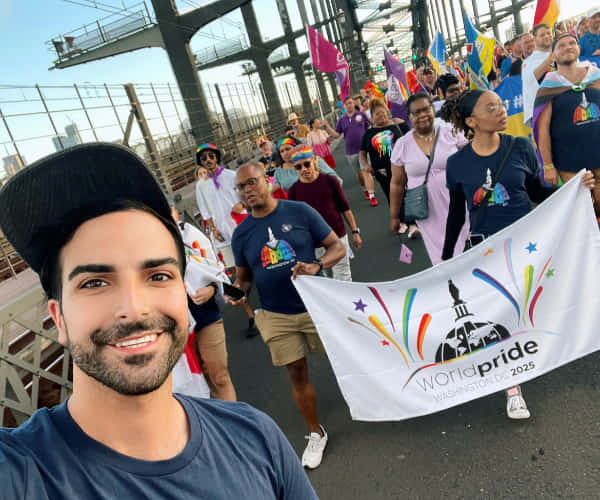
6. Whether it’s an event, a historic building, or a community milestone, you seem drawn to work that outlasts the moment. What does “leaving something behind” mean to you, and how does that shape the way you approach your work?
I often tell my friends that my goal in life is to leave the world with “a net positive of good things versus negative things.” That idea shapes almost every decision I make.
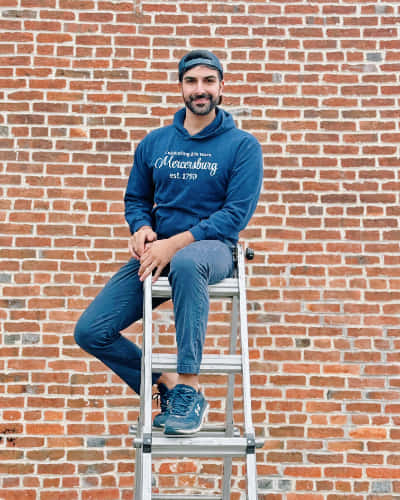
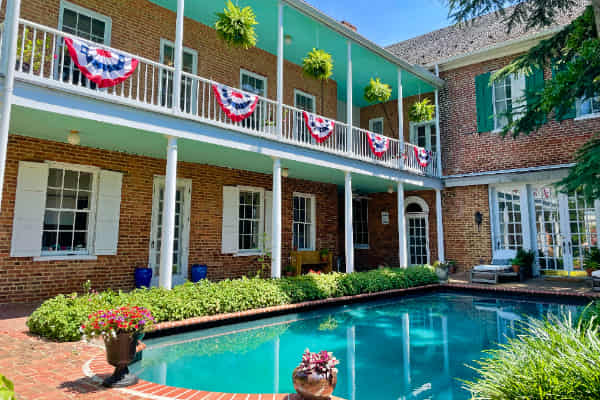
Whether I was working in museums, historic preservation, or Capital Pride, the purpose was always to serve people and create experiences that meant something to them. I think living in a two-hundred-year-old house has deepened that perspective for me because it constantly reminds me that we are only temporary caretakers of the spaces and stories around us.
The house I restored was built during a period when slavery still existed in the United States. When you research the people of the past, you begin to understand how layered history really is. Some stories are celebrated, while others disappear quietly. Preserving a historic place becomes a way of honoring not only architecture, but also the lives and histories that existed within it.
That same philosophy applies to Pride work. Creating spaces where people feel safe enough to be themselves leaves an impact that extends far beyond a single event. Sometimes people attend Pride for the first time and finally feel visible. That kind of impact may not always be measurable, but it stays with people long after the event itself ends.
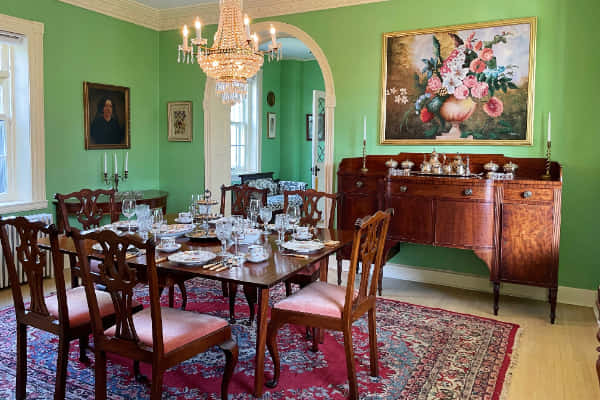
7. You leap between a Director role at a well-established organization to restoring a historic mansion as your own inn. What was the decision-making process behind that?
Honestly, I think part of it was simply following a dream I had carried since childhood. I remember going on a field trip to a historic house museum when I was very young, and something about it stayed with me. I loved the idea that spaces could hold memory and history so vividly.
When I eventually bought the house in rural Pennsylvania, a lot of people thought I was completely crazy. I was living comfortably in Washington, DC, surrounded by city life, friends, museums, and events. Suddenly I moved to a small town where I knew nobody and took on the responsibility of restoring a massive historic property.
There were definitely moments where panic set in. I remember sitting alone in this enormous empty house wondering what I had done. I had never owned a home before, and suddenly I was responsible for preserving a historic property with real cultural weight.
But I think all the best decisions in my life have come from leaning into curiosity and passion rather than fear. The inn became a way for me to combine preservation, storytelling, hospitality, and community into one space.
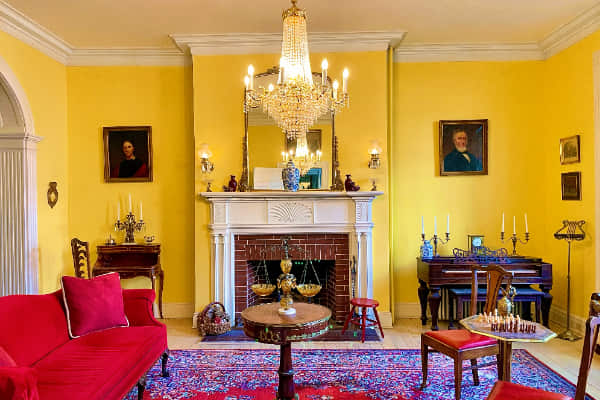
8. Restoring a historic building almost entirely by yourself while helping run a major non-profit is no small feat. What kept you going when things got hard and what does resilience actually look like for you in practice?
Resilience, for me, is usually very unglamorous. It looks like consistency. It looks like continuing to move forward even when progress feels painfully slow. There were definitely moments where the restoration felt overwhelming. Historic buildings do not cooperate on timelines. There are constant surprises, financial pressures, setbacks, and physical exhaustion.
What kept me going was believing in the outcome. I could see what the space could become even when it looked unfinished or impossible. I also think resilience comes from purpose. When the “why” behind your work is strong enough, it helps carry you through the difficult phases.
At the same time, I have learned resilience is not about pretending things are easy. It is about being honest about challenges while refusing to let them completely stop you.
9. You’ve built your entire career around mission-led organizations, from historic preservation to LGBTQ+ advocacy. How do you lead teams differently when the why behind the work is deeply personal?
When work is deeply personal, leadership has to become more human-centered. People are not simply completing tasks. They are emotionally invested in what they are building. That means empathy matters enormously. Communication matters. Trust matters.
I try to lead with transparency and clarity because mission-driven work can become emotionally exhausting if people feel disconnected from the bigger purpose. I want teams to understand not only what we are doing, but why it matters.
I also think people perform best when they feel valued and respected as individuals, not just employees. Especially in advocacy spaces, burnout is very real. Sustainable leadership requires creating environments where people can contribute meaningfully without losing themselves in the process.
10. In a world where we are prioritizing visibility and scale, what mindset would you advise young and upcoming generations to look out for while building meaningful and inclusive work?
I would encourage people not to confuse visibility with impact. Scale can be exciting, but meaningful work is usually built slowly and intentionally. Right now, there is a lot of pressure to constantly perform success publicly. But sustainable and inclusive work often grows quietly first. It grows through trust, consistency, listening, and relationships.
I also think younger generations should stay deeply connected to the community rather than focusing only on audience-building. Community requires reciprocity. It requires care and accountability. Most importantly, I would tell people not to lose their humanity while chasing growth. The work that lasts is usually the work rooted in authenticity and values rather than trend cycles.
11. What advice would you give someone building a career in media, events, and public engagement?
Learn how to work with people before anything else. Technical skills matter, but emotional intelligence, adaptability, and communication will take you much further in this industry. I would also say: stay curious. The best public engagement professionals are constantly observing culture, listening to people, and learning how communities evolve.
Do not underestimate operations either. Creativity is important, but execution is what sustains large-scale work. Understand that relationships matter more than transactions. A lot of opportunities in this field come from trust people build with you over time. Treat people well. Stay reliable. Stay collaborative.
At the end of the day, events and media are really about creating experiences people carry with them emotionally. If you can make people feel connected, welcomed, and valued, you are already doing meaningful work.
Closing Reflection
Sahand Miraminy’s journey serves as a reminder that meaningful labor is not limited to a particular identity or job, nor is it always linear. He thinks humans are unique because we tell stories. We preserve memories, pass down culture, and create meaning through shared experiences. His experience consistently demonstrates a dedication to people, stories, and shared experiences, whether it is organizing major public events or renovating a historic house. However, what stands out are his depth, empathy, and ingenuity that drives his leadership. In a world busy in scaling businesses, his purpose and intention bring a breath of fresh air.
