

CATEGORIES
Law and Technology | Leadership & Impact | People We AdmireOverview:
- Jenn Gore’s entrepreneurial ambition began early, shaped by watching how financial independence influenced the choices available to her parents.
- She founded Atlanta Personal Injury Law Group in 2013 and grew it into a multimillion-dollar business, learning that scaling requires systems, delegation, and developing strong leaders.
- After more than a decade in personal injury law, Jenn sold her firm and pursued her passion for helping other entrepreneurs through Evergreen Business Coaching.
- Jenn challenges the idea that constant business equals success, encouraging women to pursue financial independence, profitability, and sustainable business growth without abandoning their ambition.
Building a Business That Creates Freedom
Can you tell us about your journey into law and how you grew your own practice into a successful firm?
I knew pretty early that I wanted to work for myself.
My dad owned a business, and I saw the freedom that came with entrepreneurship. My mom had a more traditional role at home, and even as a child, I noticed how financial independence affected the choices available to each of them.
I wanted to be able to make my own decisions. I wanted independence, opportunity, and the ability to create the life I envisioned.
My interest in law came later, partly through personal experiences that made me realize how important it was to understand your legal rights. I was involved in a serious car accident, and I also experienced a situation where an employer stole my identity, which resulted in litigation.
Those experiences made me want to understand the legal system rather than feel powerless within it.
I attended law school at night while working during the day. By the time I graduated, I had already spent years working inside a law firm, signing clients, and learning how the business operated.
In 2013, I started Atlanta Personal Injury Law Group.
I remember having a whiteboard and thinking that if I could sign just one client, I would be happy.
One client became more clients. Then came my first employees, more attorneys, additional offices, and eventually a multimillion-dollar personal injury practice.
But one of the most important lessons I learned was that building a successful business and building a business that gives you freedom are two very different things.
In the beginning, I was responsible for everything. As the firm grew, I had to learn how to hire the right people, develop leaders, establish systems, and trust others to make decisions.
That’s when I began transitioning from being a lawyer who owned a business to being a CEO who knew how to lead one.

When did you realize that growing the firm wasn’t necessarily giving you the freedom you had hoped for, and begin thinking about a pivot?
I remember being completely exhausted.
I was working constantly, neglecting my health, and even taking business calls from the hospital after having a baby.
At one point, I remember thinking, This is not the dream.
I had become an entrepreneur because I wanted freedom, but I had built a company that depended heavily on me.
That realization changed everything.
I hired a business coach, and it completely shifted how I thought about entrepreneurship. I started understanding that my job wasn’t to personally do everything. My job was to build a company that could operate and grow without my constant involvement.
I had to hire attorneys, delegate responsibilities, develop leaders, and learn to let go of control.
As the firm became more established, I also began helping other law firm owners with their businesses.
I loved it.
I could spend hours talking about marketing, intake, sales, operations, profitability, and leadership. I was fascinated by what made businesses successful and why some owners struggled despite working incredibly hard.
Eventually, someone approached me about purchasing my law firm after seeing me speak onstage.
I hadn’t been looking for a buyer, but the opportunity led me to sell my firm and take on a leadership role at a much larger personal injury organization.
At the same time, I found myself increasingly drawn toward coaching.
I had spent more than a decade building my career as an attorney, but I realized the work that energized me most had changed.
There’s a quote I love: It’s very inconvenient to become who you are.
Sometimes you’ve built a successful life, and everyone around you thinks you should be satisfied. But deep down, you know you’re being called toward something different.
I had already proven to myself that I could build a successful business. What excited me now was helping other entrepreneurs do the same.
That’s why I created Evergreen Business Coaching.
My mission is to help business owners build profitable, scalable companies that don’t depend entirely on them.
I want entrepreneurs to avoid some of the mistakes I made, accelerate their growth, and ultimately build businesses that support the lives they actually want to live.
You talk about building organizations that create freedom instead of chaos. For a founder who feels overwhelmed by their own success, what’s one discipline, habit, or system you would recommend first?
Know your numbers.
You cannot manage what you don’t measure.
One of the biggest mistakes I see entrepreneurs make is running their businesses based on feelings rather than data.
They’ll tell me they’re busy, they’re getting a lot of calls, or they think their marketing is working.
But when I ask them specific questions, they often don’t know the answers.
How many leads did you receive last month? How many converted into clients? What does it cost to acquire a customer? How much revenue did you generate? What is your profit margin?
These are fundamental questions every business owner should be able to answer.
I believe every company should have a simple scorecard that leadership reviews weekly.
You don’t need to track a hundred different metrics. You need to identify the handful of numbers that actually drive your business.
Once you understand those numbers, you can make informed decisions about marketing, hiring, operations, and growth.
You also need to understand your financial position. Revenue matters, but so does profitability. A company can generate millions of dollars and still struggle financially if the owner doesn’t understand where the money is going.
At Evergreen, we teach business owners to focus on clarity, data, accountability, systems, and profitability.
Being busy isn’t the same thing as being successful.
The goal is to build a business where decisions are driven by information rather than emotion.
Finding Your Strengths and Becoming a Leader
What advice would you give young lawyers or professionals who want to develop entrepreneurial skills and eventually build something of their own?
I think one of the most important things you can do is figure out what you’re naturally good at and what genuinely gives you energy.
What could you spend hours doing, even if nobody paid you?
We spend so much time trying to improve our weaknesses that we sometimes overlook our greatest strengths.
Of course, you need to develop skills and become competent in areas that don’t come naturally. But I believe your greatest opportunities often come from recognizing what you’re uniquely good at and finding ways to build around it.
I was coaching business owners long before I ever called myself a business coach.
Friends would ask me questions about their businesses, and suddenly we’d spend hours talking about their marketing, their employees, their intake process, or how to grow.
I would do it at dinner. I would do it on vacation.
I genuinely loved it.
When I was younger, I didn’t even know business coaching was a career. But looking back, I can see that I was naturally drawn toward that work for years.
My advice is to pay attention to what energizes you.
And if you want to become an entrepreneur, start learning the business side of whatever profession you’re entering.
Understand sales, marketing, financial management, leadership, and operations.
Being excellent at your profession is important, but it doesn’t automatically mean you’ll know how to build a successful company.
What did you have to unlearn about being a great lawyer in order to become a great CEO?
One of the hardest lessons I had to learn was that being a high performer doesn’t automatically make you a great leader.
As a lawyer, my success was largely determined by my own performance.
I knew how to work with clients, negotiate, solve problems, and get results.
But when I became a CEO, my success was no longer just about what I could personally accomplish.
It depended on my ability to develop other people.
I had to stop expecting everyone to think, work, and respond exactly like me.
For example, I didn’t personally need a lot of praise or reassurance to stay motivated. But I learned that some of my employees did.
That didn’t make them less capable. It meant I needed to understand how to lead different personalities.
I also had to stop jumping in every time someone struggled.
If one of my lawyers was having difficulty with something I knew how to do, my instinct was to take over.
It was faster. I knew I could solve the problem.
But every time I did that, I was taking away an opportunity for that person to learn.
I had to become more intentional about coaching, teaching, and developing people rather than simply doing the work myself.
Sometimes that meant showing someone how to do something, watching them try, giving feedback, and then letting them take ownership.
Leadership isn’t about being the smartest or hardest-working person in the room. It’s about building a team that can perform without you having to be involved in every decision.
The real test of leadership is what happens when you’re not there.
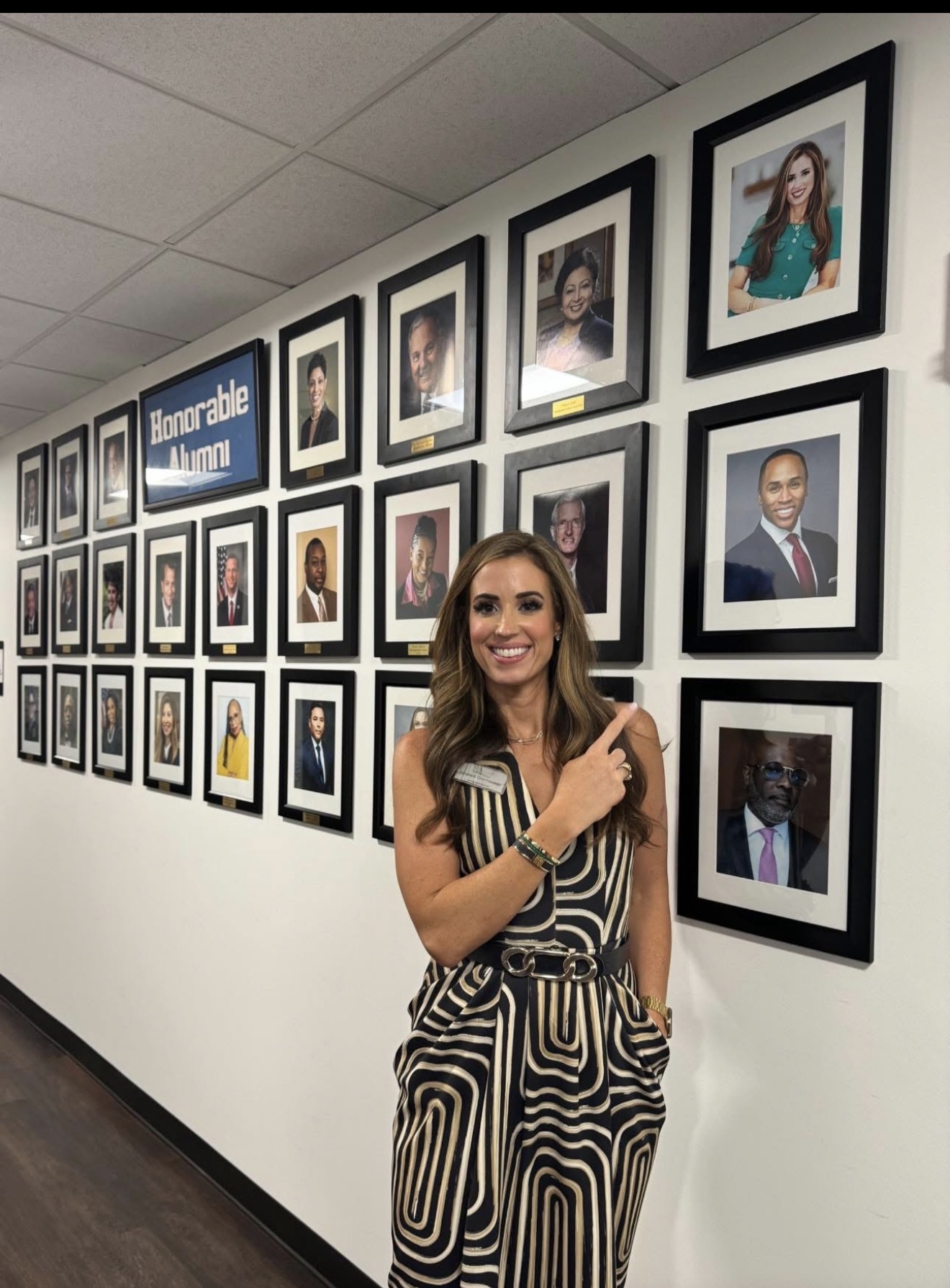
Rethinking Hustle and Women’s Ambition
You’ve pushed back against “boss babe” culture and the idea that women should do everything themselves and make it look effortless. What would you advise young women who want to pursue ambitious careers without glorifying constant overwork?
I actually believe sacrifice is part of building an ambitious life.
There were years when I made significant sacrifices to grow my business, and I don’t regret them.
Sometimes you have to work longer hours. Sometimes you have to miss social events. Sometimes you have to make decisions that prioritize your long-term goals over what feels good in the moment.
That’s part of entrepreneurship.
I think we’ve created this unrealistic expectation that you should be able to build something extraordinary without ever being uncomfortable or making sacrifices.
That’s simply not how it works.
But there’s a difference between working hard to build a business and creating a business that requires you to work hard forever.
That’s where I challenge the whole “boss babe” culture.
We’ve confused being busy with being successful.
Being exhausted isn’t a business strategy.
Having a packed calendar isn’t proof that you’re profitable.
And doing everything yourself doesn’t make you a great CEO.
I see entrepreneurs celebrating how much they’re working without asking whether all that work is actually producing the results they want.
Are you generating revenue? Are you profitable? Are you building wealth? Are you developing a team? Is your business becoming more valuable?
Those are the questions that matter.
I also believe there are seasons in life.
There are seasons when you’re building, seasons when you’re investing, and seasons when you get to enjoy more of what you’ve created.
The mistake is thinking every season has to look the same.
I want women to be unapologetically ambitious. I want them to build multimillion-dollar businesses, create wealth, become financially independent, and have the freedom to make choices about their lives.
But I also want them to understand that the ultimate goal of entrepreneurship isn’t to create another job for yourself. It’s to build an asset that creates opportunity, financial security, and freedom.
You shouldn’t have to personally carry everything forever.
The goal isn’t to avoid hard work.
The goal is to make sure all that hard work is building something bigger than yourself.

Why Lawyers Need Business Education
Is there conventional advice given to young lawyers or taught in law school that doesn’t reflect the reality of the profession?
Law school teaches you how to think like a lawyer.
It doesn’t necessarily teach you how to run a law firm.
Those are two completely different skill sets.
You can be an exceptional attorney and still struggle as a business owner because you don’t understand marketing, sales, financial management, hiring, or leadership.
When you open your own law firm, you’re not just practicing law anymore.
You’re running a company.
You have employees, payroll, marketing expenses, clients to acquire, systems to build, and financial decisions to make.
And if you don’t understand those responsibilities, you can find yourself working incredibly hard without building a profitable business.
I believe young lawyers who want to own firms should start learning business fundamentals as early as possible.
Learn how to read a profit-and-loss statement. Understand how businesses acquire customers. Learn how to manage people and build systems.
Most importantly, understand the difference between generating revenue and generating profit.
I see law firm owners who are excellent attorneys but have never really been taught how to be CEOs.
That’s one of the reasons I’m so passionate about the work we do at Evergreen.
We help entrepreneurs understand that being great at what you do and building a great business around what you do are two different accomplishments.
Both require intention, education, and leadership.
How can our audience contact you? Share with us your socials 🙂
Jennifer Gore LinkedIn: https://www.linkedin.com/in/jenngorelawyer/
Website: https://evergreenbizcoaching.com/
Conclusion
Jenn Gore’s entrepreneurial journey illustrates an important distinction: building a successful business is not necessarily the same as building a business that lasts.
From starting her personal injury practice with a whiteboard and the goal of signing one client to growing a multimillion-dollar firm, Gore learned that sustainable success requires more than ambition and hard work.
It requires financial discipline, strong systems, effective leadership, and the willingness to develop people who can carry the business forward.
Her transition from practicing law to founding Evergreen Business Coaching reflects a broader evolution in how she defines success.
Today, she is focused on helping entrepreneurs build profitable, scalable companies that create lasting value rather than simply demanding more of their owners.
For women in particular, Gore believes ambition and financial independence should be celebrated, not minimized. She encourages women to pursue meaningful careers, create wealth, and make the sacrifices necessary to achieve their goals—while recognizing that constant overwork should not be the permanent price of success.
Her message is not to dream smaller or work less simply for the sake of working less.
It is to build intentionally, lead effectively, and create a business that supports the life you want.
As Gore puts it: “I want to go to my grave knowing I lived 100%.”
