
🎧 Listen to this article:
CATEGORIES
#Careers #Women & Gender #Workplace CultureOverview:
- What is the maternal wall? Bias working mothers face in the workplace.
- Motherhood changes perceptions: Experienced women may be seen as less committed.
- Pressure to prove themselves: Mothers often work harder to earn equal opportunities.
- Fear of asking for support: Many worry that requesting flexibility will hurt their careers.
- Building fairer workplaces: Learn how mothers and employers can challenge bias.
Understanding the Maternal Wall
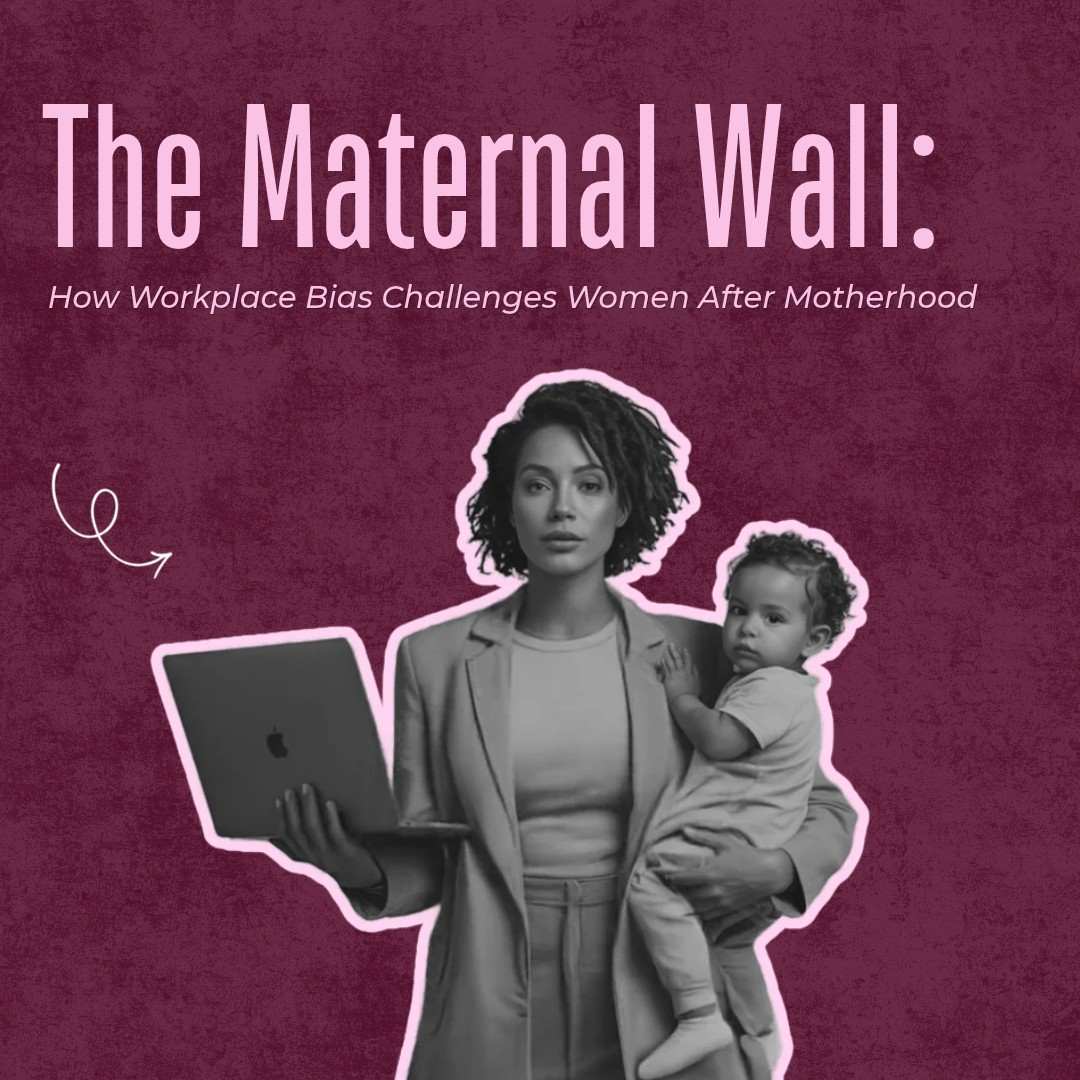
Some aspects of motherhood are universal. They are beyond geographies and cultures. One such aspect is questioning or doubting a woman’s capability as a professional after she becomes a mother. Sometimes people underestimate the mother’s competence even before the childbirth. Concern is fine, but it should not mean that you can overthrow her from the projects or assignments without even asking her. This bias, termed the maternal wall, can be easily found in many workplaces. Her experience remains the same, but assumptions towards her may change.
The term “maternal wall” refers to discrimination against mothers at work based on stereotypes about their commitment and interest in their work. Research published in the American Journal of Sociology found that equally qualified mothers were evaluated as less desirable hires and were given lower performance and salary estimates.
These results demonstrate that while women generally receive strong support when pursuing careers, motherhood can put an end to their aspirations. Although mothers keep on being ambitious and their professional capabilities remain intact after giving birth, they still have to reinstate their value in the eyes of their employers.

When Motherhood Changes Workplace Perceptions
You would not see maternal wall building at once, but you will get hit by it on different occasions in different forms. This invisible wall often appears through everyday decisions, subtle comments, and assumptions that seem harmless at first but quietly disrupt the confidence. A manager might question a mother’s availability before considering her qualifications. A colleague might assume she cannot handle a demanding project because she has kids. Someone less qualified and less experienced than her may get the promotion she was working so hard for. Read this to understand what women’s leadership pipelines when companies roll back DEI?
The maternal wall is particularly insidious when it comes to the professional growth of women with years of professional experience behind them. After all, one would expect their professional skills to speak for themselves, regardless of their status as a mother. However, the maternal wall can interfere with objective consideration of a candidate for a promotion or a new assignment.
It is not just limited to the new mothers or mothers in general, but it is affecting those women as well who are not even mothers yet. Sometimes, employers question younger women about future family plans or assume they will eventually prioritize caregiving. Consequently, women can face career-related judgments based on motherhood itself, rather than their actual performance.
The Hidden Cost of Proving Yourself
For many career women, motherhood poses a challenge to the existing professional aspirations. They want to nurture their children well but also want to progress in her career.
However, maternal wall bias can make this process exceptionally difficult for women. A working mother has to prove her devotion to the profession more consistently than other subordinates. In doing so, sometimes she accepts extra responsibilities, declines opportunities for flexibility, and works overtime just to prove that motherhood has not changed her aspirations and dedication. Even when she needs to ask for some emergencies at home or school for her child, she hesitates thinking that people may see her as less competent.
This creates an unfair cycle. A woman in need of support may feel compelled to work harder to prove she deserves equal opportunities. Over time, she might start gaging her professionalism by relentlessly focusing on it. Rest can feel like a risk, and asking for help can feel like expressing a weakness. But the real problem is not her but the workplace culture that treats caregiving responsibilities as evidence of reduced ambition.
Maternal Bias Puts Women’s Overall Well-Being at Risk
Women’s experiences of discrimination based on motherhood can be overwhelming. A woman may start feeling at some point that she has too many responsibilities and cannot deliver high-quality results in both roles. However, she may also feel that she is obliged to deliver excellent results constantly, without fail. Such internal dilemmas can negatively affect not only a woman’s physical health but also her mental and spiritual balance as well.
A woman who cannot give as much time to her work as she wants may feel pressure from society and employers to deliver excellent results. In an attempt to avoid additional burdens, women may dedicate all their free time and energy to work.
In doing so, a woman loses herself in every way. These are the times when we talk about climate feminism and all, but issues like ‘a mother’s support system’ are still not addressed as they should be. A mother who needs the support most gets just the opposite of it in our society.

What Workplaces Can Do For Breaking the Maternal Wall
Women should not be left alone in this fight against the maternal wall. Organizations must come forward and help their female employees to eliminate inequality in every way. Meaningful change begins when employers stop treating motherhood as a professional disadvantage.
Evaluate performance through clear criteria
Managers should assess employees through measurable outcomes, relevant skills, and documented contributions. Personal assumptions about availability or family responsibilities should not replace evidence of performance. Transparent promotion criteria can also reduce opportunities for unconscious bias.
Make flexibility accessible without stigma
Flexible schedules, remote work options, and reasonable leave arrangements can help employees manage responsibilities. However, these policies only work when employees can use them without fearing career consequences. Flexibility should support employees rather than become a reason to question their commitment.
Train managers to recognize bias
Managers influence hiring, project assignments, performance reviews, and promotions. Training can help them identify assumptions about mothers and make more objective decisions. Organizations should also review their evaluation processes for patterns of unequal treatment.
Create a culture where caregiving is normal
To start with, employers should strive not to make caring for children a woman’s sole responsibility. Men can be empowered as fathers and caregivers in the workplace through such policies as parental leaves and flexible hours.
Offer support to mothers who return to work
Working mothers should be allowed to return to work after maternity leave without having to start from scratch. The companies can provide work–family-friendly policies to aid them in balancing between work and family roles. This may involve mentoring and counseling programs upon request and ensuring that they participate actively in career development activities.
How Women Can Push Back Against Bias

While the role of employers in combating the maternal wall is critical, women should take action to protect their careers.
- Document all professional achievements. Women should keep a detailed record of all assignments completed and positive performance reviews received. This will allow them to objectively demonstrate their performance in case of disputes with employers.
- Define your professional boundaries. Women should define what flexibility means to them and how their work/life balance should be structured. Having defined clear boundaries, one should not be afraid to implement them. It is important to understand that one always has the right to say no, specifying the parameters within which one is willing to comply.
- Ask for objective and precise feedback. When a superior expresses doubt about one’s professional skills, one should ask for specific examples of shortcomings. This will shift the burden of proof to the employer and force them to substantiate their arguments with facts.
- Build a professional network. Having mentors and sponsors at work is crucial for career women. A professional network will help a woman get honest advice on the current situation and ways to solve it.
- Wisely use available workplace policies. Women should know all the benefits provided by the employer and carefully weigh the risks and benefits of each. If needed she should always turn to human resources department and trusted superiors for advice. One should also remember that one has the right to appeal to higher authorities in the event of employer violations.
Conclusion
Women should be able to have both their ambitions and their families. They should not have to choose between the two. The maternal wall must be breached for women in the workforce to have the opportunities and advancement that men do. This will require changes in the workplace by the employers and women banding together to make it happen. Women must stop feeling ashamed of their ambitions or their status as mothers. Not one person can bring the change at large, it requires everybody to walk together towards it.
