
CATEGORIES
#Parenting #Personal growth #Women EmpowermentOverview:
- Brands sell women’s insecurities before their products.
- Problem-and-solution advertising is deliberate and profitable.
- Beauty, fitness, and food use this tactic most aggressively.
- Recognizing the formula is the first step to spending wisely.
Introduction
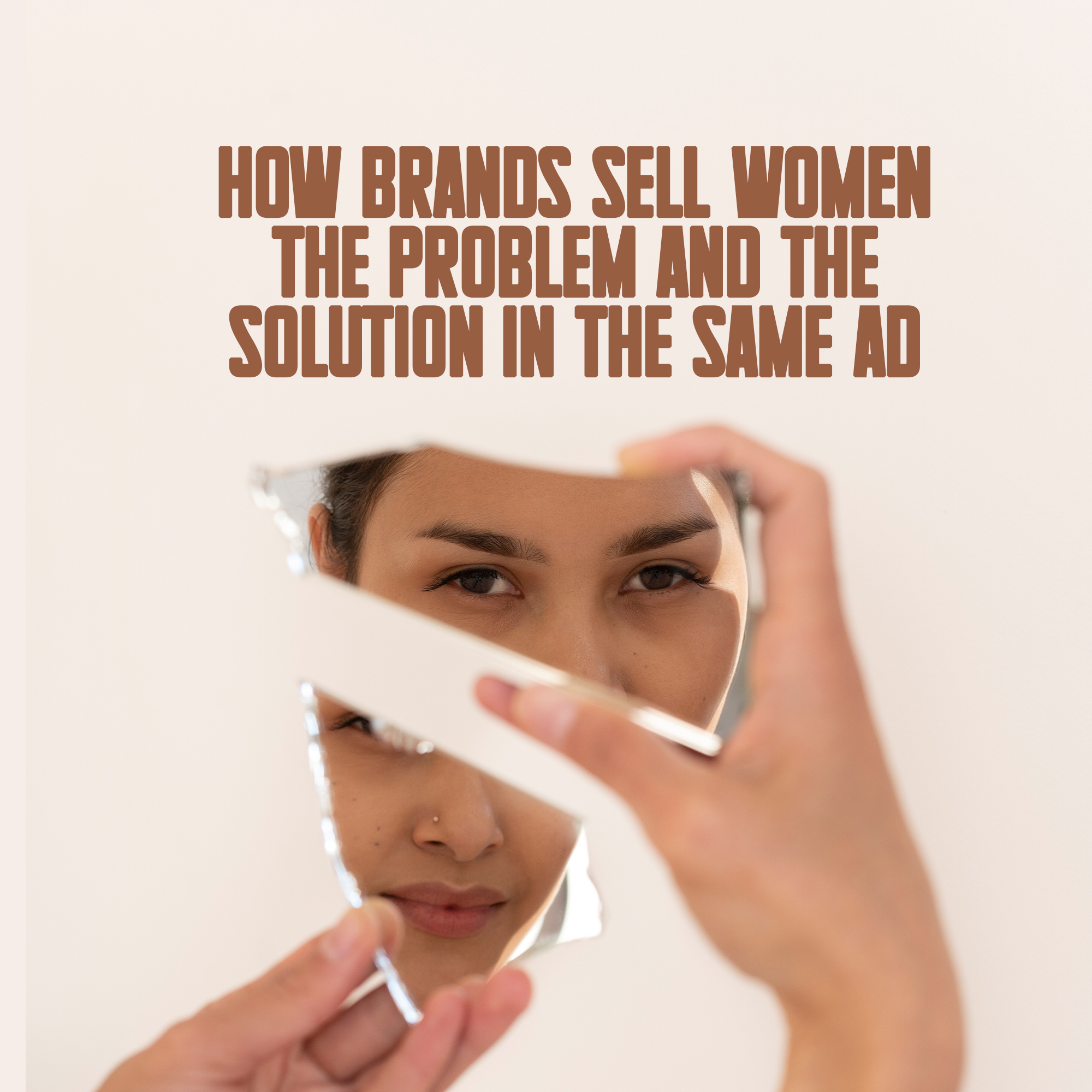
Sometimes, you watch an ad and suddenly purchase something you never knew you needed.This is how consumer behavior is driven: brands sell women the problem and the solution, which is used by marketers and businesses. Problem-and-solution advertising has existed long before social media. However, digital platforms have made marketing manipulation faster, more personal, and harder to walk away from.

The Formula Has a Name
In advertising, marketers call it “problem-agitate-solve.” This is a simple three-step structure where the ad identifies a pain point, intensifies that pain, and then presents the product as a relief.
I experienced this firsthand as a new mother. I had gained weight, something completely normal after having a child. Before I could even recognize how I felt about it, an ad for slimming tea appeared. It did not ask whether I wanted to lose weight; it assumed I did. Then the ad sold me the solution to a problem it had just introduced.
That is the “problem-agitate-solve” formula working exactly as intended. The ad does not wait for you to have the need. It creates the need first and hands you the answer. What made it manipulative was the timing. As a new mother, I was already navigating a body I did not fully recognise. The ad found that window and stepped right through it. It did not sell me a product but a version of myself that needed fixing, and then offered the fix.
In contrast, the honest alternative is an ad that tells you directly why you should want something. That version respects that you may not need what they are selling at the moment.
Problem-agitate-solve does the opposite. It manufactures the need before you have a chance to decide whether it is real.
The moment I started noticing this was the moment I began thinking before purchase. Not because I stopped wanting things, but because I realised the want was sometimes not mine. It had been handed to me in the first three seconds of an ad.
Beauty and the Manufactured Flaw
My Skin Was never the Problem
The beauty industry runs on manufactured flaws. Before the ad, you were not thinking about it. Then suddenly it becomes a problem that needs solving. This happened to me with my skin. As a melanin woman, I have been targeted by ads promising brighter, clearer, more even skin. Before those ads, I was not lying awake thinking about my complexion. The ad introduced the problem and later sold me the solution.
The Target That Never Stops Moving
Interestingly, the standards keep shifting.. The problem brands sell to women today is different from what they sold five years ago. The target moves deliberately. Once you solve the last problem, a new one appears. That is not a coincidence but a strategy.
What It Actually Cost Me
At the time, I bought the product and used it. Looking back, the problem it promised to fix was never really a problem. What stung most was not the result; it was the money. Money I could have saved, invested, or put toward something that was actually mine to want. That is what manufactured insecurity costs. Not just confidence. Real money. Spent on a problem that was handed to you in an ad.

How Fitness Culture Moves the Target
Fitness brands sell women the problem and the solution in every ad. The problem is always your current body. The solution is always their programme, supplement, or equipment. When women reach the goal, the target shifts. Weight loss becomes toning. Toning becomes sculpting. Sculpting becomes maintenance. The language changes, but the message stays the same: you are not there yet. This is not motivation but a business model. A woman who feels she has reached her goal stops spending. So the finish line is always slightly out of reach. Furthermore, fitness brands often sell women the problem and the solution in the same post. “Feel sluggish? Try our morning supplement.” The sluggishness was not something you were thinking about before the ad started.
How Fitness Culture Moves the Target
Fitness brands sell women the problem and the solution in every ad. The problem is always your current body. The solution is always their programme, supplement, or equipment. When women reach the goal, the target shifts. Weight loss becomes toning. Toning becomes sculpting. Sculpting becomes maintenance. The language changes, but the message stays the same: you are not there yet. This is not motivation but a business model. As a result, a woman who feels she has reached her goal stops spending. So the finish line is always slightly out of reach. Furthermore, fitness brands often sell women the problem and the solution in the same post. “Feel sluggish? Try our morning supplement.” The sluggishness was not something you were thinking about before the ad started.
The Food Industry Plays Both Sides
Few industries use problem-and-solution advertising as aggressively as food. Often, the same parent company owns the indulgence and diet brands. They sell you the product, the guilt about that product, and then they sell you the solution to the guilt. This is marketing manipulation running across product lines. Women are the primary audience at every stage. Indulgence ads use language of reward and pleasure, while diet ads use language of control and regret. Together, they trap women in a cycle that never ends. Moreover, this cycle is rarely visible from the inside. Brands feel different, products feel unrelated, but the strategy is one: keep women spending on both ends.
The Emotional Layer Nobody Mentions
Beyond skin and weight, brands sell women emotional problems too. Anxiety, loneliness, and the fear of falling behind. Each one is followed immediately by a product. Anxiety gets a wellness supplement, loneliness gets a subscription box, and the pressure to be productive gets a planner system. The emotional version of problem-and-solution advertising is not noticeable; however, it is no less calculated. Brands sell women the idea that their emotional state is something to be managed through a purchase, which extends into mental health branding and some therapy apps. Recognizing this does not mean dismissing all such products; it means asking whether the need existed before watching the ad.
How to Watch Ads Differently
Recognizing marketing manipulation does not mean avoiding advertising altogether. It means pausing before you respond. When an ad makes you feel something negative about yourself, stop. Ask one question: did I feel this before the ad started? Brands sell women the impression that they were already aware of the problem. In reality, the ad introduced the problem in the first three seconds. Spending with intention begins with that awareness. Additionally, it helps to research products outside the ad environment. Reviews, independent articles, and ingredient breakdowns give information without manufactured urgency. You are allowed to want things, but the goal is simply to want them on your own terms.

Conclusion
Brands have always known that insecurity sells faster than aspiration; they sell women the problem and the solution, and that is not going away. However, women who recognize the formula move through it differently and start spending with intention. The most powerful response to marketing manipulation is not skepticism; it is clarity.
