
CATEGORIES
Leadership & Impact | People We Admire | TechnologyOverview:
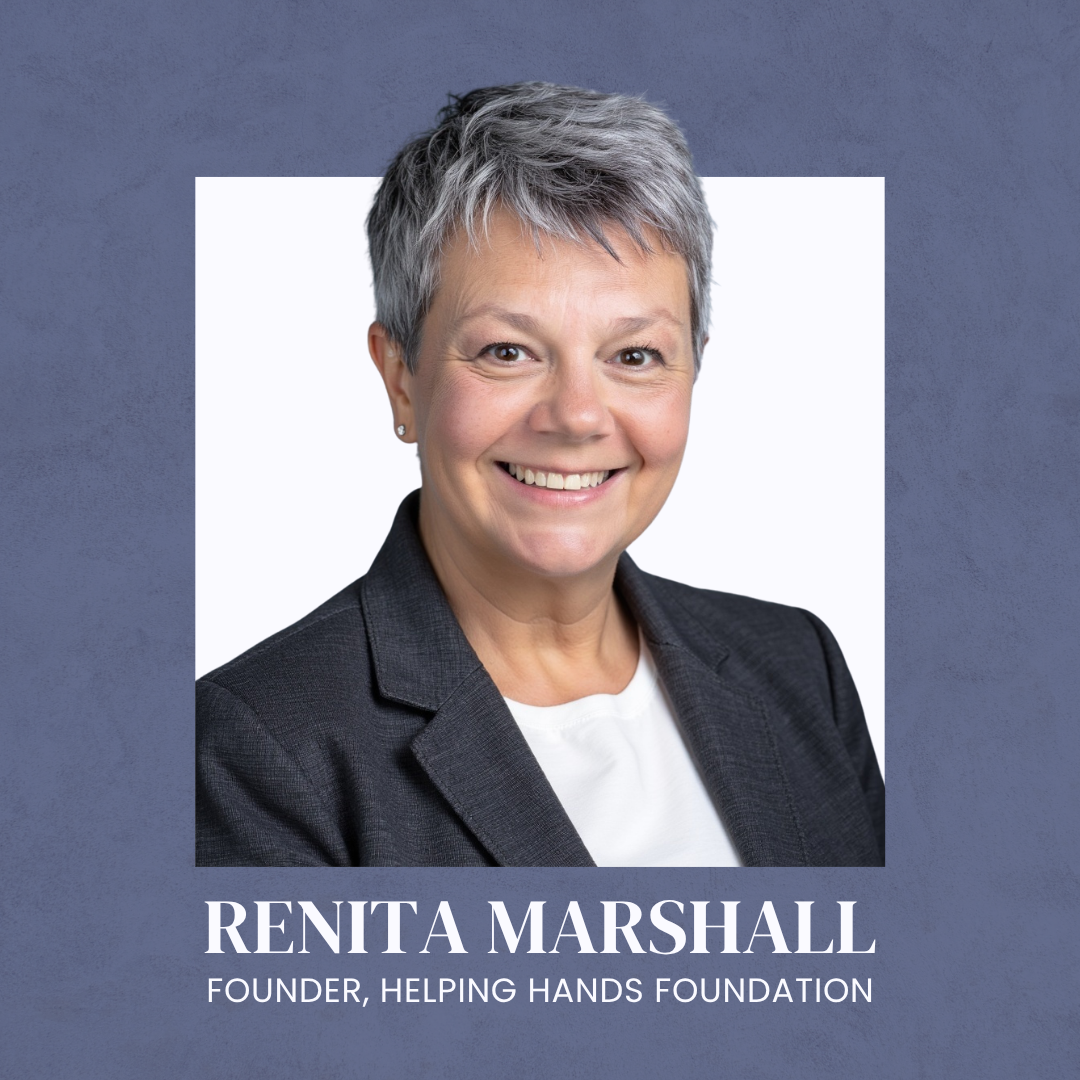
- Renita Marshall’s life has been shaped by resilience, service, and a belief that people should never be defined by their circumstances.
- Over the years, she built a career in public service, leadership, and community advocacy while dedicating herself to helping families facing difficult times.
- Today, she serves as Senior Executive Assistant at National Life Group and leads the Renita Marshall Helping Hands Foundation, which supports children and families experiencing temporary hardship.
- In this conversation, she reflects on overcoming self-doubt, the mentors who shaped her journey, and why creating impact matters more than personal success.
1. What was your childhood like and how did it shape who you are today?
I grew up in a home that was often unpredictable. My mother raised me as a single parent while my father struggled with alcoholism. He was in and out of jail, abusive toward my mother, and mostly absent from my life. There were times when our family was known as “the rough ones”. Those labels followed us, and I became aware at an early age that people sometimes make assumptions about who you are based on where you come from.
I learned early how much circumstances can shape a person, but I also learned that circumstances do not have to define them. My childhood gave me a deep understanding of what instability, fear, and being judged can feel like. It made me observant. It taught me to pay attention to what people may be carrying beneath the surface, even when they do not talk about it. It also gave me empathy for people who are struggling and may simply need someone to believe there is more possible for them.
While I was in high school, my mother made a decision that changed both of our lives. As a single parent, she went back to school, earned her college degree, and built a successful career as a teacher. I watched her work hard, persevere, and create a future that looked very different from the life she had known. She did not erase our past, but she refused to let it determine our future.
At the time, I probably did not fully understand the significance of what she was doing. Looking back, I realize she was teaching me one of the most important lessons of my life: your beginning is not your destiny. You can change direction. You can work through difficult circumstances. You can build something different.
That lesson has stayed with me. It shaped my work ethic, my resilience, and my commitment to helping others—especially people who may feel overlooked, judged, or defined by their hardest moments. I know what it is like to come from a place others may dismiss, and I also know the power of having someone recognize your potential. My mother showed me that change is possible, and much of my life has been about trying to create that same sense of possibility for other people.
2. What does a typical day in your life look like?
A typical day in my life begins around 6:30 a.m. with checking emails for the Renita Marshall Helping Hands Foundation. I review messages from families, donors, community partners, and volunteers, respond to questions, coordinate donations, and make sure families receiving assistance know they are supported.
From there, my attention shifts to my full-time role at National Life Group, where I serve as a Senior Executive Assistant supporting Operations. My day may include coordinating complex schedules, preparing leadership meetings, managing communications, organizing events, supporting more than 800 teammates, and helping leaders stay focused on strategic priorities. I am often balancing competing needs, solving problems before they become larger issues, and connecting people across departments.
Throughout the workday, I move between administrative responsibilities and broader leadership work—helping plan employee engagement activities, supporting process improvements, coordinating learning opportunities, preparing meeting materials, and ensuring that teammates feel informed and supported. No two days are exactly alike, and priorities can change quickly.
After work, I often return to RMHHF responsibilities. I may be organizing a donation drive, shopping for children, meeting with community partners, writing stories about the families we serve, preparing social media posts, or coordinating volunteers and distributions. The work is personal and detailed because every item we provide is selected with a specific child or family in mind.
I also make time for my civic commitments, including serving on the Barre City Manager Hiring Committee and the Governor’s Council on Domestic Violence. These responsibilities allow me to contribute to my community in different ways and use my experience in leadership, public service, emergency management, and relationship-building.
By the end of the day, I am usually tired—but grateful. My days are full of emails, meetings, logistics, decisions, and last-minute challenges. More importantly, they are full of opportunities to help people feel supported, improve the way work gets done, and make a meaningful difference in the lives of others.
3. Tell us about your professional journey and how you got to the position you are in today.
My professional journey has been shaped by service, persistence, and a willingness to keep learning.
I spent 24 years working for the State of Vermont, where I helped lead departments, managed complex responsibilities, supported employees, responded to emergencies, and served the public. Those years taught me how to navigate difficult situations, communicate with people at every level, build trust, and keep moving forward when circumstances were complicated.
I became a Certified Public Manager and pursued additional education in public policy and American government through Harvard Kennedy School. I also earned emergency management and Incident Command System certifications. My career in state government gave me a strong foundation, but it also taught me that leadership is not limited to a title. Leadership is taking responsibility, solving problems, and helping other people succeed.
Outside of my professional career, I had been helping families in my community for years. It began informally, when I helped a neighbor who was going through a difficult time and rallied friends to provide support. Each year, more people began asking whether I was going to help another family. What started as one small act of kindness continued to grow.
My friend Lisa Donahue repeatedly told me that I could do so much more if I made the work official. After she passed away in 2020, I promised myself I would follow through. I incorporated the Renita Marshall Helping Hands Foundation in her memory and created a nonprofit focused on helping families with children who are experiencing an unexpected or temporary hardship.
Starting the nonprofit was both exciting and intimidating. I had to learn how to create bylaws, establish a mission, review nominations, raise money, communicate with donors, coordinate volunteers, and make difficult decisions about how limited resources should be used. In the beginning, I was doing nearly everything myself. I still remain deeply involved in every part of the organization, from reviewing each family’s circumstances to shopping for the exact items their children need.
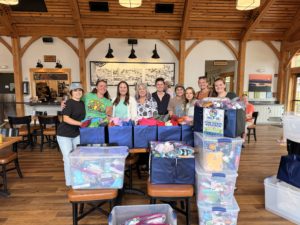
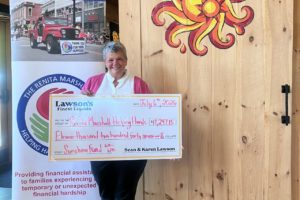
The Foundation has now invested nearly $200,000 in families and supported more than 1,400 children. We help families experiencing circumstances such as domestic violence, serious illness, injury, job loss, homelessness, fires, and other unexpected crises. The work has taught me that meaningful leadership is often found in the details—returning a phone call, listening carefully, finding the right size shoe, or making sure a child receives something that reflects who they are rather than simply receiving whatever is available.
After more than two decades in state government, I reached a point where I was ready for a new professional challenge. In 2023, I joined the National Life Group as an Executive Assistant. I knew I was bringing valuable experience with me, but I also understood that entering a new industry meant I would need to listen, learn, and prove myself in a different environment.
When I walked into my interview at National Life Group, I was nervous. It was an important opportunity, and I wanted to make a strong impression. But I remembered one piece of advice I had been given by a previous leader: “Just do what you do and you’ll be great.”
So I did.
I stopped trying to give the perfect interview answer and focused on being genuine. I talked about how I anticipate needs, support leaders, manage confidential situations, build relationships, solve problems, and bring people together. What began as an interview turned into a conversation about service, leadership, and the impact I could make.
When I walked out, I said, “I just got that job.”
Not “I hope I get it.” Not “I think it went well.” I said it with the confidence of someone who had already picked out her parking spot. That confidence did not come from assuming I was entitled to the position. It came from finally understanding that I was prepared for it. The skills I had developed through state government and through building my nonprofit—organization, judgment, communication, problem-solving, relationship-building, resilience, and service—were transferable.
Since joining the National Life Group, my role has continued to grow. My responsibilities go well beyond managing calendars and arranging meetings. I help leaders prepare for important conversations, coordinate meetings and events, support communications, connect people across teams, improve processes, and anticipate needs before they become problems.
I have also worked intentionally to understand the life insurance industry and the business of the people I support. I pursued industry certifications, including my ACS and ALMI, as well as additional LOMA coursework focused on insurance and customer experience. I wanted to be more than someone who managed logistics. I wanted to understand the work well enough to contribute meaningfully.
The position I hold today is the result of every chapter that came before it—the difficult parts, my public service career, starting the Foundation, the people who believed in me, the education I pursued, and the opportunities I was willing to take.
I did not arrive here by following a straight path. I arrived here by continuing to grow, continuing to serve, and recognizing that every experience was preparing me for the next opportunity.
Because I finally understood something: I was not pretending to belong.
4. Name one or several people you admire in history and tell us why. They could be living or have already passed.
I admire Michelle Obama because she represents strength, intelligence, grace, and authenticity. As a professional woman, wife, and mother, I see in her someone who has carried many responsibilities while continuing to lead with purpose and compassion.
Before becoming First Lady, Michelle Obama built an impressive career of her own. She attended Princeton University and Harvard Law School, became an attorney, worked in public service, and held leadership positions focused on community development and service. She did not simply become known because of her husband’s career. She had already established her own identity, accomplishments, and values.
As a professional woman, I admire the way she has used her platform to create opportunities for others. She has focused on education, healthy families, military families, girls’ leadership, and access to opportunity. She has shown that leadership is not always about being the loudest person in the room. Sometimes it is about showing up consistently, speaking honestly, and using your influence to make life better for someone else.
I also admire her because she has been open about the challenges of being a woman in highly visible spaces. She has spoken about the pressure to be perfect, the expectations placed on women, and the difficulty of balancing career, family, and public responsibilities. I appreciate that she has not presented success as effortless. She has acknowledged the hard work, compromise, uncertainty, and self-doubt that can exist alongside achievement.
As a wife, I admire the way she has maintained her own identity while supporting her husband. She has been a partner, not simply an accessory to his career. She has spoken honestly about marriage, communication, family responsibilities, and the work required to remain connected while both people are pursuing demanding goals. That feels genuine to me because a strong partnership is not about one person disappearing into the other person’s success. It is about supporting each other while continuing to grow as individuals.
As a mother, I admire her commitment to protecting and grounding her daughters while living under extraordinary public scrutiny. She understood that being successful professionally did not remove her responsibility to be present, intentional, and involved at home. She has shown that motherhood is not a limitation on ambition, nor is professional ambition a sign that a woman cares less about her family. Women can be deeply committed to both.
I also admire Michelle Obama because she leads with warmth. She is accomplished without making others feel small. She is polished but relatable, confident but willing to admit when something is difficult, and powerful without losing her humanity. She has reminded women that we do not have to change who we are in order to be taken seriously.
As a professional woman, wife, and mother, I connect with her example because I understand what it means to carry multiple responsibilities and still try to show up fully. My life includes my career, my family, my nonprofit, and my community service. There are days when I am managing professional responsibilities, supporting others, making decisions, and then continuing that work at home or through my nonprofit. Michelle Obama reminds me that it is possible to lead with purpose while remaining grounded in the people and values that matter most.
I admire her because she has never suggested that success is about having a perfect life. Instead, she has shown that success is about knowing who you are, continuing to grow, using your voice, and making room for others to rise with you.
5. Have you had any mentors along the way? Could you share about them and their influence in your life?
I have been fortunate to have strong women believe in me at different points in my life—often before I fully believed in myself. Each of them helped shape the person, professional, and leader I am today.
Patricia Gray, my high school business teacher, was one of the first people to recognize my potential. She believed in me long before I understood what I was capable of. At a time when I was still trying to figure out who I was and what direction my life might take, she saw qualities in me that I had not yet learned to see in myself. Her encouragement gave me confidence and helped me understand that I had valuable skills and something meaningful to contribute.
Mary Monte gave me an opportunity that changed the course of my life. She gave a high school student a chance at a career before I had even graduated. That opportunity meant more than simply having a job. It was an early investment in me. Mary trusted me with responsibility and gave me the chance to learn, grow, and begin building a professional future. Sometimes one person’s willingness to open a door can change everything, and Mary opened that door for me.
Camille George showed me what compassionate leadership looks like. She led with both strength and empathy, and she understood that people perform at their best when they feel respected, supported, and valued. Camille taught me that leadership is not just about getting results. It is also about how you make people feel while working toward those results. Her example continues to influence the way I work with others and the kind of leader I strive to be.
Alyssa Schuren continues to encourage me on a regular basis. Her support reminds me that mentorship does not always end when a particular job or chapter is over. Sometimes it becomes an ongoing relationship built on honesty, encouragement, and mutual respect. Alyssa helps me recognize my own growth, challenges me to keep moving forward, and encourages me to pursue opportunities even when I may be questioning whether I am ready.
Each of these women supported me in a different way. Patricia helped me see my potential. Mary gave me an opportunity. Camille taught me how to lead with compassion. Alyssa continues to remind me to believe in myself and keep growing.
Their influence has shaped not only my career, but also the way I support other women. Because I know what it feels like to have someone believe in you before you are ready to believe in yourself, I try to be that person for others. I want to encourage women, create opportunities, share what I have learned, and remind them that they do not have to have everything figured out before they take the next step.
I am where I am today because of my own hard work, but I did not get here alone. These women saw something in me, encouraged me, challenged me, and helped me become the person I was capable of becoming.
6. What has been the greatest challenge in your journey and how did you overcome it?
The greatest challenge in my journey has not been a lack of opportunity or ability. It has been learning to believe that I deserve the opportunities I have worked so hard to earn.
For much of my life, I have struggled with imposter syndrome. I have often been my own worst critic, questioning whether I was experienced enough, educated enough, or prepared enough to be in the room. Even when I had a successful career, led teams, started a nonprofit, earned certifications, and took on new responsibilities, I could still focus more on what I did not know than on everything I had already accomplished.
I sometimes assumed that other people were more qualified, more confident, or more deserving. I would replay conversations, second-guess decisions, and hold myself to a standard I would never expect another person to meet. If something went well, I might attribute it to preparation, timing, or luck. If something did not go perfectly, I would treat it as evidence that I was not good enough.
That became especially apparent when I interviewed for my position at National Life Group. I was nervous walking into the interview because I was entering a new industry and wondered whether my experience would translate. But I remembered advice from a previous leader: “Just do what you do and you’ll be great.”
That advice helped me stop trying to prove I was someone else. I focused on what I knew how to do—build relationships, anticipate needs, solve problems, communicate clearly, support leaders, and serve people well. When I walked out of the interview, I said, “I just got that job.” For perhaps the first time, I recognized that confidence did not mean knowing everything. It meant trusting that I had the ability to learn and contribute.
I have overcome imposter syndrome by keeping evidence of my growth in front of me. I remind myself of the 24 years I spent in public service, the leadership responsibilities I managed, the nonprofit I built, the families and children we have helped, the certifications I pursued, and the people who have trusted me with important work. I have learned that being nervous does not mean I am unqualified. It often means I care deeply and understand the importance of what I am doing.
I have also learned to accept encouragement instead of immediately dismissing it. Women such as Patricia Gray, Mary Monte, Camille George, and Alyssa Schuren saw potential in me at different points in my life and helped me recognize it for myself. Their belief in me became part of the evidence I could draw on when my own confidence was lacking.
I still have moments of self-doubt. Overcoming imposter syndrome does not mean I never question myself. It means I no longer allow that questioning to make my decisions for me. I can acknowledge the doubt, prepare as thoroughly as possible, and move forward anyway.
The greatest lesson has been understanding that I do not have to be perfect to be capable. I do not have to know everything to belong. I do not have to wait until I feel completely confident before taking the next step.
I have learned to give myself the same grace, encouragement, and belief that I have always tried to give other people. That has allowed me to stop seeing my past as something I had to overcome and start seeing it as preparation for the person I am today.
7. How do you balance your work and personal life and what is one thing you enjoy doing in your free time?
Balancing work and personal life is something I have to be intentional about because I am almost always “on.” Between my career, my nonprofit, community involvement, and civic responsibilities, there is usually someone who needs an answer, a decision, or support. I genuinely care about the work I do, but I have learned that I cannot be fully present for others if I never give myself time to reset.
That is why I try to protect Sundays as a day to step away. I do not work on RMHHF projects, respond to community requests, or schedule activities where I need to be visible and engaged. I try not to spend the day being “on” for other people. Sundays give me a chance to slow down, recharge, and prepare emotionally and mentally for the week ahead.
I also make a point of taking regular vacations where I truly step away from electronics. I do not want to spend my time off checking emails, answering messages, or constantly documenting what I am doing. Disconnecting helps me be present and allows me to return feeling refreshed rather than simply having worked from a different location.
The one thing I most enjoy doing in my free time is being with my family. I am a new grandmother, and that has given me an even greater appreciation for quiet, ordinary moments together. Whether we are having dinner at home, spending time together at the house, or planning a weekend away at a lakefront cabin, I simply want to be with them.
My family grounds me. They remind me that I am more than my job titles, responsibilities, accomplishments, and community commitments. With them, I am just Mom—and now Grandma. I do not have to solve anything, organize anything, or be responsible for everyone else. I can relax, laugh, enjoy the moment, and be fully present.
Those family moments are what restore me. They help me return to my work with more energy and perspective, but their value is not simply that they make me more productive. They remind me of who I am at my core and what matters most when everything else becomes demanding.
8. What do you think is the biggest concern for global youth today and how do you think it could be solved?
My biggest concern for young people today is the growing normalization of hate and division. Hate is being said out loud again—in online conversations, in the news, and by people in positions of influence. Words that once would have been challenged are increasingly treated as acceptable, and young people are watching, listening, and absorbing those messages.
Children are growing up in a world where they are constantly exposed to anger, misinformation, discrimination, and public conflict. They see people reduced to their race, religion, gender, immigration status, disability, political beliefs, or personal circumstances. Over time, that kind of division can make it easier to fear people we do not know and harder to recognize our shared humanity.
I worry about what this teaches young people about how to treat one another. If they are repeatedly shown that cruelty is power, that humiliation is entertainment, or that difference is something to fear, those lessons can shape the way they build relationships, participate in their communities, and understand their own place in the world.
The solution will not come from one law, one program, or one leader. It will require all of us to be more intentional about what we model and what we allow. We need to combat hate with compassion, learning, and understanding.
That means teaching young people how to think critically about what they see and hear online. It means giving them opportunities to learn about people and cultures different from their own. It means creating spaces where they can ask difficult questions, have honest conversations, and understand that disagreement does not have to become disrespect.
It also means adults must take responsibility for the example we set. Parents, educators, community leaders, employers, elected officials, and public figures all influence young people. We cannot tell children to be kind while modeling contempt. We cannot ask them to reject bullying while excusing it when adults engage in it. Young people need to see us listening, apologizing, standing up for others, and treating people with dignity—even when we disagree.
Compassion does not mean avoiding difficult conversations or ignoring injustice. It means approaching those conversations with the belief that people are capable of learning and that every person deserves dignity. Understanding does not require us to agree with everything someone believes, but it does require us to see the person beyond the label.
Education is also essential. Young people need to understand history, social justice, civic responsibility, and the consequences of discrimination. They need to know that progress has always depended on people who were willing to speak up when remaining silent would have been easier.
For those who continue to fight for social justice, I would say: keep going. Progress can feel slow, and the current climate can be discouraging, but the work matters. Every conversation that challenges prejudice, every child who feels seen, every person who chooses compassion over cruelty, and every community that makes room for others helps create a different future.
Our children are watching us. The world they inherit will be shaped not only by the hatred that is spoken, but by the courage, compassion, and understanding we choose to practice in response.

9. Which are some ways in which you are creating a positive change in the world?
I try to make a positive change in the world by focusing on the people directly in front of me. I do not believe change always begins with a large platform or a perfect solution. Often, it begins with noticing that someone needs help and deciding not to look away.
Through the Renita Marshall Helping Hands Foundation, I support families with children who are facing unexpected and temporary hardship. These families may be dealing with domestic violence, serious illness, injury, job loss, housing instability, or another crisis that has disrupted their lives. We provide practical, personalized assistance, whether that means back-to-school clothing and supplies, winter gear, sports equipment, camp opportunities, holiday gifts, scholarships, or basic necessities.
What makes this work especially meaningful is that we do not treat families as statistics. We take time to understand their circumstances and learn what each child needs and enjoys. We purchase clothing, shoes, and supplies specifically for the individual children rather than distributing generic items. That attention to detail helps children feel seen, valued, and included during what may be one of the most difficult periods in their family’s life.
I also work to create positive change through my professional role at National Life Group. As a Senior Executive Assistant supporting Operations, I help leaders and teams communicate, collaborate, and serve more effectively. I support more than 800 teammates, coordinate important meetings and programs, improve processes, and help ensure that people have the information and resources they need to do their jobs well.
I believe the way organizations treat people matters. Service is not limited to what an organization provides externally. It is also reflected in how employees, customers, families, and community members are treated during every interaction. I try to bring empathy, accountability, and a service mindset into my work and encourage others to think about how their actions affect the people they serve.
My civic involvement is another way I contribute. Serving on the Barre City Manager Hiring Committee has allowed me to help shape the future leadership of my community. Through the Governor’s Council on Domestic Violence, I contribute to conversations and efforts focused on safety, awareness, and support for people affected by domestic violence. These roles allow me to use my experience in public service, leadership, emergency management, and community relationships for the benefit of others.
I also try to make a difference by encouraging women and young people. I know how important it is to have someone believe in you, especially when you are still learning to believe in yourself. I try to be that person for others by sharing opportunities, offering encouragement, listening honestly, and reminding people that their circumstances do not have to define their future.
Most of all, I try to make a positive change through consistency. I answer the email, make the phone call, show up to the meeting, speak up when something is wrong, thank the volunteer, connect people to resources, and keep going when the work is difficult.
I know I cannot solve every problem or help every family. But I can make a difference in the lives of the people I encounter. To me, positive change is built one family, one child, one conversation, one opportunity, and one act of compassion at a time.
10. What is a mantra that you live by and how does it help you on a daily basis?
“Resilience built me; impact defines me.”
This mantra captures both where I have come from and how I want to live. The challenges I experienced growing up, the obstacles I faced professionally, and the moments when I doubted myself all helped build my resilience. They taught me how to keep going, adapt, work hard, and find a way forward even when circumstances were difficult.
But resilience is only part of my story. I do not want to be defined solely by what I have survived or overcome. I want to be defined by what I do with those experiences. “Impact defines me” reminds me that my life has meaning when I use my strength, opportunities, and experiences to help others.
It reflects my work with families through the Renita Marshall Helping Hands Foundation, my service to my community, my professional responsibilities, and my commitment to encouraging other women. It reminds me that success is not only about titles, recognition, or accomplishments. It is about whether I made someone’s life better, helped someone feel seen, opened a door, solved a problem, or gave someone hope.
On a daily basis, this mantra helps me put challenges into perspective. When I feel overwhelmed or question whether I am capable, “resilience built me” reminds me that I have faced difficult things before and continued forward. When I am deciding how to spend my time or respond to a challenge, “impact defines me” reminds me to focus on what matters most and how my actions affect other people.
It also helps me remember that I do not have to change the entire world in one day. Impact can be found in small, consistent actions—a thoughtful conversation, a difficult decision made with compassion, support given to a teammate, or a child receiving something they desperately needed.
“Resilience built me; impact defines me” reminds me that my past has strengthened me, but the difference I make for others is what gives that strength purpose.
11. If you were to give advice to young people aiming to follow your professional path, what would it be?
My advice would be to stay open to opportunities, even when they do not look exactly like the path you imagined. My career has not been a straight line. I spent 24 years in state government, started a nonprofit, moved into the insurance industry, and continued building new skills along the way. Each experience prepared me for the next one.
Do not underestimate the value of administrative, organizational, or support roles. They can provide a front-row seat to leadership and teach you how decisions are made, how organizations operate, and how to influence outcomes. Learn the business—not just your job description—and look for ways to make the people and processes around you better.
Find mentors who see your potential, especially when you are still learning to see it yourself. Listen to their advice, but also develop your own voice. Be willing to ask questions, accept feedback, and admit what you do not know. Confidence does not come from knowing everything; it comes from trusting your ability to learn.
Do not let imposter syndrome convince you that you are not ready. You may never feel completely prepared before taking an opportunity, and that is okay. Prepare thoroughly, show up authentically, and remember that your experiences have value.
I would also encourage young people to lead with integrity and compassion. How you treat people matters. Build relationships, follow through on your commitments, and be the person others can trust. Technical skills may help you get an opportunity, but character and consistency are what help you build a lasting career.
Finally, make room for a life beyond work. Pursue meaningful relationships, protect your time, and find ways to serve others. A successful career is important, but the greatest measure of success is the impact you have on people along the way.
12. How can our audience contact you? Share with us your socials 🙂
Renita Marshall Helping Hands Foundation: https://www.facebook.com/rmhhf
Renita Marshall Personal: https://www.facebook.com/renita.marshall.16/
Renita Marshall LinkedIn: https://www.linkedin.com/in/renita-marshall-cpm-acs-almi-a903059b/
Conclusion
Renita Marshall’s story is a reminder that our beginnings do not determine our future. From a childhood marked by instability to a career built on leadership and service, she has shown what can happen when resilience is paired with purpose. Whether she is supporting hundreds of colleagues, helping families through crises, or encouraging the next generation, her focus remains the same: make a positive difference in the lives of others. Her journey proves that lasting impact is often built through small acts of compassion carried out consistently over time.
