

Overview:
- Trust is what really matters when leaders are in charge of teams that are far away.
- Having goals is more important than having a lot of meetings for remote teams to work well.
- When people do not want to use tools, it usually means that leaders are moving too fast.
- Research shows that remote teams that are happy and involved often do better than teams that work in the office.
Remote Leadership Is Different
When the pandemic struck in 2020, teams that had been working in offices suddenly started working from home. For leaders, it was a big change in how things were done. However, dig a little deeper, and the change was more psychological than most leaders wanted to admit.
The old way of leading teams was based on being able to see people and what they were doing. Managers could walk past desks, drop into huddles, and read body language across a table. When that visibility disappeared, most leaders got worried. Their immediate response was to increase check-ins, hold more meetings, and make forced screen-share requests. All of it to feel in control.
Most teams resisted this and felt like their leaders did not trust them, shaking the very foundation of work. It turned out that a lot of what was happening in offices was not really about getting work done. It was rather about being in the same room.
At my friend’s organization, the director introduced three tools in six months. The team stopped using all of them. It was not that the tools were bad; it was just that the director was moving too fast.
The numbers do not lie. A 2023 report by Buffer revealed that 98 percent of people who worked remotely wanted to continue with the remote model. The office model was beginning to feel passé. The question then was whether leaders could adapt fast enough to make it work.

Image Credit: Pexels
The Trust Problem That Nobody Talks About
When managers cannot see the team members, they face a difficult crossroad: trust or control. Unfortunately, many managers choose control, which is expensive and damaging.
Control, in most cases, is just distrust dressed up as a process. To the team members, it is not only taxing but also a root cause of disengagement and quiet quitting.
Gallup’s State of the Global Workplace report found that fully remote workers are the most engaged group at 31 percent. On-site workers sit at 19 percent. When leaders build trust in remote teams, engagement rises sharply.
The same report found a flipside: remote workers can also feel lonely and have poor well-being. So trust is not about giving people space; it is also about checking in with them regularly.
A Framework for Building Trust in Remote Teams
Building trust in remote teams is really just a pattern of repeated behaviors: not a sentiment, not a value statement. Most high-trust distributed teams tend to share these habits.
- Clarity first: Every project starts with written goals, responsible and accountable owners, and clear success KPIs. Not verbal, written, and well documented.
- Default to transparency: Decisions, trade-offs, and changes are shared openly. People stop guessing and start contributing.
- Outcomes over hours: What gets shipped matters. When work happens does not.
- Recognition that travels: Appreciation is made public and loud, not tucked into a private Slack message.

Image Credit: Pexels
These four pillars are the foundation of trust in remote teams. Without them, everything else feels like fancy words in a company’s culture deck. Research from Great Place to Work suggests that at high-trust workplaces, trust does not just lift performance, it also softens the human cost of distance.
A useful gut check for managers: would the team’s best work get done if no one was watching? If the honest answer is yes, the trust foundation is solid.
What Makes Remote Teams Efficient
Remote team efficiency rarely comes from a new tool or an aesthetic dashboard; it comes from disciplined attention. The most efficient distributed teams tend to share four operating principles.
- Async-first communication: Meetings are the last resort, not the default. A clear thread or a short video can replace a thirty-minute call.
- Protect deep work: Calendars include uninterrupted blocks. Notifications are tamed. Focus is treated as a precious resource.
- Sacred one-on-ones: Cancel any meeting before canceling a one-on-one. The signal it sends is powerful.
- A small, stable tool stack: Fewer tools, kept longer, beat a constantly changing setup. Every switch costs hidden hours.
Another study found that remote workers can show a 13 percent productivity boost when teams are set up well. The gains are not automatic. They show up when leaders stop confusing busyness with progress.
There is a counterintuitive truth here. Remote team efficiency improves when leaders write more and meet less. Writing forces clarity. Meetings often hide their absence.
One agency replaced fourteen weekly status meetings with a single shared written digest. Within a month, the team reclaimed close to nine hours per person per week. Nothing else changed.
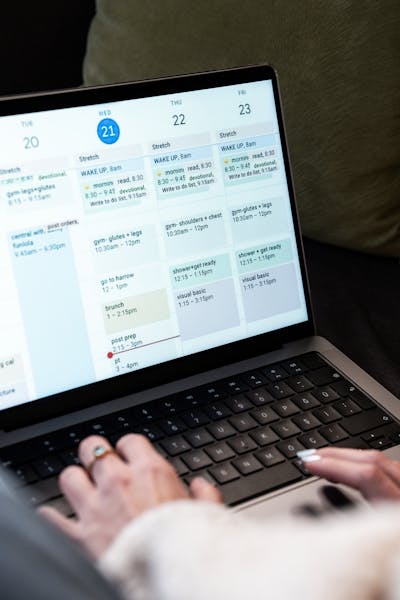
Image Credit: Pexels
When Teams Resist Change
Most resistance is not laziness. It is accumulated fatigue. Teams that have lived through repeated reorganizations, tool rollouts, and process pivots are not pushing back on a new idea. They are pushing back on the pattern.
A few principles tend to defuse resistance quickly.
- Heard before solved: Run a meeting where the only rule is no solutions, only complaints. It clears the air and surfaces real friction.
- Co-create the rollout: People defend what they help build. Naming a few skeptics as co-owners often flips the dynamic.
- Move at the speed of trust: One new system per quarter beats three, because three usually fail.
- Name the pattern out loud: Acknowledging change fatigue is often enough to lower the temperature on a team.
At a fifty-person team, a senior designer refused to install a new app for a week. He called it “another app shouting at me.” A few months later, he was the one writing the onboarding doc for new hires. The shift came from inclusion, not pressure.
When leaders treat resistance as data, the picture changes. Systems that respect the team’s efficiency and mental health get prioritized. That habit alone keeps a leader at the forefront of managing remote teams smoothly.
Final Thoughts
Learning how to manage remote teams is psychological. The leaders who succeed choose trust when control feels safer. They design for outcomes, write more than they speak, and treat resistance as feedback. Build trust, protect the deep work, and the efficiency tends to follow.
