
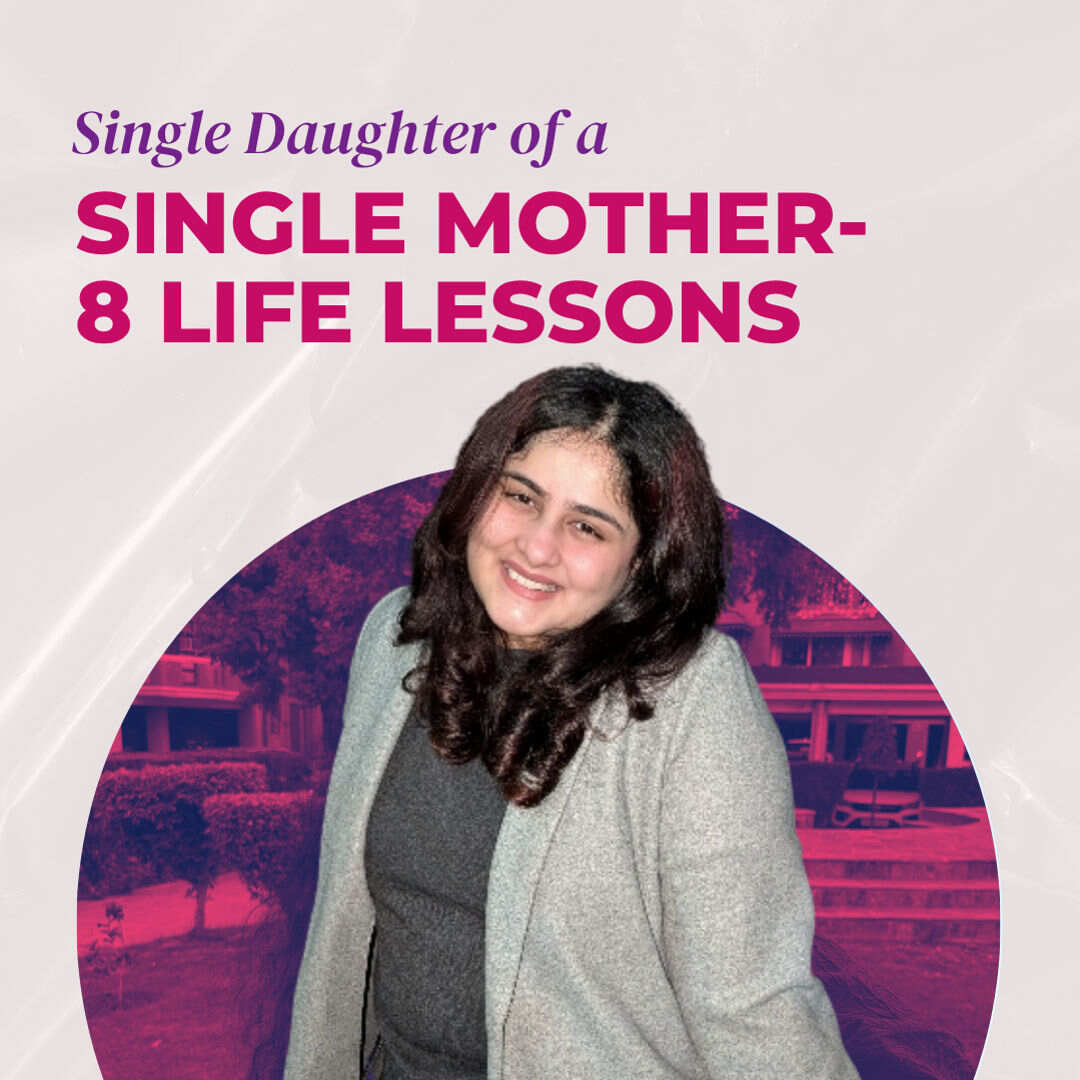
Overview:
- There is an emotional complexity involved with growing up as a single daughter to a single mother,
- The journey has been framed through eight life lessons.
- Societal assumptions are challenges, and silent struggles and moments of strength are highlighted.
- The beauty and depth of an unconventional family bond are captured.
When I was little, someone once told my mom, “You don’t have to tell people you’re divorced— say he works overseas. That way, no one will know, and you won’t have to feel ashamed.” She laughed. Not out of agreement, but because she knew she was never going to choose that path. Shame had no place in our story. She had nothing to hide. She owned her truth with grace, with pride—and she raised me to do the same. We’ve walked through life with our heads held high, never hiding, never pretending. We’ve always believed we are a complete family—just the two of us. And over the years, I’ve learned that we really, truly are.
Here’s what being a single daughter to a single mother taught me.
It’s Okay to Be Angry
Anger gets a bad rep. It’s like a volcanic eruption—sudden and explosive. Thoughts and feelings rush out, too complex to put into words. But it can also simmer silently, like slow-moving lava beneath the surface. Slowly shaping everything around it, almost unseen. No one really talks about the silent, persistent anger that dwells within a single daughter raised by a single mother. The anger of having to write a father’s name on every school form, as if my mother weren’t enough. Anger of getting pity-filled stares from teachers and neighbors.
The anger came from people assuming our life was tragic or incomplete. Worse, they assumed I was pampered and had it easy. Watching your mother hustle daily—trying to make up for both parents, and sometimes failing—was anything but easy. Seeing her sell her last piece of jewellery just to protect my future wasn’t a walk in the park either.
And yet, even in the thick of that anger, there was always joy. So much joy. Right from the little delights of going out for a late-night movie or shopping, to the big moments in life like taking care of her when she was sick, every part of it has felt fulfilling. Beating cancer’s ass together? That was fun. Scolding her for refusing to eat healthy? Honestly, my most natural reaction. Good memories can be borne from anger, too; it’s not something to be afraid of, or to contain and hide. I’ve been angry a lot—at the world, at my mother, at myself. But that anger also gave me the courage to stand up for us. To gain the strength to endure, to survive and thrive, and to prove the worldly perceptions wrong.
It’s Okay to Feel Alone
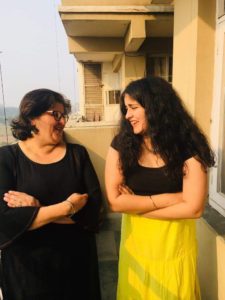
I used to dread coming home from school. As a single child, it’s hard to enjoy their own company. Having no one to eat lunch with or no one to tell how my day went, I felt alone. I felt my friends’ privilege in having fresh hot food waiting for them as soon as they got back home. Sometimes, I had no option but to spend time with myself a lot. I didn’t love it, and I longed for company. Sometimes, I still do.
It’s Okay to Feel Incomplete and Still Be Whole
We were always “just the two.” Two girls in a home sharing chores, laughter, meals, and sometimes the weight of the world. People would say, “At least you don’t have to share.” But I would have given anything to have someone to share—laughter, silence, even sorrow. That absence wasn’t just about a missing sibling or father. It meant being the only pillar the other could lean on. It meant knowing I was her support system just as much as she was mine.
It’s Okay to Feel Guilty
There’s a silent thread of guilt that ties single daughters to their single mothers. There was guilt for leaving her alone, for being a child when she needed a friend. Guilt for being the reason she never got to take a day off from being strong.
When she was alone and I wasn’t there, it scared me. Just like that, when I was sick and she couldn’t be around, I felt that ache in my bones.
It’s hard not to wonder if I am too much of a burden and if she’d be better off without me. I used to wish someone was on my side when she punished me. Someone to wipe my tears when I was overwhelmed. A sibling? A father? But we only had each other. And we did the best we could. And that’s what matters.
It’s Okay to Resent—And Understand
I didn’t have a backup parent. No one to run to when she was upset, and no one to mediate our fights or soften the blow. There was no choice but to figure things out alone. Sometimes, I resented her for expecting too much too soon. For wanting me to be responsible before I was ready, for not letting me just be a child. I resented her when she compared me to smarter kids in class. Or when she found out I had a boyfriend at thirteen and overreacted.
I thought she didn’t get me. But now, as I’m growing up, I see how she didn’t have it easy either, or easy at all. She lost her own mother at three. No one ever taught her how to be a mother, and life never handed her a manual. She was forced to grow up far too soon. Still, she raised me the only way she knew—with instinct, effort, flaws, and endless love. It took me years to realise she’s human first, mother second. But I’m lucky that I realised it while she was still around to hear it. Some people realise too late.
It’s Okay to Be Strong and Still Fall Apart
When I found out she had cancer, it completely broke me. It deflated my spirit, it made me question my faith, and I even had nightmares about being orphaned. The fear clung to me like skin.
But something, unknown to me till then, deep inside kicked in. I became her crutch. Days went by– I couldn’t sleep, fueled by sheer will that came from a place I have never been able to explain. I fed her like a baby and scolded her like a mother. People say our roles have reversed, but I disagree. I didn’t do anything extraordinary—just barely returned what she had always done for me since day one. If I knew anything about caring and being strong in times of hardship, it was only because she showed me. Years later, when I fell into a deep depression, I hid it from her at first as I didn’t want to be a burden.
But as they say, mothers just know. She read about therapy and supported me throughout. She made sure I took my meds, stood by me through self-harm and breakdowns—never flinching, never judging. She stood like a wall, protecting me. Always.
We’ve both been strong. And we’ve both fallen apart. But we always put each other back together. I genuinely believe that is what love is.
It’s Okay to Celebrate
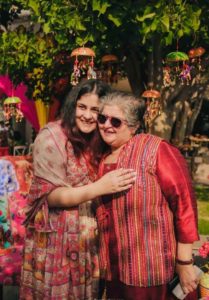
In a world obsessed with perfect families, we had no blueprint. No scolding voices when our room was a mess. No one nagging us to cook every day—we’d just order takeout when we failed. We lived on our own terms. We made beautiful memories. Sundays were especially sacred. We made sure to eat out, laughing, just us.
Today, beyond being mother and daughter, we’re friends. We fight, we joke, we clean (or don’t). Life isn’t always pretty, but it’s always real. And that’s more than enough. It’s okay to laugh, when things feel heavy. It’s okay to celebrate small things. Happiness can be found in the most unconventional ways.
It’s Okay to Be Scared
Divorce. The word that has always scared me. I was too young to understand it entirely, but I saw how people reacted to us—with pity, discomfort, judgment. In my mind, I could only see it as a bad thing then. I envied families with one strict parent and one soft one. They had someone to vent to, someone to confide in. I often wondered what would happen if something happened to her? What if I were left alone? The fear never truly left. The world scared me. Her pain felt unbearable. I feared being left behind.
She once battled her depression in silence so it wouldn’t touch me. And when my turn came, she stood stronger than I’d ever seen her. She gets back up faster than she falls. And if she ever needs to fall, I’m right here.
Conclusion:
I used to feel like others had more: a fuller house, a fuller family. But I had her. And honestly, that was everything. She always filled my cup, even when hers was empty. We are not broken. We complete each other. We are enough. Anger, joy, sorrow—all have a place in my life. I’ve realised that it is okay to live a life others might not understand, as long as I do. It’s okay to be unsure, to learn and adapt and to not have everything “perfect” in your life. Perfection looks different for everybody. And sometimes, Perfect is the enemy of Good.
It’s okay to be a single mom.
And it’s okay to be her only daughter.
