
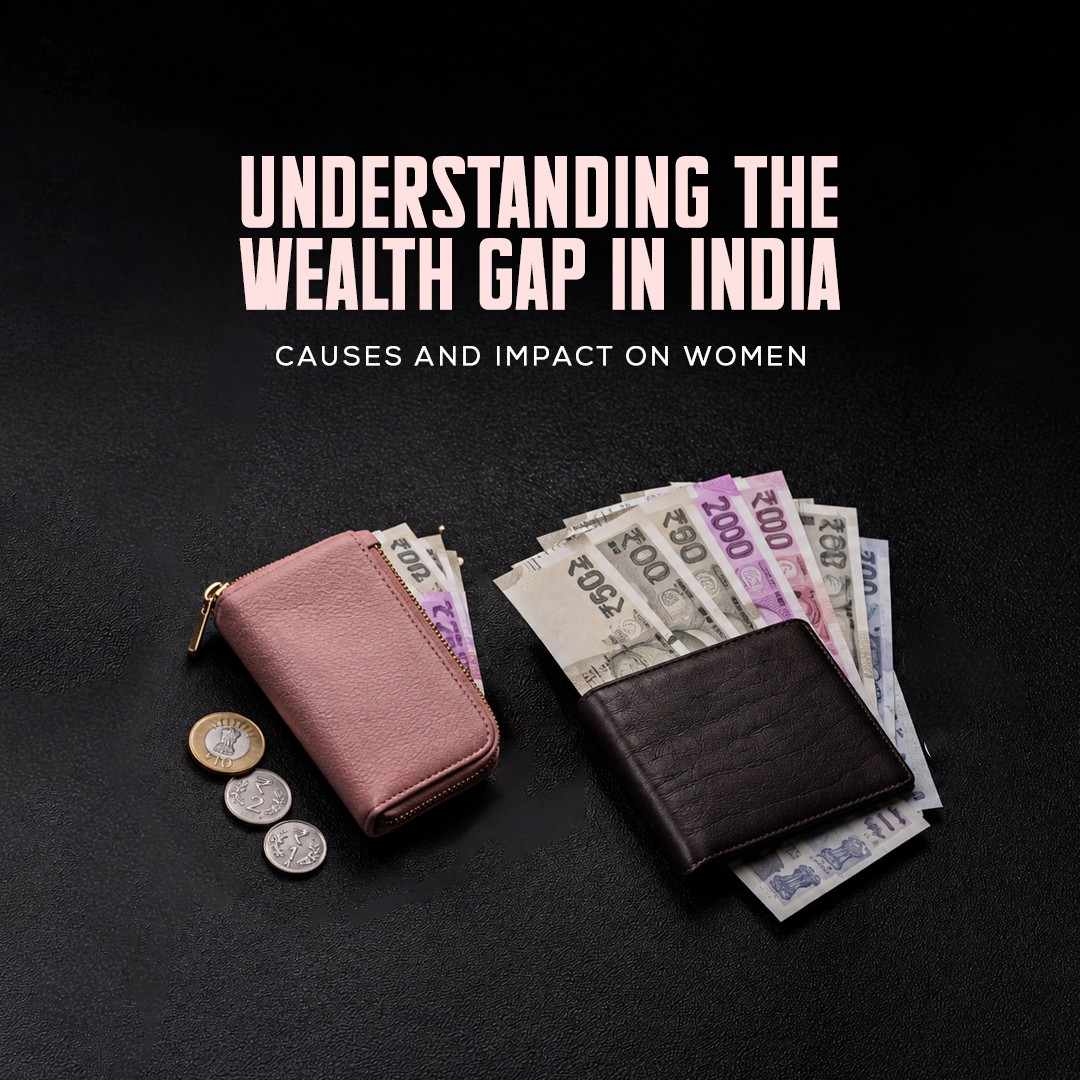
Overview:
- The wealth gap in India distinguishes what people own from what they earn.
- The top 1% hold about 40% of national wealth, and the richest 10% hold 65%.
- Unequal inheritance, low workforce participation, informal jobs, and limited credit hold women back.
- Women face weaker independence, lower pensions, fewer businesses, and disadvantages that pass to daughters.
- Fair inheritance, credit access, care services, and financial skills can fill up the gap.
There is a critical difference between what an individual earns and what they own. An individual can earn a lot of money but cannot have savings, assets or property on their name. Conversely speaking, an individual can own a series of assets in different forms but have low or no income. This difference gives birth to the socio-economic term wealth gap.

Today, the wealth gap in India is excruciating. Only a small percentage or a group of people holds most of the nation’s assets. In such a scenario, women in India stand at the far end of that divide.
The World Inequality Report 2026 found that the top 1% of Indians hold about 40% of national wealth. The richest 10% hold around 65%. The situation worsens for women who face an even deeper gap, because they own fewer assets and control less money.
This blog elaborates on the wealth gap in India and why it persists. It also shows how the gap affects women and what can narrow it.
What Is the Wealth Gap in India?
Wealth is the total value of what a person owns. This includes land, homes, savings, gold, pensions, and business shares. Income on the contrary, is the money a person earns. Hence, there is a clear difference between wealth gap and income gap. The income gap in its simplest form only describes the difference between income of people, groups and communities but the wealth gap accounts for assets and the total net worth of the underlying entity. The discussion goes further when it comes to understanding the financial standing of women in society.
Wealth gap is an extended perspective that goes beyond income gap to show the real financial inequality among people and groups. It happens because the wealth gap accounts for the total worth of an individual. This is why analysts tend to opt for the wealth gap for research and analysis.
The wealth gap in India describes how unevenly these assets are spread. Earning a salary does not mean owning assets. A woman can earn well and still hold no property in her own name.
Researchers call this the gender wealth gap. It measures what men and women own, beyond what they earn. As per the report of The Quint, women often hold far less wealth, even when income gaps shrink.
How Wide Is the Wealth Gap in India?
Recent data shows how steep the divide has become. The same World Inequality Report shows the richest 10% earn about 58% of national income. The bottom 50% of earners receive just 15%.
The trend is long-running. A World Inequality Lab study found the top 1% wealth share rose from 13% in 1961 to 39% in 2023. The income gap between the top 10% and the bottom 50% stayed flat from 2014 to 2024. The gap has not narrowed in recent years, even as the economy has grown.
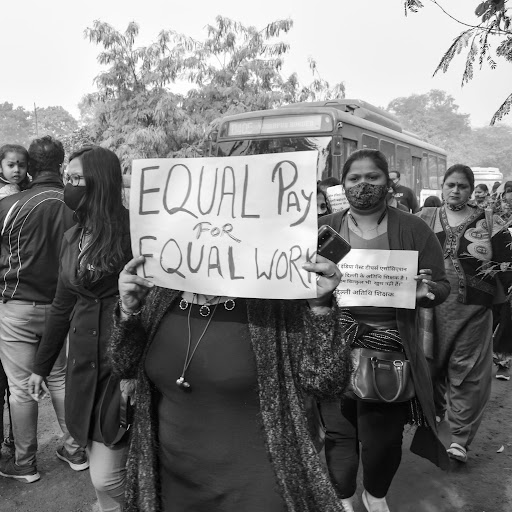
The gender picture is equally stark. The World Economic Forum ranked India 131st out of 148 countries in its Global Gender Gap Report 2025. India scored 40.7% on economic participation and opportunity. That placed it among the bottom five countries on that measure. These statistics show how the wealth gap has increased between men and women and also how it can have a perpetual negative impact on women at the workplace and the financial standing of women in general.
What Causes the Wealth Gap in India?
There are several factors that determine the critical causes of wealth gap in India –
Unequal Ownership and Inheritance
Land and property are major sources of wealth in India. Sons often inherit them first. Daughters may receive less, even when the law gives them equal rights. Without property, women have little to sell, pass on, or borrow against.
Low Workforce Participation
According to Policy Circle, female labour force participation fell from 32% in 2005 to below 24% in 2024. The same analysis says women contribute only 18% of India’s GDP. They make up nearly half the population. Fewer paid jobs mean fewer savings and fewer assets.
Informal and Low-Paid Work
Many working women hold informal jobs. These jobs lack contracts, steady pay, and benefits. As per the Smile Foundation, the International Labour Organization estimates that nearly nine in ten employed women in India work informally. Informal workers rarely build savings or pensions.
Unpaid Care Work
Women do most of the cooking, cleaning, and caregiving at home. This work earns no pay and gets little recognition. The National Family Health Survey reports that women perform over 85% of unpaid household labour. That leaves less time for paid jobs and skill building.
Limited Access to Credit
Credit helps people buy assets and grow businesses. Women often struggle to get it. According to BharatLoan data reported by The Economic Times, women received only 10.81% of total loans disbursed in 2025.
At the same time, the International Monetary Fund suggests that women also rarely own property that can serve as collateral that they can use to apply for bank loans. This further means that women will not be able to get their loans approved due to lack of collateral to offer.
Gaps in Financial Knowledge
Many women are left out of household money decisions. This keeps their confidence and financial skills low. It is high time that the issue of the financial literacy of women in India must be properly addressed. Better money knowledge will only help women save, invest, and negotiate in a better way.
How the Wealth Gap in India Affects Women
The wealth gap in India defines women’s daily lives in practical ways. Women without assets often depend on relatives for money. This limits their independence. It also weakens their bargaining power, since owning property gives women a stronger voice in family decisions. Women with assets face less danger from poverty and abandonment.
Money problems continue into old age. The World Bank suggests that women’s pensions are 25 to 30% lower than men’s. Business ownership suffers too. Missing collateral and credit block many women entrepreneurs. The IMF also points out that equal access to finance could raise GDP by up to 6.8%. That gain needs simpler labour rules and better skills.
The effects also pass to the next generation. Girls in households with little wealth often get fewer chances to study, save, or start a career. The gap then repeats itself.
Ways to Narrow the Wealth Gap in India
Progress needs action from families, employers, and policymakers. Equal inheritance is the first step. Awareness drives and legal support can help daughters claim their share. Better data matters too. Experts urge governments to track land, wealth, and pensions by gender, because better data shows the true gap.
Credit and care services come next. Self-help groups and government loan schemes can help women start businesses. Public childcare and elderly care free women’s time. Training also builds confidence in saving, borrowing, and investing. Women in Technology have proved that they have equal talent, but sadly opportunities are less. Better-paid careers can turn that talent into lasting wealth.
Skills programs also matter at the local level. When small-town girls upskill, it shows how training helps young women build independent lives.
Conclusion
The wealth gap in India touches every part of women’s economic lives. Fewer assets, lower pay, and heavy care duties keep many women dependent. Fair inheritance, better credit, and stronger skills can start to close the divide. Families, employers, and policymakers each have a part to play in making these changes real. Over time, women who own assets can pass that security on to their daughters. Real change begins when women own assets beyond their general income.
