
CATEGORIES
#Education and Life Skills #Psychology #Social IssuesOverview:
- Why poor civic sense persists despite India’s growth and awareness.
- Common issues: littering, spitting, queue-jumping, and traffic violations.
- The gap between private cleanliness and public responsibility.
- Impact of the “chalta hai” mindset and lack of accountability.
- Why lasting change starts with individual action.
Almost every Indian has experienced it.
A hand lets go of trash while the vehicle rolls forward. Litter tumbles through the open window airflow. The road collects what was tossed without stopping. Motion carries both cars and debris apart. What drops stays behind in slow view.
People spitting gutka on freshly painted walls.
People shove their way into subway cars while others are still getting out.
Litter left behind after public events.
Honking in traffic for absolutely no reason.
Still, these actions pop up everywhere, leaving hardly a blink from anyone.
It’s not about knowing right from wrong when it comes to clean spaces or order. What’s missing is treating shared rules as personal duties – everyone wants them followed, just not by themselves.
Most times, streets in India sit forgotten by everyone. When care slips away, potholes grow unnoticed. Buses rattle through dust without complaint. Parks lose benches slowly, piece by piece. Garbage piles where they shouldn’t be, left waiting forever. Quiet moments pass between strangers on sidewalks, unhelped. Even help fades when trust wears thin.
The Difference Between Private Pride and Public Neglect
What stands out in India surprises at first glance. Personal homes get endless attention, yet common areas sit ignored. A backyard might shine while the street stays littered.
Privacy matters intensely, though what’s public feels forgotten. Inside walls are sacred, outside borders treated like afterthoughts. People guard their gates tightly, still toss trash beyond them without pause. The contrast hits hard when you walk through neighbourhoods. Homes gleam beside piles no one claims. Closeness to family burns strong, care for neighbours’ surroundings barely flickers.
This split runs quite deeply.
Outside the gate, trash piles up even though homes stay perfectly clean. From inside expensive cars, junk flies out despite careful upkeep of the vehicles.
This gap exists because of attitudes toward shared spaces. Growing up, lots of folks see parks or streets as fleeting places – cold, distant, never quite their own.
What shapes that mindset? Often it’s a habit, not a thought.
Ownership shared by all often leads to neglect by each. People assume someone else will care for what they think isn’t theirs alone.
Civic Sense Is Rarely Taught Properly
Most classrooms spend hours on equations, facts, and rules meant for tests. Yet how kids act in shared spaces often gets less attention than their grades.
Little ones learn fast how to earn points on tests. Respect for lines forms slowly, if at all. Tossing trash aside happens without second thought. The idea of duty we carry together? Rarely mentioned. School values shine bright on results, dim on behavior.
So they reach adult years thinking good citizenship means obeying out of dread – not because it’s simply the right thing to do.
Here’s the reason people stick to ordering overseas yet toss it aside back home. They know better. Just not how to care.
The “Chalta Hai” Culture Makes Things Worse
What keeps bad public behavior going in India? Mostly because people have just got used to it.
People see rule-breaking every day, so it stops feeling wrong.
One person cuts in line? Suddenly, more do too.
A single act of littering might seem small. Yet it often sparks more waste piling up nearby. Before long, that spot turns into an unofficial trash zone.
A single driver breaks the pattern – suddenly, timing unravels. Order fades when one move doesn’t follow.
Eventually, people start treating rule-breaking like normal behaviour – since most figure the situation won’t shift at all.
Something small like “chalta hai” might seem quiet, yet it quietly moulds how people act every day. Tolerating hassle comes from here, also a lack of ownership, along with mess piling up without reaction.
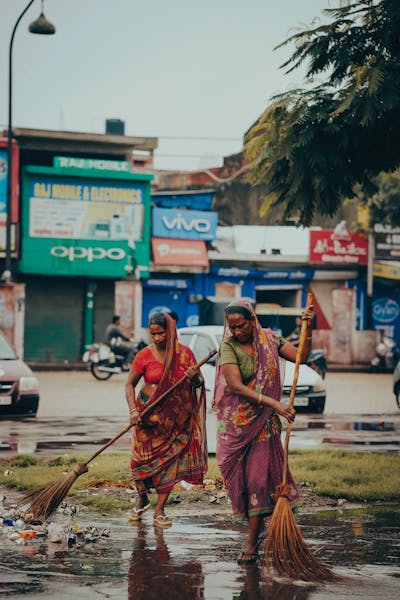
Image Credit: Pexels
Public Spaces Are Still Designed Around Survival, Not Respect
Crowded streets tend to sharpen tempers, as personal space shrinks under constant pressure.
When too many share too little, nerves fray without warning. Space runs short, reactions grow sharp – close quarters twist small moments into sparks.
Space shrinks where people grow. Seats on trains vanish fast. Parking turns into a hunt. Lanes jam with motionless rows. Paths squeeze under crowded steps.
Running late feels like falling behind. Horns blast when silence seems invisible. Cutting ahead happens where order looks like a delay.
Later on, gut reflexes start winning against polite conduct.
Still, bad behavior isn’t justified – yet rage finds its way into the streets more easily than we admit. A spark spreads when pressure builds behind quiet eyes.
There Is Also a Deeper Social Hierarchy Problem
Most of the time, people behave poorly in public because they assume maintenance is someone else’s responsibility.
A mindset like that spreads when people assume responsibility isn’t theirs. You see it where trash piles up near bins full of warnings. It grows where sidewalks crack without repair for months. Someone always thinks another person should step in first
People litter because cleaners exist.
People leave messes behind since cleaning crews handle the work later.
Vandalism happens when people see shared spaces as someone else’s problem. Ownership fades into the background, replaced by indifference. What belongs to everyone ends up belonging to no one. Broken windows appear where responsibility dissolves. Distance grows between person and place. Neglect spreads quietly through streets that feel anonymous. Familiar corners turn unfamiliar without care.
When people see upkeep of shared spaces as another’s duty, care for community life stays low.
Digital Patriotism vs Real Responsibility
Now India speaks up loudly on the internet. National wins, a growing economy, also rising status abroad – these matter deeply to its people. Online pride thrives where connection spreads fast.
What drives someone isn’t just feeling. Action shapes it too.
A nation earns regard not through digital displays of symbols. Respect grows where neighbors treat common areas with care in daily life.
Most people ignore how odd it seems to brag about loving your country while littering the streets. One moment, they praise tradition, yet toss wrappers without thought. You hear proud speeches near piles of garbage nobody owns up to. It feels off when flags wave above broken bottles tossed aside. Talking big about honor means little if sidewalks stay filthy by choice.
Real civic sense begins in ordinary moments:
- Not littering,
- Not damaging property,
- Respecting queues,
- Driving responsibly
Public areas deserve just as much attention as personal spots do.
Change Cannot Happen Only Through Government Campaigns
Change sticks only when habits shift, not just from posters or slogans. Efforts to push order and tidiness have their place – yet real progress grows quietly through routine choices. Moments of awareness matter less than how people act without being told. The lasting difference comes from action, not declaration.
What shapes civic behavior? Not catchy phrases. Instead, it grows quietly – home by home, classroom by classroom, neighborhood by neighborhood – where daily actions teach regard for common ground.
Children notice everything:
- Whether adults litter,
- Do they treat employees fairly?
- Whether they follow traffic rules,
- How people look after things that everyone shares.
Long before rules set duties, people pick up civic habits through daily life around others.
The Question India Needs to Ask
The question that India needs to ask is not whether people in India do not have sense. India needs to ask why people in India behave badly in public and why this bad behavior is accepted by society. People in India no longer feel bad about behaving in public.
Civic sense is not about being rich or having things. It is about respecting people, respecting spaces and respecting the fact that we all live together. Indian public spaces will keep having problems until people in India take responsibility for their actions every day. The problem is that everyone in India wants things to get better. Nobody in India wants to take responsibility for making things better.
