
CATEGORIES
People We Admire | Social Impact | Women EmpowermentOverview:
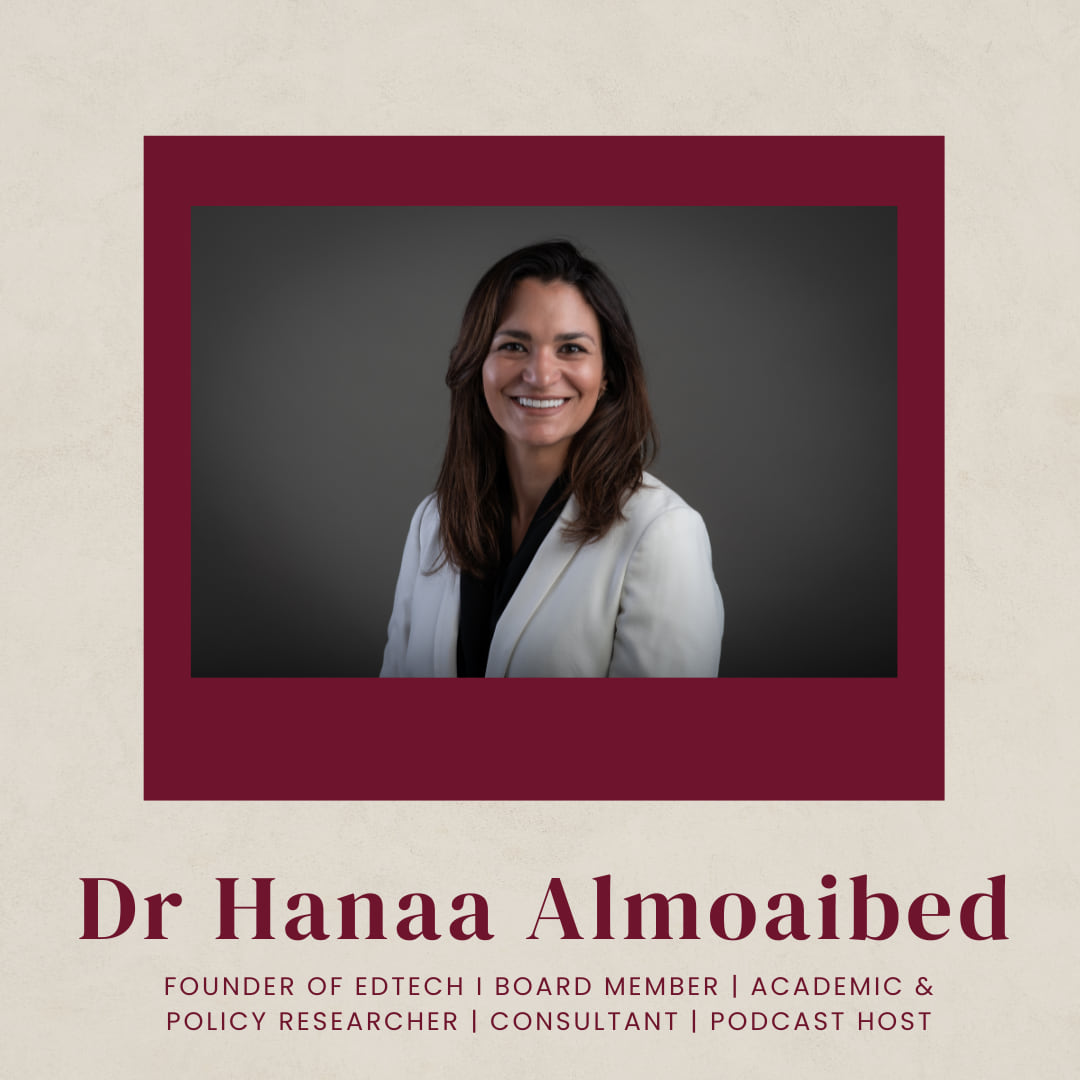
- Dr. Hanaa Almoaibed’s journey spans teaching, research, policy, and entrepreneurship.
- Raised between Saudi Arabia and the United States, she developed an early awareness of how context shapes perspective.
- Her work focuses on education, youth development, and creating systems that expand individual agency.
- She approaches research through listening, lived experience, and close collaboration with communities.
- Her transition into founding reflects a shift from studying systems to building practical solutions.
- Across roles, she remains grounded in one idea: meaningful impact comes from working with people, not for them.
1. Looking back at your early years, what experiences or influences in your family or community first sparked your interest in education, social impact, and youth empowerment?
I think one recurring thread in my life has been travel. I was born in Saudi Arabia and am the youngest of three. My two older siblings were born in the US, and because they were already in school, my mother stayed in Saudi Arabia when I was born. Every summer, I traveled between Seattle and the eastern province of Saudi Arabia.
One memory has stayed with me. I was about nine years old, returning to Saudi Arabia for the first time, wearing glasses. We landed at night in the most humid month, and when the airplane doors opened, my glasses fogged up so completely. For a moment, I felt blind. It was a shock, but it taught me something I have carried ever since. When you move between environments, you almost have to relearn how to see and how to function.
I grew up between very different worlds and moved between routines, cultures, and ways of understanding the world. In the US, I went camping with my family, surrounded by mountains and lakes. In Saudi Arabia, weekends were spent at the beach, around meals, conversation, and family connections. That contrast made me feel how vast the world is, and how small I am within it.
I was also constantly asked to explain one world to the other. I helped my mother understand the culture I was growing up in, while also explaining Saudi Arabia to people in the US. Most of the questions centered on gender. People wanted to know how I lived as a girl or as a woman, and whether life was difficult for me. I never intended to get into gender studies or write about women, but those questions pushed me in that direction. Over time, I became deeply engaged in that space through research, teaching young women, and collaborating with nonprofits focused on women’s literacy and capacity building.
Living between these two realities, the unconditional acceptance at home and the conditional acceptance of the outside world, shaped me profoundly. It made me observant, empathetic, and eventually fearless. Most importantly, it taught me that silence can wound deeply, while speaking up has the power to heal, not just oneself, but entire communities that have been taught to feel unseen.
2. Before you became a researcher, policy advisor, and founder, what did you imagine your future might look like? Was there a defining moment that changed your direction?
As a child, I always played teacher with my cousin. We even bought grade books and filled them with imaginary students. For a long time, I truly thought I would become a teacher. And I did teach, first in high school for three years, and later at university as a postgraduate researcher. I believed teaching would be my long-term path.
The defining moment came after my master’s degree, when I returned to teach at my former school. A friend said to me, “What are you doing? I’m sure teaching is fulfilling, but you have so much more to offer the world. You should work in education in a different capacity.” I didn’t agree at all. I felt she underestimated the daily impact of teaching. But her words stayed with me.
They made me reflect on whether I could make an impact that lasted beyond one cohort, or even three. At the same time, teaching shaped me in ways few other experiences have. I was only about ten years older than my students, and seeing the world through their eyes mattered deeply.
That experience didn’t pull me away from education. It expanded how I see my role in it. I realized I could stay connected to teaching while working at a broader policy level.
3. Is there any moment in your journey that changed your perspective on how you approach work or communities?
There have been many moments, but the most recent shift stands out the most. Over the past two years, I have begun to think about my impact not just as a researcher, but also as a founder. For a long time, I saw myself staying within academic and policy research.
Then I met someone working in the same space, specifically around career literacy, but through a digital platform that was very design-led. Seeing their work made something click. They are translating research into real-world applications, and that made me reflect on my own path.
I used to say I never wanted to be in the C-suite or run a company. But after that experience, I became a co-founder of a new company.
It reminded me that you can be deliberate and still open. I’ve shown up and done the work I care about. But I did not reject that spark when it came. I saw it as an opportunity. Meeting people, talking about what I do, and listening to their stories create possibilities that feel boundless.
4. What is your dream for a better world, and how do you think we get there? How are you working towards it through everyday actions?
It is a hard question, especially given how the world feels right now. At times, it feels like everything happening calls for a completely different response if we truly want a better future.
For me, sustainable change begins with giving people the tools to understand the world they live in and the systems shaping their lives. In my own work, I try to create opportunities for people to make their own choices. It is not about telling people what to do. It is about asking them what they want, and making sure they have the knowledge and resources to explore a path further.
Giving people agency is the most important thing for a sustainable future. Agency over their decisions, over knowledge, and the support to act on both. That is what matters most to me.
5. Can you share more about a project or initiative that you are particularly interested in, and what made it successful?
Moving to the UK was a pivotal moment in my life. About ten years ago, I was working in corporate social responsibility with a focus on youth empowerment. That work eventually led me to pursue a PhD. That program was so important because it opened up questions that still shape the trajectory I am on today.
The program relied heavily on volunteers who shared their career journeys with young people over two intensive weeks. For five years, I listened to countless stories from professionals across different fields.
What we were doing was powerful, but incomplete. A young person only heard a small portion of those stories. I wanted to bring them together and create something more lasting. I wanted to translate them into something deeper and more enduring.
That is what inspired my PhD research. It also shaped the work I have done ever since and continues to influence the company I am building now. We are building a career platform that brings these stories together so young people can explore hundreds or thousands of journeys and think, “I could be any of these people, or my own version of them.”
6. How do you think women’s leadership and participation can be promoted in various sectors, including business, politics, and education?
The most important thing is that women have a voice. If decision-makers don’t reflect your experiences, it’s difficult to feel represented.
We need both top-down and bottom-up approaches. Women entering an organization should have the flexibility to shape how they work. But that only happens if leadership supports those choices.
I remember when I led a department composed mostly of women. Several of us had young children. We sometimes arrived a little late or left a little early, but we were deeply committed to our work and performed exceptionally well. In fact, we received awards. But we were criticized for not following strict schedules, and leadership asked us to conform.
That showed me that even being in a decision-making role is not always enough if the wider culture does not support it. Years later, that same leader became far more flexible after having a child herself. People who share aspects of your experience are more likely to understand what support actually looks like. It reinforced how important representation is.
At the same time, women are not one group with identical needs. Some women are frustrated when organizations assume all women need the same accommodations. So the answer is not a one-size-fits-all model. It is flexibility, voice, and leadership that understand different realities.
7. Your work spans education, social innovation, and policy. How do you navigate the balance between research-driven insights and the need for practical, community-based approaches that create immediate impact?
All of my research is deeply empirical. I go where people are, ask questions, and listen. Most of my work is qualitative, so it is rooted in curiosity and learning from what people are already doing. From there, I look for patterns and themes that can help others better understand what is happening.
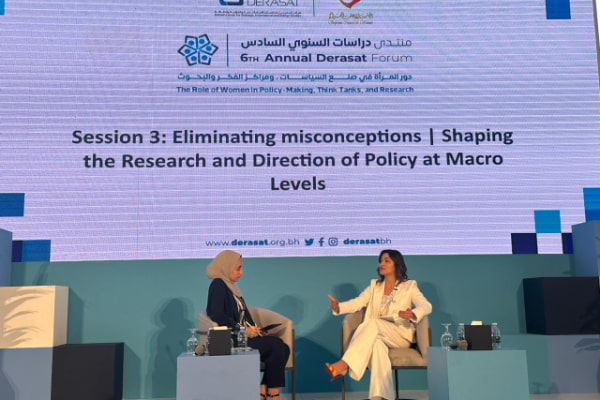
In policy work, that means partnering closely with people on the ground. For example, in a current project examining women’s positions across the Gulf states, I collaborated with local organizations in each country. Even when I am working in Saudi Arabia, I still partner with groups already engaged in the communities I want to understand. I want to be as close as possible to the people and their lived realities.
I always approach my work with curiosity. While I bring my own experience, I rely heavily on the knowledge of people who are there every day. I also try to take an intersectional approach because life is never one-dimensional. There are always multiple factors shaping any experience. For me, it is never about speaking about people. It is about speaking with them. That is why co-creation is always central.
8. As someone who collaborates across international networks, what have you found to be the biggest enabler and the biggest barrier to building truly inclusive and sustainable global partnerships?
There are many barriers, but this one stands out. Too often, people enter partnerships thinking first about what they want rather than what they can contribute. The strongest, true, and lasting partnerships begin by asking what you can offer and how something can be built together.
One colleague always said, “We do things with, not to.” It is a simple phrase, but it captures the heart of meaningful partnership. Collaboration works when people are open to learning from each other and creating something together, rather than arriving with ready-made solutions.
Too often, partnerships begin with someone saying, “I built this in one country, so now I want to bring it to yours.” That usually fails and can even feel disrespectful to those already working in that context.
A better approach is to come in saying, “This is something I have done. What have you done? Is there a way we can build something together that draws from both?” That is where truly inclusive work begins.
9. What are some tangible steps or resources you would recommend for someone aspiring to become a founder and future policy advisor?
I am a serial networker, and being part of supportive communities is one of the most important things. You are not always invited into those spaces right away, but when you do find one, it can change everything.
A couple of years ago, someone I had worked with opened a door to a network that completely transformed my perspective. It happened because I stayed open, collaborative, and willing to listen. Often, that is what makes people think of you when opportunities arise. They see that you are someone worth working with.
Not every network is meaningful. Some are genuinely supportive, while others are more performative. You have to explore and find the ones that actually nourish you. Above all, I would say surround yourself with people who support you, believe in you, give you room to be yourself, and allow you to articulate what you want instead of telling you what to do. I have found that I am always happiest and most successful with genuinely supportive people, not those who simply offer prestige.
10. What have been some of the realistic habits or routines that have shaped your own professional path?
I do make plans. Not rigid five-year plans, but I do think in two-year blocks. Early in my marriage, my husband and I created a ten-year plan, broken into two-year segments. It was a way to think practically about our aspirations, our careers, and even our family life.
We asked questions like: if I want to pursue a PhD, where might that fit in the next seven years? If he wants to launch a startup, how do we maintain stability? It was about plotting dreams against reality.
I also regularly reflect on what I know, what I don’t, and what I want to learn next. Professional development matters a lot to me. Each year, I think about new courses, skills, or areas of knowledge I want to pursue.
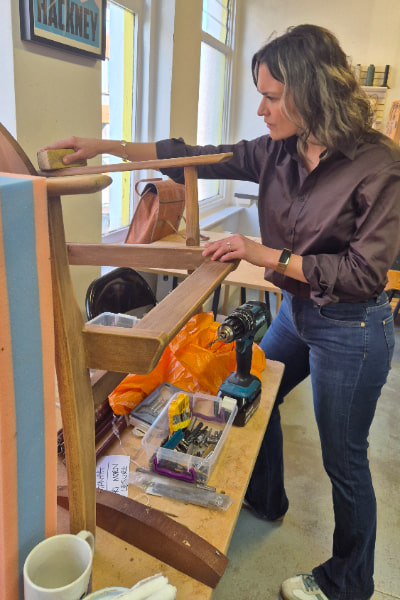
Outside of work, I prioritize things that fill my cup. I aim to complete one upholstery project a year. I loved taking classes a few years ago, and building chairs gives me an incredible sense of accomplishment. I am also trying to learn shuffle dance. So I try to think through the year in a realistic way. What is one personal goal and one professional, and how do I fit all of that around my family? I sit down with a calendar often and think honestly about what is possible.
11. With the rise of AI now influencing research, what is your perspective on its current and future impact?
AI is both a tremendous opportunity and a significant challenge. AI is already changing the world, and if it has not touched your life yet, you probably haven’t noticed. People need to embrace it and equip themselves with knowledge. They need to understand what AI is, what it does, and how it can be used well.
At the same time, I think we are still in a “wild west” phase. I recently took my children to an AI workshop, hoping they would learn how technology is reshaping education and how to continue learning well in that environment. Instead, it focused on how to prompt AI to become the best and most advanced version of yourself. I found that approach irresponsible for teenagers. Young people need guidance around responsibility. If you tell young people that AI can make music, generate images, and create content for them, you also need to remind them to go outside, make music themselves, draw, and interact with the real world. Otherwise, it becomes very easy to forget that there is still a world of people and nature that we are meant to engage with.
I do not think AI will eliminate work. People will continue to have opportunities to work with it. But right now, we do not fully know how to interact with it yet. We are still too focused on fear without enough shared understanding about how to use it for good. The part that worries me most is the security and defense side of it. Beyond that, I remain hopeful we can figure out how to harness AI in positive ways.
12. In such a busy career, where do you find joy or calm outside of work?
Sometimes I struggle to find time for that. As a mother, a lot of joy comes simply from sitting down with my children and being present with them. Just yesterday, one of my sons shared a funny story from school, and I was laughing hysterically. Moments like that bring real happiness.
I also find energy in conversation, bringing people together, hearing good stories, and having meaningful exchanges. This conversation itself has been fun for that reason.
When I do find time, I enjoy music and singing lessons, upholstery, and reading a good book. But often, joy is found in the everyday closeness of family and conversation.
13. When you imagine yourself many years from now, what do you hope people will remember most about you as a person?
More than anything, I hope people remember me as kind. It may sound like a generic answer, but I mean it deeply. I hope people felt valued by me and that my kindness came through in the way I treated them.
I also carry memories from when I was younger and not always kind. Those moments stay with me. You cannot go back, but you can make amends moving forward.
We all have moments when we fall short. I certainly did. So I hope that if any of those moments caused harm, I have had the chance to make amends, and that overall, people feel seen, valued, and treated with kindness when they think of me.
Conclusion:
At the core of Dr. Almoaibed’s work is a simple belief: meaningful change begins with people. It starts with individuals who feel heard, supported, and able to make their own choices.
Her journey shows that impact does not follow a straight path. It grows through curiosity, openness, and a willingness to evolve. From teaching to research to building something of her own, she has stayed grounded in listening and working alongside others.
In the end, what stands out is not just what she has built, but how she has done it. With intention, with empathy, and with a consistent effort to make people feel valued.
