
CATEGORIES
#Gen Z #Mental Health & Well-Being #Social ImpactOverview:
- Eco-anxiety is real and clinically recognised, but the term was built around people who experience climate change as a feeling rather than a daily emergency
- There is a widening gap between urban, online Gen Z who narrate climate dread and rural or economically precarious youth who live its direct consequences
- Social media and individual-guilt culture both widen this gap by rewarding visible dread over structural accountability
- The signs of the gap show up as doomscrolling, guilt without real power, ungrieved climate grief, and early burnout
- Closing the gap means redistributing attention and redirecting energy from personal guilt toward collective, structural pressure
You know this scroll. It’s past midnight, you’re lying under the AC you already feel a little guilty about running, and a video of a glacier collapsing slides past your thumb. You hit repost, add a crying-face sticker, and put the phone face down. Tomorrow there’s a class, an internship deadline, a life that leaves no real room to sit with what you just watched.
Three hundred kilometres away, a farmer’s daughter in a flood-affected district of Bengal is not doomscrolling. She is helping move the grain sacks to higher ground before the water rises again this year.
Both of them are Gen Z. Both are, in some sense, anxious about climate change. Only one of them gets to call it eco-anxiety and post about it.
What Eco-Anxiety Actually Means
The term itself is fairly recent, popularised as psychologists began noticing a specific kind of dread showing up in younger patients: a chronic fear of environmental doom, often paired with grief, guilt, and a creeping sense of powerlessness. It is a real and clinically recognised response, not manufactured drama. Watching ecosystems collapse in real time, on a screen you refresh compulsively, does something to a developing nervous system.
But eco-anxiety was first named and studied largely among people who have the luxury of anxiety as an abstraction. For a college student in a metro city, climate change often arrives as a feeling: dread about the future, guilt about flights and plastic, a low simmering panic that worsens every time a new report goes viral. For someone whose home has already flooded twice this decade, or whose family’s harvest failed because the monsoon no longer arrives on schedule, climate change is not a feeling. It is Tuesday.

Where the Gap Opens
This is the gap. Not a gap in who feels something, because almost everyone under twenty-five feels something about the state of the planet. The gap is in who gets the bandwidth to sit with that feeling, name it, share it, and be taken seriously for having it.
Urban, English-speaking, chronically online Gen Z has built an entire vocabulary around ecological dread. There are memes about it. There are aesthetic doom playlists. There are carousel posts breaking down “five signs you have eco-anxiety,” most of them written by and for people who have air conditioning, savings, and a following.

Rural and economically precarious young people, who are statistically far more likely to be displaced, indebted, or directly harmed by climate disaster, rarely get to frame their experience this way. Their reality does not get the softening language of a mental health term. It gets called hardship, or bad luck, or simply life. Nobody hands them a carousel post. Nobody asks if they are okay.
How the Gap Widens
Social media rewards the kind of climate content that is visually striking over the kind that is structurally accurate. A single image of a starving polar bear will always travel further than an explainer on agricultural distress in Vidarbha.
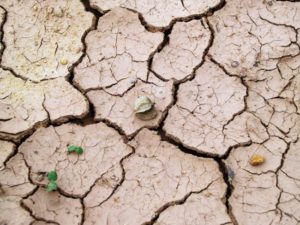
There is also a strange guilt economy that has grown around individual consumption. Skip the straw, carry a cloth bag, feel slightly better, feel worse when you forget. This framing quietly shifts responsibility away from the handful of corporations and governments actually driving emissions at scale, and onto the shoulders of twenty-somethings who did not create the crisis and cannot fix it alone either.
The Signs of the Gap
The young people closest to the damage are often the least equipped, financially and politically, to demand accountability from the systems failing them. Anxiety, in their case, rarely stays theoretical long enough to become a hashtag.
The Doomscroll Loop
She checks the news, feels worse, checks again anyway. The feed keeps offering more disaster than any single person can process, and closing the app rarely closes the feeling.

Guilt Without Power
She feels responsible for using a plastic straw and simultaneously powerless to stop a factory upstream from dumping waste into the same river. The guilt is loud. The actual leverage is close to zero, and some part of her already knows it.
Grief That Has Nowhere to Go
Climate grief rarely gets named as grief. It shows up instead as low-grade dread about the future, hesitation around having children, a vague sense that planning long-term is pointless. Few people are ever told this feeling deserves to be grieved rather than simply managed and pushed aside.
Burnout Before the Work Even Starts
Some of the most climate-conscious young people burn out before they get anywhere near activism, exhausted by the sheer scale of the problem against the smallness of what any one person can do about it. Passion curdles into apathy faster than anyone expects.
Toward Closing the Gap
Closing this gap does not mean asking anxious young people to feel less. It means redistributing who gets heard, and connecting individual dread to a collective, structural response instead of individual purity.
That starts with language. Climate anxiety in a flood-prone village and climate anxiety in a co-working space in Bengaluru are not identical experiences. Treating them as the same story flattens both. The first deserves resources, infrastructure, and accountability from those in power. The second deserves community, and a redirection of energy away from personal guilt and toward organised pressure on the systems that actually hold it.
It also means young people talking to each other across this divide rather than past it. A student with a platform can use it to amplify someone actually living the disaster, instead of only narrating her own dread about it from a distance. Local climate groups, mutual aid networks, and youth-led policy work do more for the anxiety than another explainer post ever will, because they turn helplessness into something with a shape.
Conclusion
The eco-anxiety conversation will only matter if it stops sounding the same from every mouth. Naming a feeling is not activism, but it can be the first honest step toward it, as long as the naming does not stop at the people who already have the safety to do it. Gen Z did not choose the crisis it grew up inside, and it does not owe anyone a composed response to it either. What it can offer, if the gap ever narrows, is a generation that learns to listen sideways instead of only scrolling down.
