
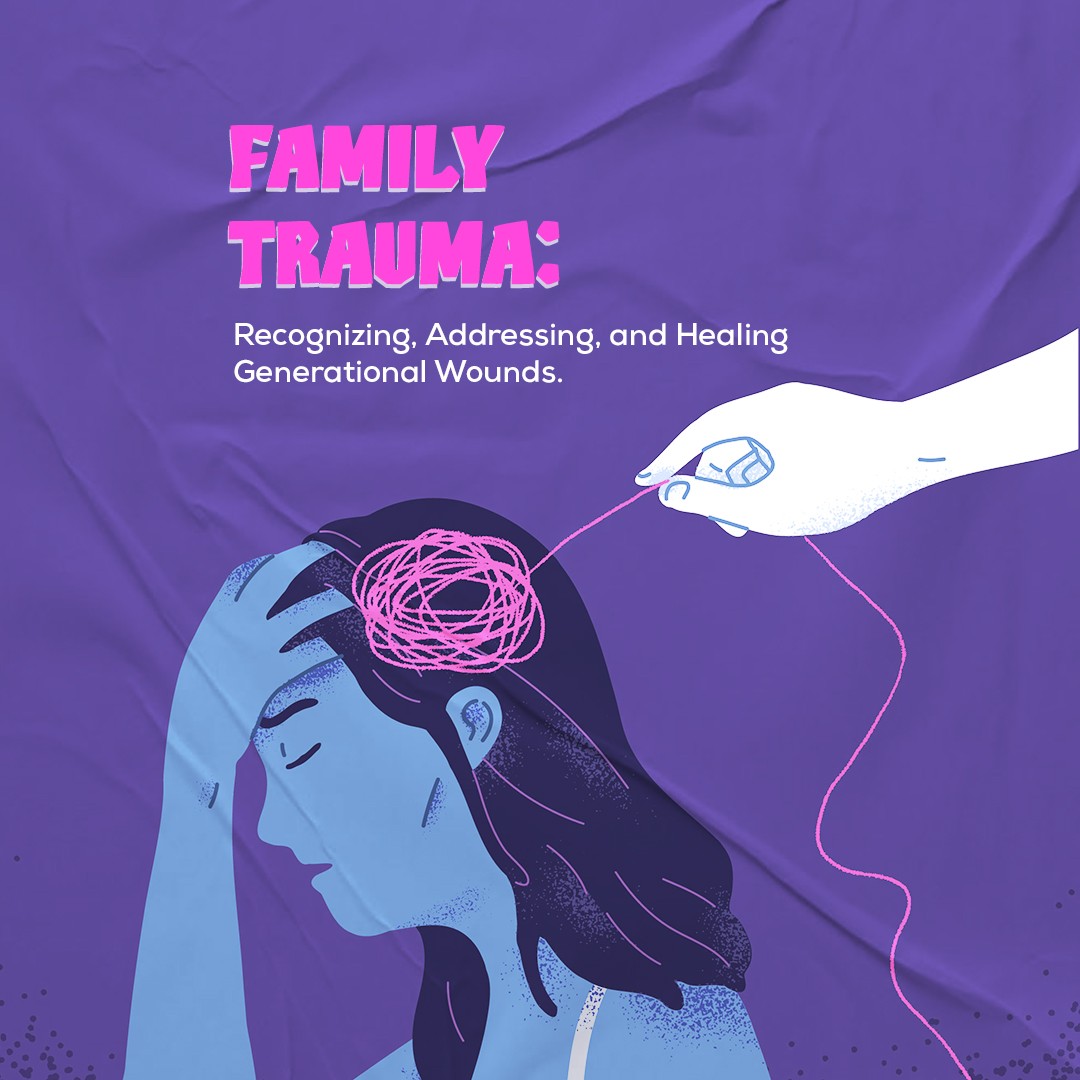
Overview:
- Family traumas are painful experiences that shape how a household loves and copes.
- They pass down quietly, through behaviour and belief rather than conversation.
- Most people notice the pattern in adulthood, usually inside their own relationships.
- Therapy and boundaries help. Saying out loud what happened is the hard part.
Introduction
Family traumas rarely announce themselves. Instead, they show up in little things like habits, temper, and the way you brace yourself before answering a phone call. Over time, these wounds can be shaped by past experiences and may contribute to health issues and lifelong challenges. Therefore, this article covers how to recognize, address, and heal from generational wounds.

What are Family Traumas?
A family trauma is a painful experience that affects an individual or the members of a family. The causes of family trauma sometimes are easy to identify. It might be a death in the family, an abuse, an addiction, abandonment, or an unforeseen incident. Other causes might not be easily identified and those are often the most painful ones.
Sometimes, you might even notice them between conversations or in the tension that fills a room when a certain relative walks in. Similarly, they can echo through the critical voice a parent uses without thinking. These experiences change how people speak, interact, trust, and show affection. Unfortunately, they are often unpredictable. A single loud event can cause them. However, ignoring the experience does not make it smaller. Instead, it can affect how the next generation understands relationships and emotional safety.
These subtle experiences shape us as deeply as the loud ones.

The Signs and Symptoms of Inherited Pain
If you are active on social media, you have probably seen posts where people talk about being “The angry sibling.” A lot of people often relate to posts like this. Now this doesn’t necessarily mean a trauma exists, but being the angry sibling could leave a mark on the people around you and create its own form of trauma. This is just one example out of many.
Anger, particularly, is worth following back to its source. Pay attention to the small things. How you speak when you are tired. What you do when plans change. Who you become in a room full of relatives.
Patterns to Look For
Find a pattern.
- You apologise reflexively, even when nothing went wrong.
- You shut down when faced with conflict, or escalate within seconds.
- You struggle to accept care without feeling indebted, common with firstborns.
- You can read the mood of a room in seconds. Your own mood takes considerably longer.
- You walk into a room and quietly assess everyone’s behavior before interaction.
- You keep choosing partners who feel familiar rather than good.
Related Patterns of Inherited Pain
Some people also carry a constant sense of having let someone down. That chronic guilt is often the residue of a childhood spent managing someone else’s feelings. Another pattern is parentification, when a child has to step into an adult’s emotional or practical duties far too early. They become the mediator, the confidant, the one who manages everyone else, and in some cases, the provider. However, the child also needs parental care.
The Roots of Family Traumas
“When a tree keeps bearing bitter fruit, the wise do not blame the fruit; they examine the roots.”
Nobody sits a child down and hands them a trauma. The transfer is much quieter than that.
For example, a parent raised in chaos may want to control their own child. As a result, their child learns that spontaneity is dangerous. A grandmother who once went hungry may hoard food. Two generations later, nobody in that family can throw anything away. These are roots. The child never lived the original event. They inherited the adaptation to it.
Whilst these roots exist, there are some traumas where a child lived the original event. From the earlier examples given, the parent doing the controlling was once a child living through chaos themselves. There are also traumas formed after experiencing the death of a parent, and it is often hard to overcome. If not addressed, the pain can be passed on to generations.
Three Ways Family Traumas Travel
- Parenting and behaviour: For example, adults raise children using the only blueprint they have, the way they themselves were raised. They pass on their experience. Unhealed pain can change your behavior in ways you never imagined. Research points to parenting behaviour, caregiver mental health, and attachment as the strongest links in that chain.
- Silence and family narrative: Similarly, families teach children what can and cannot be discussed. They raise their brows and faces when their child tries to bring up forbidden topics. Children pick up on that energy and adapt accordingly.
- Biology: Meanwhile, researchers are still working out whether severe stress leaves epigenetic marks that pass on to later generations. Psychiatrist Rachel Yehuda has done much of the foundational work here. Her review in World Psychiatry is careful, treating epigenetic transmission as a hypothesis still being tested rather than settled science. The behavioural pathway is far better evidenced.
Furthermore, the scale is larger than most people assume. Drawing on data from all fifty US states, the Center for Disease Control found that nearly 64% of adults reported at least one adverse childhood experience. Roughly 17% reported four or more. Most of them would never use the phrase family traumas to describe it. It was a concept they never thought could be linked to their behavior.
Steps to Take to Break the Cycle
Breaking a cycle requires certain steps. The Christians say “faith without works is dead.” Family trauma cannot fade away on its own, no matter how long you wait. This is why you should recognize the pattern and take responsibility for what happens next.
There is a difference between accountability and blame. Accountability names what happened and lets you move forward. Blame settles in and stays. Nobody is asking you to blame yourself for what was done to you.
Most parents who caused harm were once children in difficult homes themselves. That explains the pattern. It does not excuse it. In such situations taking accountability for your part in the pattern is the first step towards change.

Practical Steps to Break the Cycle :
Name it plainly. Write down what actually happened. No excuses, no rewriting it to be kinder than it was. Vague accounts keep the pain vague, and such is impossible to work with.
Separate the behaviour from the person. You can love someone and still name the harm they caused. Both things stay true.
Then decide what you actually want next. Some people want an apology. Others want distance. Many just want to stop repeating the pattern. Keep your expectations realistic if you want to have a conversation about it with a relative. Not everyone is ready to talk. Some will deny events you clearly remember. Your healing cannot wait on their agreement.
Set boundaries. Decide what you are willing to discuss and how long you will stay at a difficult gathering before you leave. Boundaries are not punishments. They are the terms that make a relationship work.
Expect the worst. You will have weeks of clarity, then one phone call undoes them. That is normal. It is not a failure.
Grief usually arrives late. One ordinary afternoon you find yourself mourning a childhood you never had. Let that happen. Never try to hold back your tears or emotions as these could grow into resentment or something worse.
Getting Professional Help and Healing Resources
For many people, therapy can provide a structured way to work through family traumas. The American Psychological Association puts cognitive processing therapy, prolonged exposure, and trauma-focused Cognitive Behavioural Therapy (CBT) in the first line of treatment. Eye Movement Desensitisation and Reprocessing (EMDR) and narrative exposure therapy are recognised options too.
In addition, family therapy can work when relatives genuinely want to be in the room. It won’t work if you have to drag them into the room.

If it is about cost, you can also peek into community clinics, sliding- scale practices, and workplace support schemes. Access is improving, but sometimes not at the exact same pace everywhere.
Things That Help Between Sessions:
- Write it out: Expressing yourself through writing gives shape to those memories that can feel like they are floating around, somehow formless.
- Track your triggers: write down what was going on right before the reaction, not just the reaction itself.
- Build a chosen family: Friends and mentors can supply the steadiness a childhood did not.
- Move: Trauma settles in the body. Walking, dancing and lifting…it all shifts something in you, somehow.
- Get outside. Green space lowers cortisol, and what we call nature therapy is now actually used in real clinical settings.
- Reparent yourself: give yourself the kindness you needed when you were eight, not the “later” version.
If this stirs up more than you expected, it’s worth taking to someone qualified. A licensed therapist, or your local mental health service can help you sort through it properly.
Conclusion
Ultimately, there is someone in every family who eventually decides to confront the pain and stop passing it along. They get tired of carrying it alone. Over time, they may also become tired of holding a grudge over the slightest reasons.
However, cycle breaking is not an easy job. It takes conscious efforts, such as pausing before you shout, apologising to a child, and asking a question for clarity.
In particular, new parents deserve extra care. Sometimes, holding your own child can reopen something you thought was closed. As a result, the exhaustion of those first months can strip away the defences you built. This is part of why it is okay not to feel okay after birth. Similarly, plenty of people describe this work as breaking a generational curse. The language is spiritual. The mechanism is behavioural.
Furthermore, there is a public argument too. The CDC estimates that preventing adverse childhood experiences could reduce adult depression cases by as much as 44%. Private healing can have public consequences.
Ultimately, family traumas can be inherited, but they are not necessarily permanent. Recognizing the pattern is where the roots start to loosen. Healing might not happen immediately. However, one person deciding to stop the pattern can change what comes next for others.
