
CATEGORIES
Careers | Leadership & Impact | People We AdmireOverview:
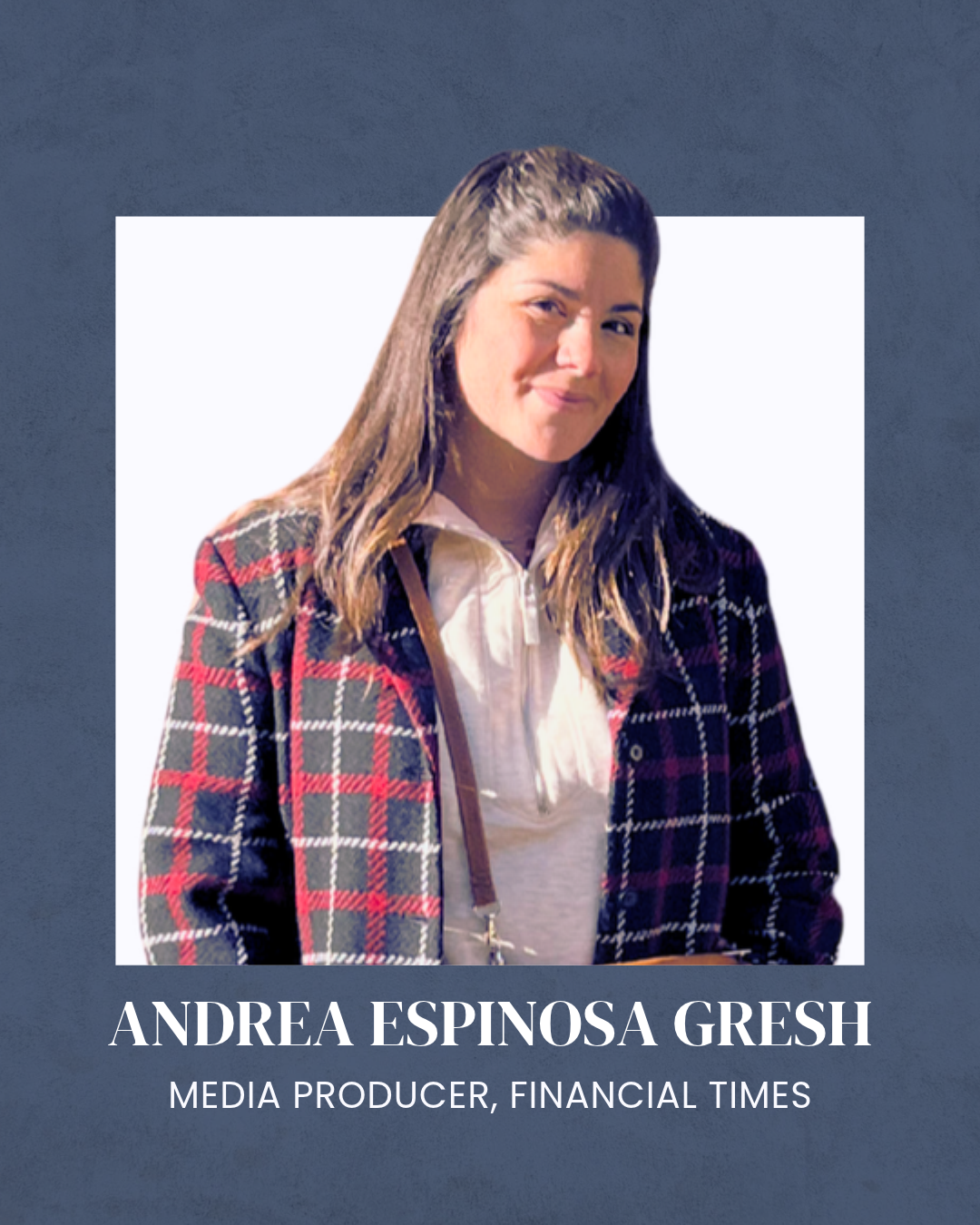
- Andrea Espinosa Gresh’s journey from dance and acting to producing at the Financial Times highlights the power of embracing unexpected career paths.
- She shares how her creative background helps her transform complex topics into engaging, visually compelling stories.
- Motherhood reshaped her priorities, teaching her to set boundaries, ask for help, and challenge the idea that women can do it all.
- Andrea reflects on trusting her intelligence, finding inspiration beyond work, and making space for personal fulfilment.
- She discusses the importance of transparent communication, strong professional networks, and redefining success beyond financial stability.
Early Life & Career Journey
1. Can you share a little bit about your background and experiences in your early life? Anything that you would like to share that shaped the person you are today?
I grew up in Maryland in a multicultural family. My father is from the Dominican Republic and came to the US at 17 to attend the Naval Academy, speaking no English at all. He met my mother, a Maryland native, while he was studying there. Growing up, there was always a pull toward my Dominican heritage and the Spanish language, which I didn’t begin learning until about age eight, when our family moved to Mexico City for a year. Two months in the Dominican Republic when I was 13 made me fall in love with the culture. That experience sparked a lifelong love of travel, anthropology, and observing how different people live.
The performing arts captured me early too. Ballet, tap, and jazz filled several nights a week, and fine arts, graphic design, and music followed. When it came time for college, a degree in dance was the goal, and California State University, Long Beach (CSULB), on the opposite side of the country, was the choice.
As one of the strongest dancers in my hometown studio, my confidence got ahead of me. CSULB advised waiting before auditioning for acceptance into the dance department, but I ignored it and was not accepted. A second (and final) attempt ended the same way. That led me to the theatre department, which turned out to be wonderful and made me believe that everything happens for a reason. My parents cautioned that a theatre degree alone would not lead to a lucrative career, so I added a second major in communication studies.
After graduating, Los Angeles became the next stop, with acting auditions by day and bartending by night. After three or four years, the burnout set in. Being dependent on casting directors to secure a role left me feeling like I had no control over my future, so it was back to school for a master’s in film and media at The New School in New York City, with a determination to learn how to make video content myself.
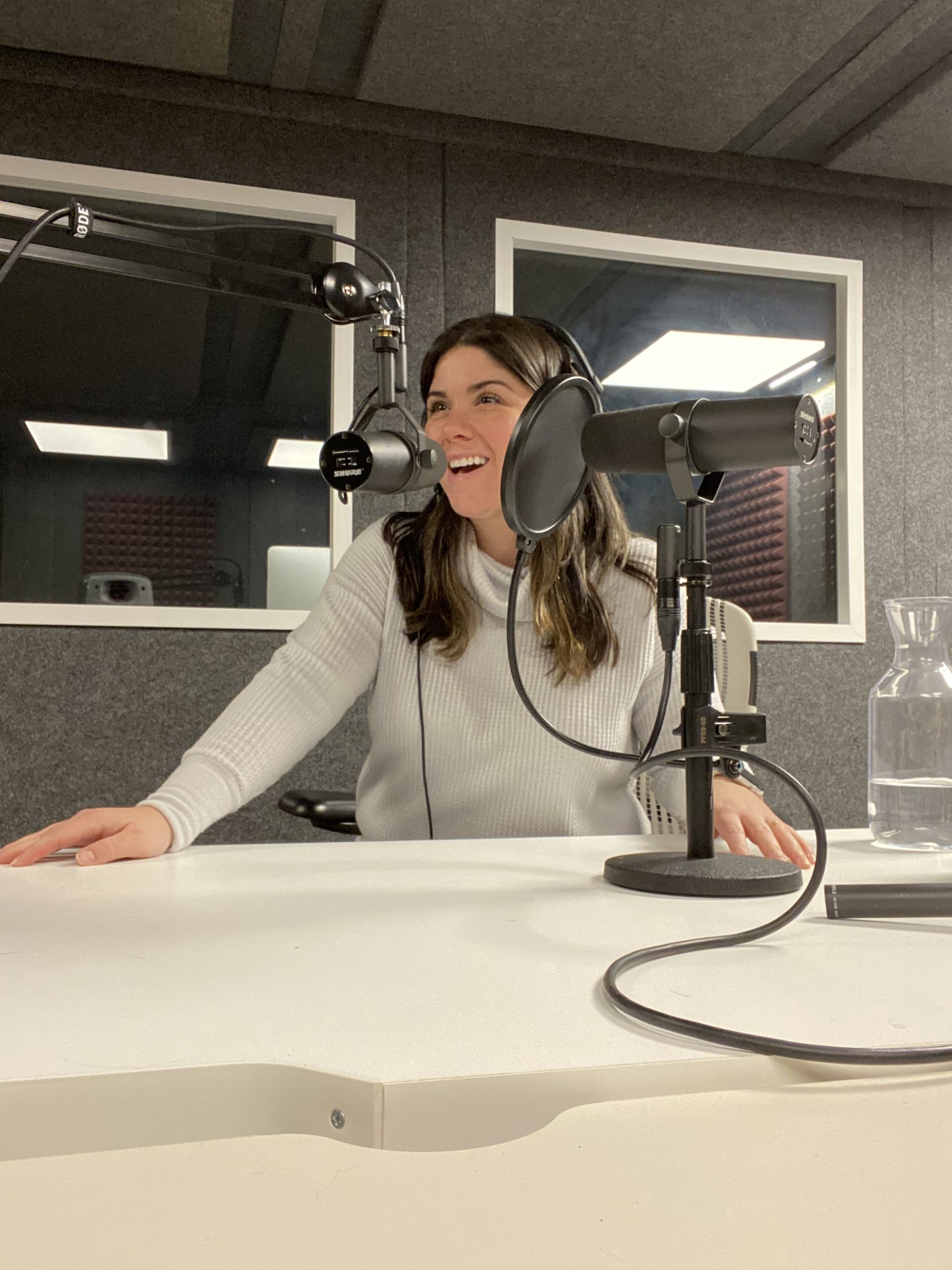
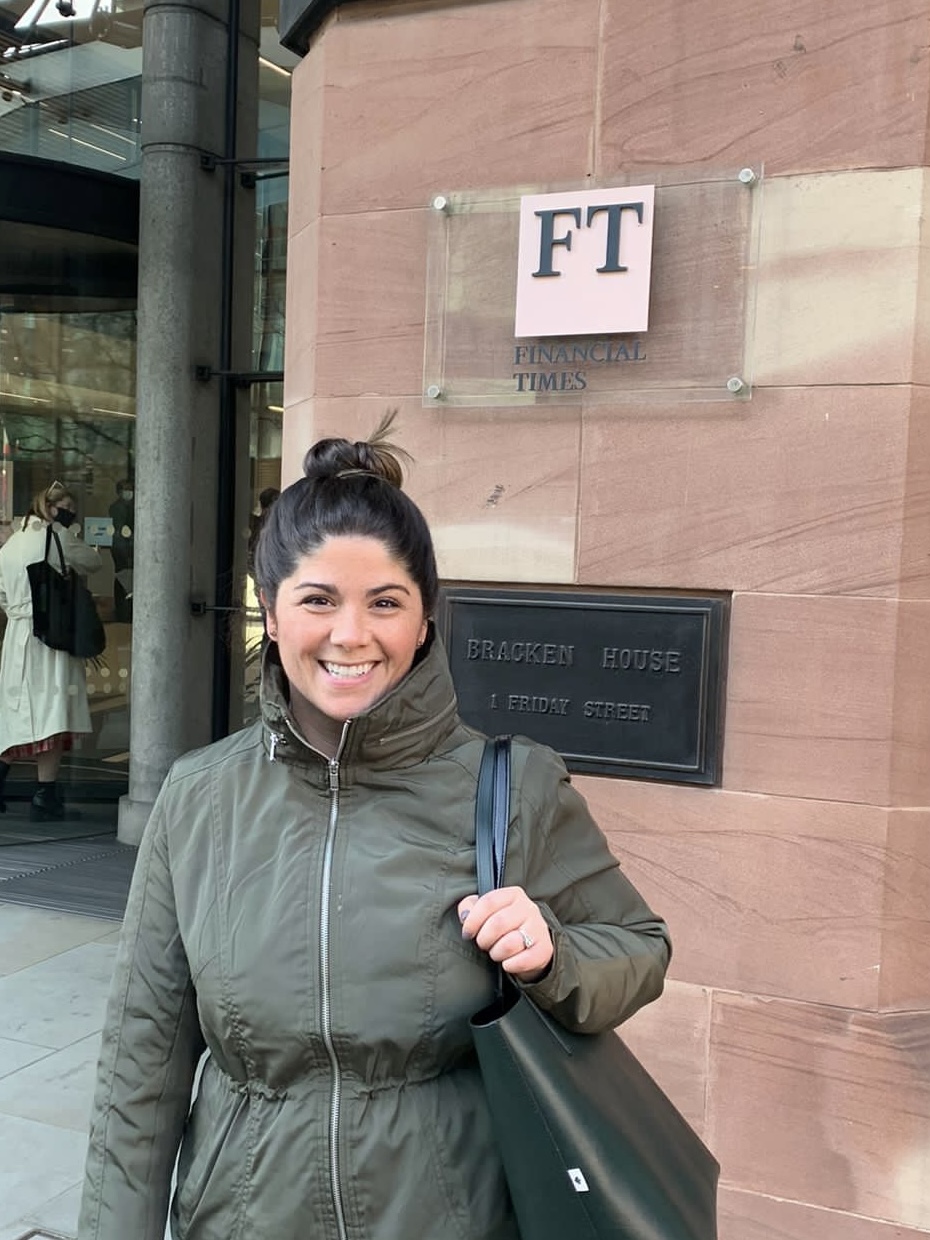
A live stream producer role for fortune 500 clients came first, followed by a move to PIMCO as an in-house video producer. Financial content was never part of the plan, yet it was a tremendous start to my career and a wonderful niche to stumble upon. Later came Alpha Grid, which was acquired by the Financial Times and is now FT Studio. The work I produce turns complex, weighty topics into engaging and visually interesting content, which has brought together many of the skills and interests I have developed over my lifetime.
Meaning, Motherhood & Balance
2. What is it that you found to be most meaningful in this journey, or something that you have been drawn to now, having had your hand at so many things?
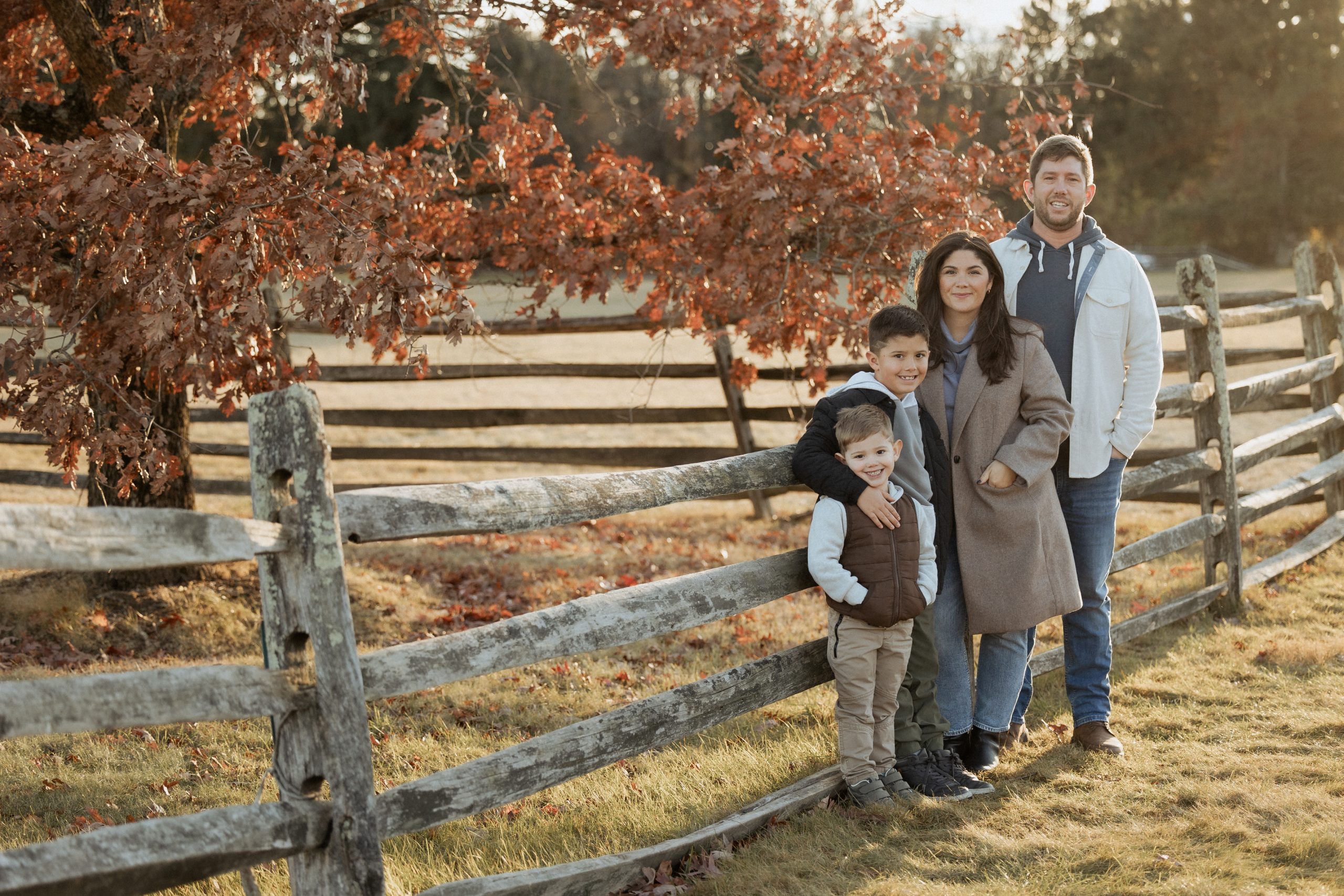
It may not be what you expect, but becoming a mother has been the most meaningful part of my journey, because it transformed my priorities.
A career I love was always the goal, a belief that came from my father, who often said, “I love what I do.” But the moment I became a mother, the career immediately took a back seat, and that wasn’t a bad thing. There was a certain freedom that came along with this ‘not caring so much anymore’ mentality. Balancing motherhood and work ultimately strengthened my ability to be transparent without guilt. I could speak openly with colleagues who also knew what it was like to join an 8 a.m. call with the kids in the background.
With 40 just around the corner, part of me wants to start climbing the career ladder again. My kids are now six and nine, which leaves room to push a little further.
The idea that women can have it all has never sat well with me. My generation grew up on it, and many of us are now drowning a little. You can have a family and be happy at work, but giving 100% to both leads straight to burnout.
So ask for help. Lean on your family, friends, and colleagues, and be open about your situation. Don’t be ashamed to say, “I would love to join that call, but unfortunately I can’t.” There is no need to apologize.
Craft, Reflection & Life Outside Work
3. Can you walk us through how you develop an idea from the initial concept into the final piece?
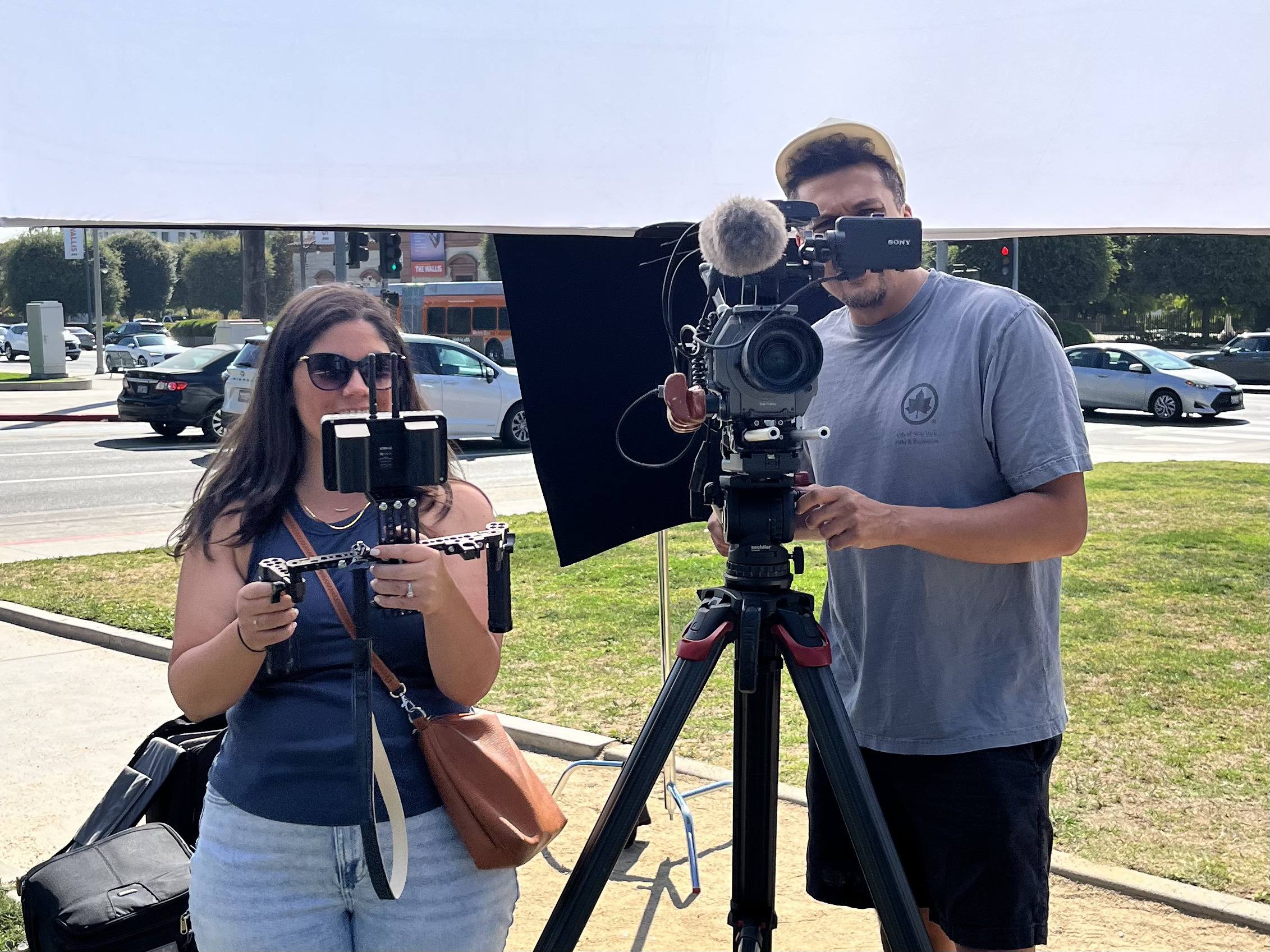
It starts with the client brief. What is the core message, and who is the audience? As a producer, I then weigh that against the budget, which is the creative nutshell. Sometimes a great idea doesn’t come with the funding, so the approach has to change. Occasionally, a larger budget lets us bring in freelancers or a director we could not normally afford.
A recent video for a data management company, about how AI is affecting energy use, is a good example. A documentary case-study approach would typically be my route, but the topic is so new that there are limited case studies. So leading voices in the industry were brought together for a filmed conversation.
That can sound dull on paper, which makes the challenge visual. Where can we film something beautiful? Can the camera pan in as they speak, or shoot from above on a rig? Can we find a unique music track and an editor to cut a strong intro montage?
That was the thought process on this brief. The job is not all having an idea. There’s always understanding the story, the audience, the practical constraints, and then finding a creative way to make it work.
4. Looking back at your younger self, is there something that you wish you had worried less about or trusted more?
Trusting my own intellect more.
At times, feeling not smart enough came partly from watching others take a more traditional academic path. But you can love English, literature, art, and performance and still be very smart, without being an A+ student. Standardized testing was never my strength, and being so hard on myself over it is something I wish I could undo.
5. What does a fulfilling day look like for you outside of work, and have you found any interests or routines that help you stay motivated?
This is something I have been thinking about a lot as 40 approaches. A career built around things I love eventually became my job, and it started to feel less fulfilling. Hobbies of my own are what’s missing, but with young children, life is a constant hamster wheel, and youth sports fill most nights.
A fulfilling day is wandering down a main street, sitting with a coffee and watching people, then stepping into a gallery or shop for inspiration. Nature with my kids matters just as much, whether on forest walks, nature trails, or trips to streams and ponds.
They drive me nuts a lot of the time, but being with them is something I truly love.
Collaboration & Redefining Success
6. What qualities do you value the most in the people you choose to collaborate with?
Skill matters a great deal. A brilliant designer or photographer who is a bit awkward is still worth working with if the output is stellar.
Above all, though, I look for easy, transparent communicators. The work involves constant communication with the client, the project manager, the sales team, and the entire crew, so collaborators who keep that process smooth are essential.
Long explanations are not necessary. If something can not be done, just say so and share when it can be. That keeps everything efficient and professional.
7. Is there a belief about creativity, work, or success that you held early in your career?
Early on, success meant making money. If you could make a living from your creative work, with no Plan B and no waiting tables, you had made it. That is why our profession is so hard. How do you do the creative work you love and still support yourself?
My grad program at The New School changed that perspective. It showed me there are many careers built around the things I love, rather than one single path or no path at all.
For anyone interested in a creative profession, find the right communities and the right network of people who know how to turn those skills into a career.
8. How can our audience contact you? Share with us your socials 🙂
Andrea Gresh Personal: https://www.instagram.com/espinosagresh?srtk=cGV6MmZicDM1NGhn
Andrea Gresh LinkedIn: https://www.linkedin.com/in/andrea-gresh/
Conclusion
Andrea’s journey is a reminder that success rarely follows a straight path. By embracing change, balancing personal priorities, and staying curious, she continues to bring complex stories to life while redefining what a fulfilling career means to her.
