
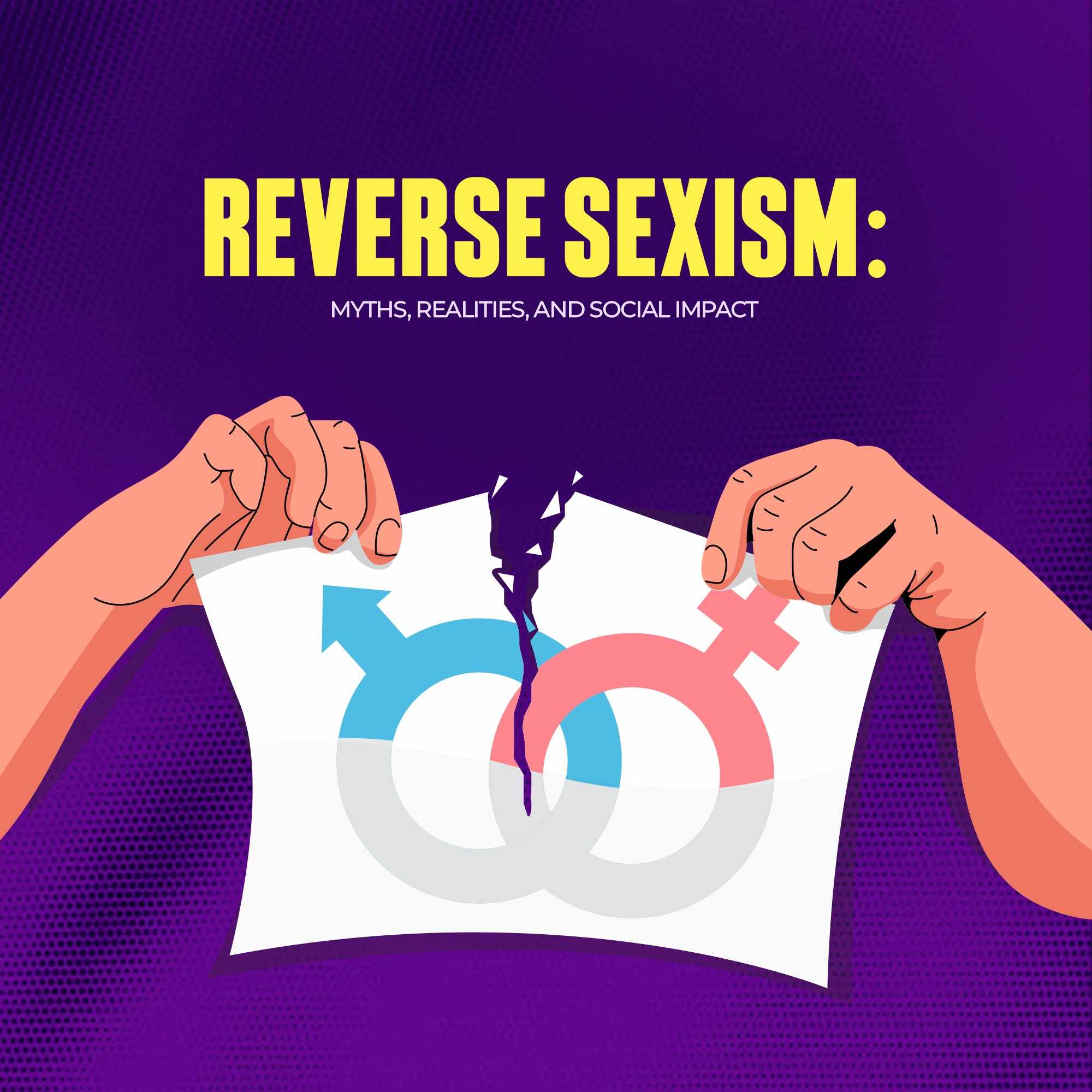
Overview:
- This article explores what reverse sexism means and why the term remains controversial.
- Understand the difference between gender prejudice and systemic sexism.
- Look beyond the men-versus-women debate to understand what equality really means.
Think of a woman who has been looked down on for years because she is a woman. She knows what it feels like when people dismiss her opinion, call her too emotional, or tell her to “soften her voice” before they take her seriously. Then, during a disagreement with a quiet male colleague, she asks herself, “Why can’t he just stand on his own? He is a man.”
People often expect men to be assertive. She would not say it out loud, but she may still find herself making assumptions about men based on the stereotypes she has learned. The same thing happens when a woman steps outside society’s boundaries and is called “rebellious”. A man can also face judgment when he steps outside what society expects of him.
This situation may seem paradoxical, but it raises an uncomfortable question: Can sexism also affect men? The controversial idea of “reverse sexism” enters the discussion here. Some people use the term to describe prejudice against men. Others argue that the term overlooks the role of power, history, and wider social systems in shaping sexism.

First, What Are We Even Calling Sexism?
In other words, sexism implies discrimination on the basis of one’s biological sex. As the American Psychological Association points out, it may take place at personal, organisational, institutional, and cultural levels, and it manifests itself in the form of overt, covert, and subtle sexism.
Sexism hides behind stereotypes about people’s capacities and gender-specific behaviour as well as expectations regarding roles that certain sexes should play.
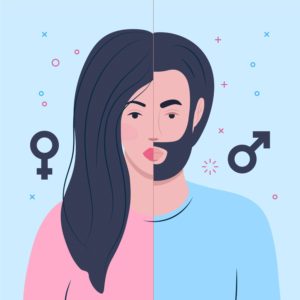
People can judge others because of their gender. That is gender bias. However, many feminist scholars argue that sexism can involve more than personal attitudes. It can also appear in workplaces, institutions, laws, and social systems.
Relationships and social environments also matter. You become the people around you and these relationships can influence the beliefs, expectations, and biases you develop over time. The people and systems around us can shape how we understand gender, power, and what we consider normal.
A woman making a sexist comment about men and a system that repeatedly puts women at a disadvantage may both involve gender bias. However, they do not necessarily work in the same way.
That difference lies at the heart of the debate around “reverse sexism.”
So What Does “Reverse Sexism” Actually Mean?
People commonly use “reverse sexism” to describe prejudice or discrimination against men because of their gender. Such prejudice can appear through stereotypes that expect men to be strong, controlling, emotionally tough, or financially successful.
Consider a boy who often hears that “real men do not show pain.” Over time, he may learn to hide his emotions because people expect men to behave in a certain way.
Men can also face judgment when they choose roles that challenge traditional expectations. For example, a husband may want to stay home while his wife works, or he may choose to become the primary caregiver for his child. Society may judge him for stepping outside traditional ideas about masculinity.
The same pressure can affect anyone who does not fit expected gender roles.
However, an important question remains: Does every form of gender-based discrimination count as sexism? This is where the debate begins. Some people use sexism to describe any gender-based bias. Others argue that we also need to consider power, history, and social institutions when we define sexism.
The debate over “reverse sexism” largely centers on this difference.
Myth 1: Sexism Only Happens to Women
Men can experience gender discrimination, often because of expectations about how men should behave. Society may expect men to be strong, financially successful, emotionally stable, and independent.
For example, a man who wants to stay home and care for his child may face judgment. Some men may also hesitate to seek psychological help because they fear that others will see them as weak or unable to meet traditional ideas of masculinity. This connects with wider discussions about how [fathers are usually absent when it comes to parenting].
These experiences are real, and recognizing them does not diminish the discrimination women experience. At the same time, gender discrimination can affect men and women in different ways.
Recognizing stereotypes against men does not automatically mean that sexism has simply become a two-sided problem. We still need to look at the specific form of discrimination, the context, and the systems involved.

Myth 2: If Both Sides Face Stereotypes, They Face the Same Kind of Sexism
A woman may hear that she is too emotional to become a leader. A man may hear that he is too emotional to be a “real man.” Both people face judgment based on gender stereotypes.
The important question is whether these experiences have the same social effects in every situation.
Historically, women faced restrictions on education, employment, voting, property ownership, and leadership. These restrictions did not exist only as personal opinions. Laws and institutions also enforced many of them.
For this reason, feminist scholarship often distinguishes between personal prejudice and broader forms of inequality.
A Stereotype Can Hurt Without Being a System
Needless to say, an offensive remark is painful, but repeated stereotyping shapes self-concept. There is a difference between a stereotype held by an individual regarding others and one used institutionally during recruitment and promotion processes.
Knowledge of the distinctions between these terms does not mean that one type of gender discrimination is more important than another. Rather, it means that all gender discrimination is not of equal importance, history, or significance.
Thus, the possibility of male gender discrimination does not mean that the situation has become reciprocal.
Myth 3: If Women Are Advancing, Has Sexism Simply Shifted to Men?
Researchers have studied the belief that women’s social progress means men have lost power. A 2021 study published in PLOS ONE introduced the concept of Belief in Sexism Shift (BSS).
The BSS concept describes the belief that men have become the main victims of sexism, that anti-male discrimination is now greater than anti-female discrimination, and that women’s social progress caused this change.
The researchers created a 15-item scale to measure this belief across four studies involving 666 participants. Their findings showed that BSS differed from other forms of sexism but also had links with them.
The study did not examine whether men experience gender-based prejudice. Instead, the researchers examined a broader belief that men had become the more disadvantaged group because women had gained social and economic ground.
The distinction matters. Experiencing prejudice because of gender is different from believing that women’s progress has shifted sexism from women to men.

Why That Word “Reverse” Bothers So Many People
The term “reverse” can suggest that sexism has simply shifted from women to men. Some feminist academics challenge this idea.
A study of the “reverse sexism” argument was published in the Journal of Human Values in 2025. The paper concluded that the phrase is insufficient to describe prejudicial behavior against men and suggested an alternative approach.
However, this does not negate the possibility of sex-based discrimination against men. Whether the phrase “reverse” accurately conveys the association between personal prejudice, societal power, and the larger systems that allow rise to gender inequality is actually at issue.
Thus, the question of whether men can be treated unfairly is not at issue. The question is whether referring to that as “reverse sexism” fully captures what is happening.
When the Debate Starts Silencing People
The reverse sexism controversy is significant because of the power that language has to determine which stories are heard and which are disregarded. The fact that gender bias towards men should be recognised does not necessarily have to mean disregarding the story of the woman’s struggle.
-
Don’t Dismiss Women’s Experiences
When a woman says that she faces discrimination at work and someone responds, “But men face it too,” the conversation moves away from her experience. That may be true, but it does not make her experience less important. Sharing another person’s experience should not become a way to dismiss their concerns.
-
Don’t Dismiss Men’s Experiences Either
The same principle applies to men. Women may face discrimination, but that does not erase the pressure some men experience to hide their feelings, act tough, or prove that they are “real men.” Men’s experiences deserve attention without assuming that they are exactly the same as women’s experiences.
-
Stop Keeping Score
The discussion becomes pointless when gender inequality is depicted as a contest of who has suffered most. Who has it worse ? is a question that rarely gets us anywhere because people’s experiences, circumstances and forms of discrimination are not the same.
We should be engaging in better questions, instead of keeping a score: What gender expectation is at stake here? Who is affected? Where does it begin and why does it continue to exist?
This shift takes us away from comparing pain and toward understanding the prejudice, the expectations and the systems behind it.
So, Does Reverse Sexism Exist or Not?
The response is completely dependent on the definition you walked into with; there is no simple yes or no.
If sexism is characterized as prejudice or discrimination based on sex or gender, then there is little room for debate concerning the prejudice towards men based on their gender. Many feminist scholars reject the expression “reverse sexism” as a description if sexism is viewed as a larger system of inequality based on women’s historical oppression since it suggests that the system has just been reversed.
Whether or not men can be treated unfairly has never been the real point of debate. It has to do with what the word “sexism” does.
Getting Out of the Men vs. Women Trap
We have ended up turning a fight for everyone into a conflict between men and women. We seek clarification as to who has suffered more, who has benefited more, who is currently the target of discrimination, and whose issues deserve more attention. However, equality wasn’t ever meant to have a dominant side.
So the first step is to recognize what equality is—not to make everyone equal, but to make sure that a person’s gender does not dictate how much freedom, respect, opportunity, or dignity they get.
For grieving, wanting to be the primary parent, or not being the loudest person in the room, a male may face judgment.
Women continue to experience discrimination and barriers within institutions. At the same time, both realities can exist without undermining one another.
People may tell women that they are too emotional to lead. Men may also hear that they should never show emotion. Both messages reduce individuals to gender-based expectations.
Though, that was never the question. Who is in worse condition? It was to make sure that no gender was told what they could or could not be.
Conclusion: Why the Difference Is Worth Holding On To
The most crucial point that must be picked up from the reverse sexism debate is that acknowledging one kind of inequity does not mean dismissing another.
Gender bias also affects men. Structural sexism can still affect women. Understanding the distinction between the two enables us to address both without exploiting the experiences of one person as an excuse for another.
Discussions about gender inequality can lose sight of the bigger picture when people focus on whether men or women have it worse. The goal is not to create a gender-based fight. Instead, we should challenge the norms and structures that restrict people because of their gender.
To be accepted, a woman shouldn’t have to give up who she is.
Maybe equality begins when we stop asking which gender deserves more understanding and start making room for everyone to be understood.
