
CATEGORIES
#Business & Economy #women and finance #Work CultureOverview:
- Pay Parity and the gender pay gap sound similar but they measure two very different things.
- The latest 2026 numbers show just how wide the gap is globally and in India.
- Unequal pay doesn’t just shrink a paycheck, it affects everything overtime.
- Several stubborn factors, from segregation to motherhood, keeps this gap from closing.
- There are real steps companies and individuals can take today to start narrowing it.
Introduction
“Pay parity” comes up constantly in fair-pay conversations, yet almost nobody pins down what it actually means. At its core, it simply means same role, same pay despite any gender. And in 2026, women are still bringing home less than men for identical work that holds true in most industries across countries. If you line the salaries up role by role then the gap shows itself and that too very fast. But what does pay parity really mean, what’s the data actually showing right now, and why is this problem still here?
What Pay Parity Really Means
The gender pay gap and pay parity get confused constantly and it is quite understandable, since the two terms sound almost interchangeable. They are related, but they are not measuring the same thing at all. The gender pay gap comes from national averages, it is the average difference between the salaries of different genders in return for the same work. Every salary in a country is folded into a single number, whether that person answers phones or runs the company. Pay parity works differently. The gender pay gap is closely connected to broader workplace inequalities. Understanding women’s financial empowerment can help explain why equal pay matters for women’s financial independence.
It zooms in, comparing one employee to another doing the same job, and asks a much simpler question: does the pay actually match?
Two Measurements, One Recurring Mix-Up
If we look into the numbers, then according to the payscale of 2026, women earn 82 cents for every dollar a man makes. The number is uncontrolled, though it lumps every profession together into one average. Once you adjust for matching job titles and comparable experience, things start to shift. This figure suddenly jumps to 99 cents on the dollar. A single cent might not sound like much, until it is multiplied across millions of paychecks, at which point it’s no longer a rounding error.
Where the Numbers Currently Stand
A handful of 2026 statistics are worth more than a passing glance.
A Global Snapshot
According to the World Bank’s count, women globally earn about 77 cents for every dollar men earn, while payscale puts the figures slightly higher at 82-cent. Either way, the difference adds up over time. Across a 40-year career, that gap can translate into nearly a million dollars in lost earnings for women.
And progress remains slow. Equal Pay Day fell on March 26 this year, just a day later than in 2025. At the current pace, it could take roughly 134 years to close the global gender pay gap. Equileap’s 2026 report found that a mere 1.66 percent of large public companies have eliminated their pay gap altogether.
A Closer Look at India
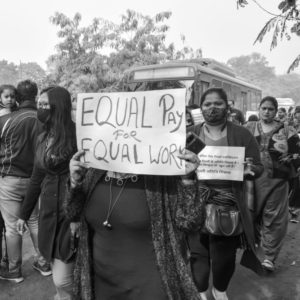
In India, salaried men brought home about 20,666 rupees a month between mid-2022 and mid-2023. Whereas the woman, over that same window, earned 15,722 rupees, according to World Economic Forum figures. This puts the gap for salaried workers nearly around 24 percent. If we look at every sector combined, then the range holds fairly steady between 19 and 24 percent, regardless of field. The problem goes beyond pay. India’s female labor force participation rate stands at just 32.8 percent, well below the 47 percent global average.
Why This Still Matters
Understanding and defining pay parity is only half the picture. The other and the important half is understanding what unequal pay actually does to the lives of people.
Economic and Family Impact
A smaller paycheck can leave less room for savings, especially when the income barely fulfills the basic requirements. It can mean putting off retirements, and keeping a smaller portion to be saved for emergency funds. Since women also tend to live longer than men, these gaps trail them more into old age. For a woman, supporting their families, the consequences can reach beyond their expenses and they feel the burnout at the workplace and home altogether. A mothers earning less, that can translate into fewer resources for a child’s education, basic essentials or medical care. Single mothers feel this hardest of all, with no second income to fall back on.
The Ripple Effect on Careers
Small pay gaps rarely stay small for long. Raises are often calculated as a percentage of whatever someone was already earning, and new job offers tend to reference past salary too. A modest gap at twenty-five can balloon by forty-five, simply because of how that math compounds. Catching pay parity issues early protects earning potential for decades down the line.
What’s Actually Keeping This Gap in Place
There are a handful of stubborn factors that explain why progress has crawled.
Occupational Segregation
The fields where women remain heavily concentrated include education, retail, caregiving while men dominate the higher-paying ones like finance, engineering, technology. There is a name for this: occupational segregation. It is baked into overall pay statistics well before anyone starts comparing individual salaries. The same split can show up inside a single company too, with women clustered in support roles while men climb toward leadership.
The Motherhood Penalty

Women have to take career breaks for childbirth or caregiving and coming back from one can mean slower raises and fewer promotions than before. Some employers quietly even assume that mothers care less about their careers, which is a belief with no evidence behind it. This bias is called the motherhood penalty. It keeps the pay gap stretching for years after the leave ends.
The motherhood penalty can affect women’s career growth and earning potential. Supporting women in the workplace is an important step toward creating fairer opportunities.
Lack of Pay Transparency
Pay transparency is still the exception rather than the rule in most of the world. There are only 15 percent of US companies who currently publish gender pay gap data, according to Equileap. Whereas Europe tells a different story: 74 percent of companies there now disclose this information, largely thanks to the EU’s Pay Transparency Directive. Without similar rules elsewhere, gaps like this can stay buried inside a company for years.
How This Gap Could Actually Close
Closing the gender pay gap requires a systematic, societal and policy-level contribution from lawmakers, companies, and individual workers alike.
Policy and Legislation
On paper, India’s Equal Remuneration Act has required equal pay since 1976 but enforcement is another story. The one thing that lagged well behind the law’s intent. Over in the EU, a newer directive takes a different approach, pushing companies toward greater pay transparency. Laws alone will not fix a gap this deep-rooted, but they can force conversations that companies would rather sidestep.
What Companies Can Do
Companies have real leverage here. They can have regular pay audits to catch problems before they calcify into permanent ones. Posting salary ranges in job listings hands applicants real information from the start. Clear, skill-based promotion criteria cut down on favoritism in raises. Equal parental leave for all parents chips away at the motherhood penalty from a different angle.
What Individuals Can Do Today
Workers are not powerless while waiting on policy to catch up. A little homework on market rates goes a long way toward strengthening any salary negotiation. It also helps to ask about pay ranges early in an interview, before surprises show up later. Keeping track of your own raises over the years often reveals a pattern you would never spot otherwise. And pay stops feeling like a private frustration once colleagues start talking about it openly, it becomes something a team can actually work on together.
Conclusion
Knowing what pay parity means is really just the first step, not the destination. Real progress has happened, but genuine gaps still show up across nearly every region studied. Closing what is left will take steady, unglamorous choices from companies and individuals alike. Honest conversations about pay, kept up long enough, tend to shift outcomes that silence never could.
