
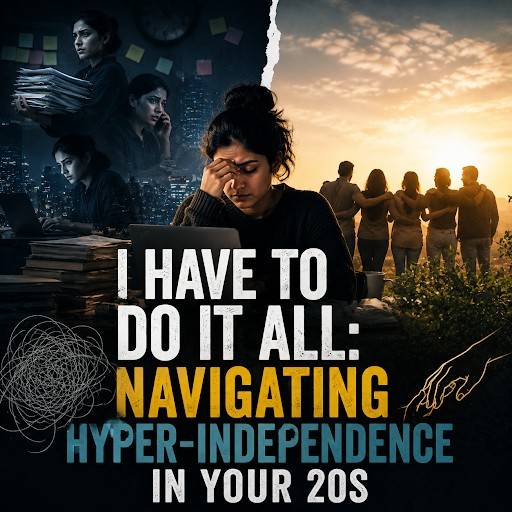
Overview:
- Modern culture falsely frames asking for help as a sign of incompetence.
- Solo-carrying every responsibility triggers chronic burnout and intense imposter syndrome.
- True resilience requires trading stubborn self-reliance for mutual support systems.
- Practicing micro-vulnerabilities and seeking real-world mentorship dismantles isolation.
- Embracing community helps twenty-somethings build a sustainable life over a successful facade.
“Midnight for a professional in their twenties is always going to be the same.” The bright glow from a computer screen shines down on a mounting to-do list. Asking another employee for help is never even considered an option. Modern workplace dynamics have somehow managed to twist basic self-reliance into a high-stakes endurance sport.
Social media algorithms severely compound this phenomenon. Feeds are saturated with peers effortlessly climbing corporate ladders while maintaining pristine personal lives. What appears to be intense discipline is often a psychological barrier clinical professionals label “hyper-independence.” This is deeply concerning. It weaponizes a natural human desire for autonomy, turning it into an isolating shield.

Image Credit: ChatGPT
The Illusion of the Solitary Achiever
Buying into the concept of the totally self-made professional is a strategic error. It sells aspiring adults the lie that success is invalid unless it inherently hurts. Entering the workforce under this assumption solidifies rigid, self-defeating internal mechanics:
- Information and task hoarding: Asking for direction triggers deep anxiety. Professionals assume competent adults already possess every answer. Offloading assignments implies total failure.
- Pathologizing vulnerability: Society falsely equates reaching a breaking point with weakness. It ignores normal biological responses to acute stress.
What stands out here is the aggressive nature of this isolation. Managing workloads morphs into a frantic effort to keep everyone distant. The primary goal becomes hiding the underlying panic.
The Cognitive Toll of Absolute Autonomy
Operating indefinitely as a one-person command center simply breaks down. Forcing every setback and obligation onto a single set of shoulders guarantees mental friction.
Physical Depletion
Running without a safety net forces the nervous system into a chronic state of high alert. Sustained cortisol spikes accelerate the plunge into severe, hard-to-reverse burnout.
This continuous stress baseline leaves the body physically exhausted. Constant exhaustion fundamentally alters daily energy levels. Simple tasks quickly become overwhelming mental hurdles. Eventually, total physical collapse forces a mandatory halt.
Manufactured Loneliness
Constantly deflecting assistance builds a bizarre trap. Colleagues assume the hyper-independent individual has everything perfectly handled. They eventually step back and stop offering backup entirely. The resulting isolation is entirely self-inflicted. A fabricated image of flawless execution locks it firmly in place.
This silent withdrawal breeds deep workplace resentment. Hyper-independent workers struggle alone under a self-imposed mountain of work. Meanwhile, teammates feel entirely unneeded and pushed away. The internal pressure mounts while outward communication completely stalls. Breaking this cycle requires destroying the illusion of perfection.

Image Credit: ChatGPT
Amplified Imposter Syndrome
Without an external sounding board, the internal critic dominates the narrative. Lacking mentor perspective allows minor errors to mutate. They quickly become massive anxieties about exposure and professional fraud.
Isolated individuals lose objective baseline perspective on daily achievements. Every minor misstep instantly morphs into career-ending failure. Unchecked thoughts easily construct complex narratives of imminent exposure. Intense anxiety multiplies rapidly without objective external validation.
Re-evaluating Professional Resilience
Human progress rarely occurs in a vacuum. Actual maturity lies in pinpointing precisely where personal capabilities end.
Behind any highly visible executive or creative force operates a dense, uncredited network of peers and advisors.

Image Credit: ChatGPT
Seeing communities as a force multiplier is much more advantageous compared to seeing them as a safety net. In a model of interdependence, the individuals maintain their freedom but use the support system strategically. Strategic Interdependence considers directed assistance as a strength. The focus shifts away from hoarding tasks and masking exhaustion behind perfectionism. Instead, professionals utilize transparency to leverage their network and build genuine trust.

Image Credit: ChatGPT
Tactics for Dismantling the Solo-Mission
Shifting away from compulsive self-reliance demands friction and intentional behavior changes.
- Executing micro-vulnerabilities: Testing the waters with low-stakes requests is a highly practical starting point. Asking peers for minor feedback proves that requesting input never causes the professional sky to fall.

Image Credit: ChatGPT
- Sourcing direct mentorship and editing digital consumption: Being associated with experienced people will give practical guidelines. It eliminates the tiring aspect of continuously inventing the wheel. Silencing social media accounts that encourage constant hustle ensures there is no mental pressure of being flawless.
Conclusion
The twenties are inherently chaotic. Expecting to possess a flawless operational playbook during this decade is an irrational standard. Falling down is the new norm.
Ditching the lone wolf mentality creates an immense amount of cognitive bandwidth for young professionals. Shifting away from extreme independence to create a strong support system. It proves the weight of a career should never rest entirely on one person’s shoulders.
